15 November 2026
The aim of training for Kilimanjaro is simple: be able to walk for six to eight hours on several days in a row, uphill and downhill, while carrying a small daypack.
Weeks 1–4: build a base
- Three times a week 30–45 minutes of cardio: brisk walking, cycling, swimming or running.
- One longer walk at the weekend of two to three hours.
- Twice a week simple strength work: squats, lunges, step-ups and core exercises.
Weeks 5–8: add distance and height
- Increase weekday sessions to 45–60 minutes.
- Weekend walks of four to five hours, with as much elevation as you can find: hills, dunes, stairs or a stair machine.
- Start walking with the daypack you will use, with 5–7 kg in it.
- Break in your boots now.
Weeks 9–11: back-to-back days
- Plan at least two weekends with long walks on both Saturday and Sunday. This simulates consecutive days on the mountain.
- One long session of six hours or more.
- Keep strength training going, focusing on legs and core.
Week 12: taper
Reduce volume, keep moving lightly, sleep well. Arrive rested.
Living in a flat country
Most of our travellers come from the Netherlands and Belgium, where hills are scarce. Stairs, stair machines and treadmills on an incline help. A weekend in the Ardennes, the Eifel or the Alps is a great test.
What training does not do
Training does not protect against altitude sickness. It makes you more comfortable and helps you recover overnight. Days on the mountain still matter most. See Altitude sickness on Kilimanjaro and our page on preparing for Kilimanjaro.
Check with your doctor before starting a new training programme.
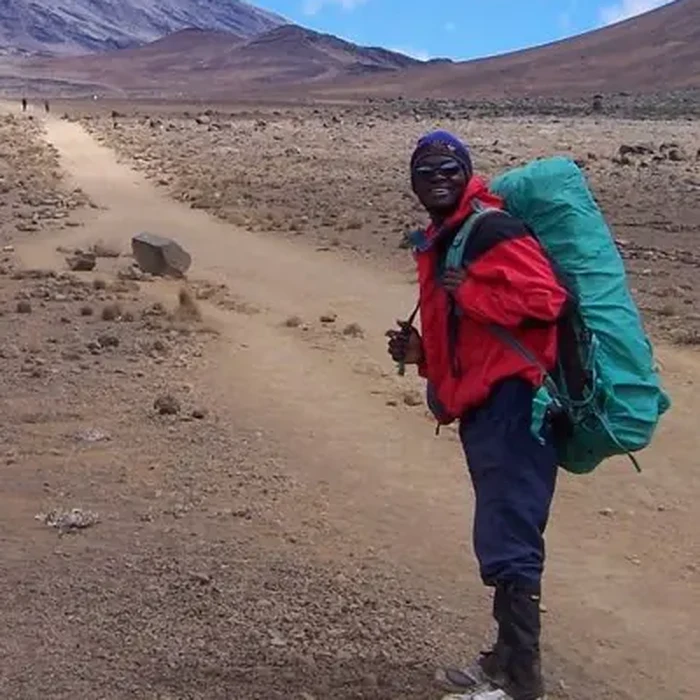
Cover photo: Enrico Corradi on Unsplash (Unsplash License). Illustrative photo; see our photo credits.