15 November 2026
If someone asks us which route to take up Kilimanjaro, the answer is often Lemosho. It starts in quiet forest on the western side, crosses the wide Shira Plateau and joins the main southern circuit only after a few days. Eight days on Lemosho is, in our experience, one of the best balances between scenery, quiet trails and acclimatisation.
Why Lemosho works
- Fewer people at the start. The first two days are among the quietest on the mountain.
- A gradual climb. The route gains height slowly over the Shira Plateau before you reach Lava Tower.
- Climb high, sleep low. Like Machame, it uses the Lava Tower–Barranco day to help your body adapt.
- Variety. Rainforest, giant heather, the open plateau, the Barranco Wall and alpine desert.
The 8-day outline
- Londorossi Gate to Mti Mkubwa (Big Tree) Camp, through dense forest.
- To Shira 1 Camp, out onto heath and moorland.
- Across the plateau to Shira 2 Camp, with Kibo in view all day.
- Via Lava Tower to Barranco Camp.
- Over the Barranco Wall to Karanga Camp.
- To Barafu Camp, early night.
- Summit night to Uhuru Peak (5,895 m), descent to Mweka Camp.
- Down to Mweka Gate.
How hard is it?
Lemosho is not technical. The hardest parts are the long summit night and the altitude itself. If you can walk six to seven hours a day on several days in a row, you can train for Lemosho. Our 12-week training plan helps.
Is Lemosho more expensive?
The route starts further from Moshi, so the transfer is longer, and an eight-day climb has more park days than six. The price of your climb is always confirmed by our partner for your dates; you can read what makes up the cost of a climb.
See our sample Lemosho itinerary or ask us for a proposal with your own dates.
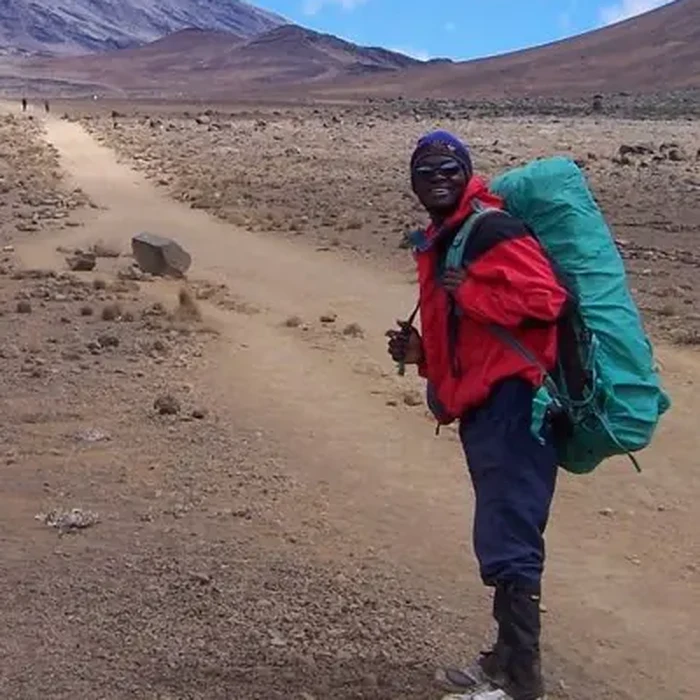
Cover photo: Sergey Pesterev on Unsplash (Unsplash License). Illustrative photo; see our photo credits.