15 November 2026
Age itself is not a barrier on Kilimanjaro. Plenty of climbers reach Uhuru Peak in their fifties, sixties and even later. What matters is health, preparation and enough time.
Start with your doctor
Have a check-up before you commit, especially if you have heart, lung or blood pressure conditions or take regular medication. Discuss altitude, medication and vaccinations.
Choose more days
Older climbers often do very well because they walk at a steady pace and do not rush. Give yourself extra time: eight days on Lemosho or nine on the Northern Circuit.
Look after your joints
- Trekking poles reduce strain on knees, especially on the way down.
- Train on descents as well as climbs.
- Good boots with cushioning help.
Recovery
Recovery overnight becomes more important with age. A comfortable sleeping mat, a warm sleeping bag and good food make a real difference. Our partner can arrange extra comfort such as a thicker mattress.
Huts or tents?
If you prefer a solid roof, Marangu is the only route with huts. Choose the six-day version.
Travel insurance
Check that your insurance covers trekking to 6,000 m and helicopter evacuation, and whether there is an age limit. See travel insurance for Kilimanjaro.
Combine it
Many travellers over 50 add a relaxed safari afterwards. Plan your trip with us.
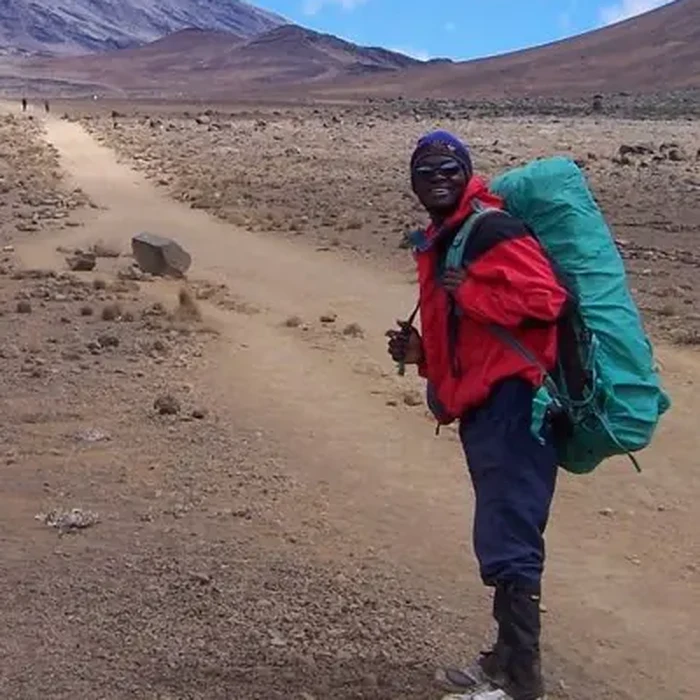
Cover photo: Nichika Sakurai on Unsplash (Unsplash License). Illustrative photo; see our photo credits.