15 November 2026
Rongai approaches Kilimanjaro from the north, close to the Kenyan border. It is the only route on that side of the mountain, which gives it a different character: drier, quieter and more open than the southern routes.
Why choose Rongai
- Drier weather. The northern slope gets less rain, which makes Rongai a good option in the wetter months.
- Quiet trails. Far fewer climbers than Machame or Lemosho.
- Gentle gradients. The climb is steady rather than steep, which many first-time trekkers find comfortable.
- Wildlife chances. On the lower slopes you may see colobus monkeys, and occasionally elephant tracks.
How the route runs
Rongai starts near the village of Nalemuru and climbs through pine plantation and forest onto open moorland. Most programmes include a side trip to the Mawenzi Tarn, below the jagged peak of Mawenzi, which is a beautiful acclimatisation camp. You then cross the saddle between Mawenzi and Kibo to Kibo Hut, and summit via Gilman's Point. You descend on the Marangu side, so you see two faces of the mountain.
Six or seven days
We suggest seven days with a night at Mawenzi Tarn. Rongai does not have the "climb high, sleep low" profile of the southern routes as clearly, so the extra night matters.
What is less good
The scenery in the first days is less dramatic than on Lemosho, and the drive to the start is longer from Moshi. The final night is steep scree to Gilman's Point.
Rongai in short
A sensible choice for people who want calm, a drier slope and a steady climb. Compare it with other routes in Which Kilimanjaro route is right for you? or ask us for advice.
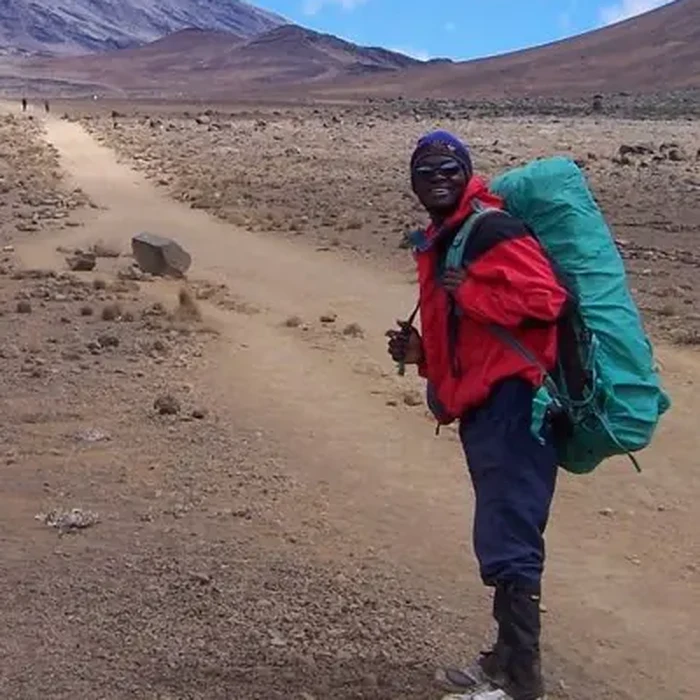
Cover photo: Crispin Jones on Unsplash (Unsplash License). Illustrative photo; see our photo credits.