
20 August 2022
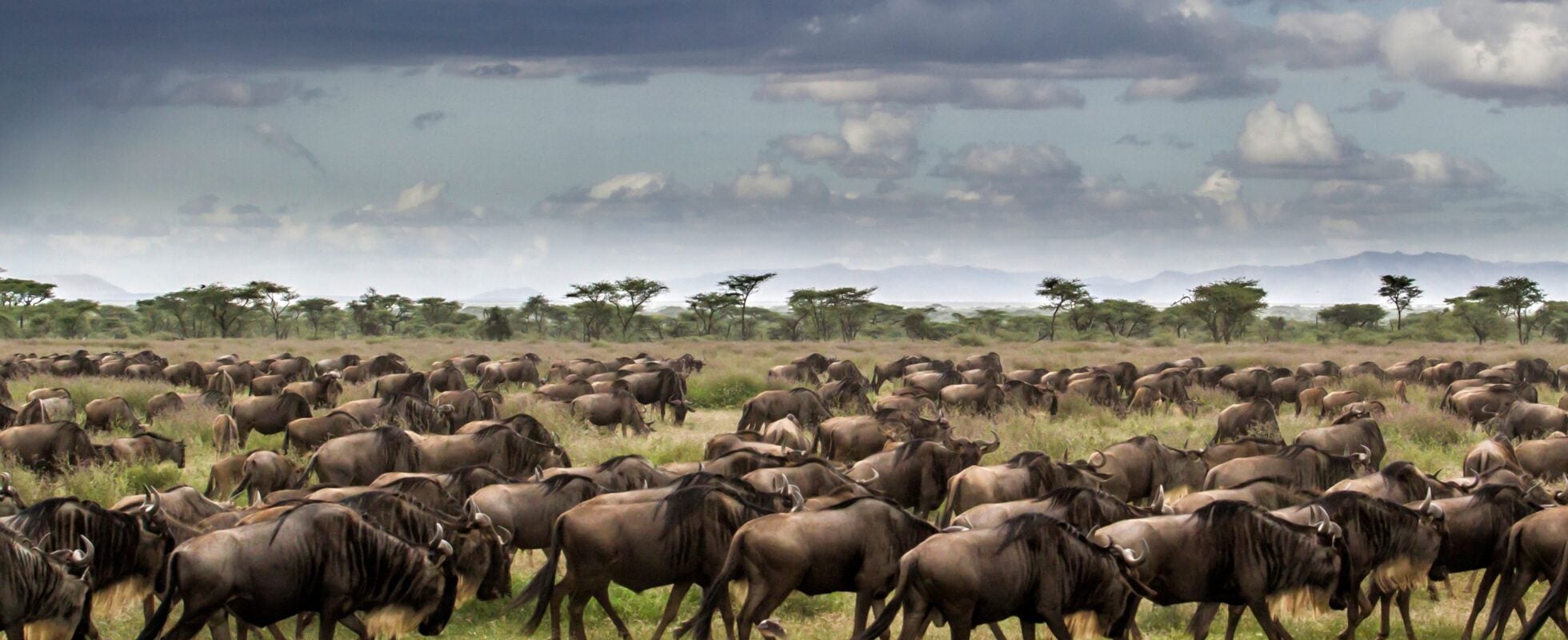
Of all African countries, Tanzania is perhaps the one people know best. Its name has become linked with Zanzibar, Mount Kilimanjaro and the Serengeti. Visitors from every corner of the globe flock here to go on safari in some of the finest national parks on the planet.
The country is stunningly beautiful, its Swahili culture is warm and welcoming, and its wildlife ranks among the best anywhere. Yet Tanzania is far more distinctive than you might expect! Below you’ll find ten intriguing facts about Tanzania that may well surprise you.
1. Africa’s tallest mountain stands here
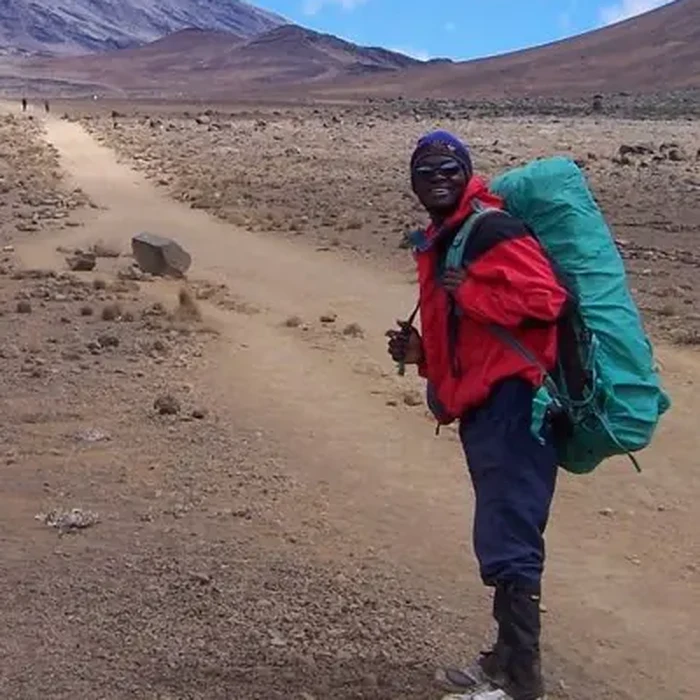
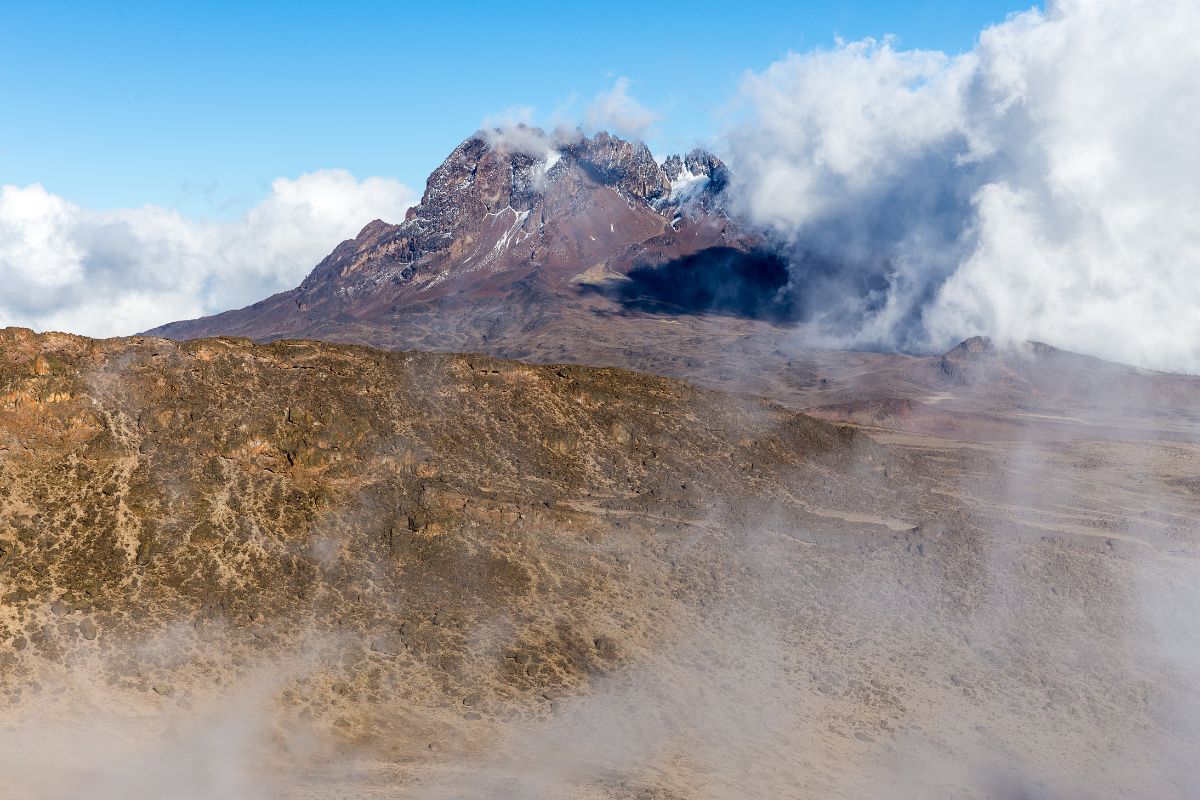
Should you be lucky enough to catch sight of it, this snow-capped, cone-shaped mountain will leave you in awe! At 5,895 meters above sea level, Mount Kilimanjaro is both Africa’s tallest mountain and the highest freestanding peak on earth. Nearly every kind of ecosystem occurs on its slopes, from cultivated land and rainforest to alpine desert and the arctic summit. You are very welcome to admire this majestic mountain from below, while anyone keen can climb the dormant volcano and enjoy spectacular views.
2. More than 1.5 million animals take part in the Great Migration
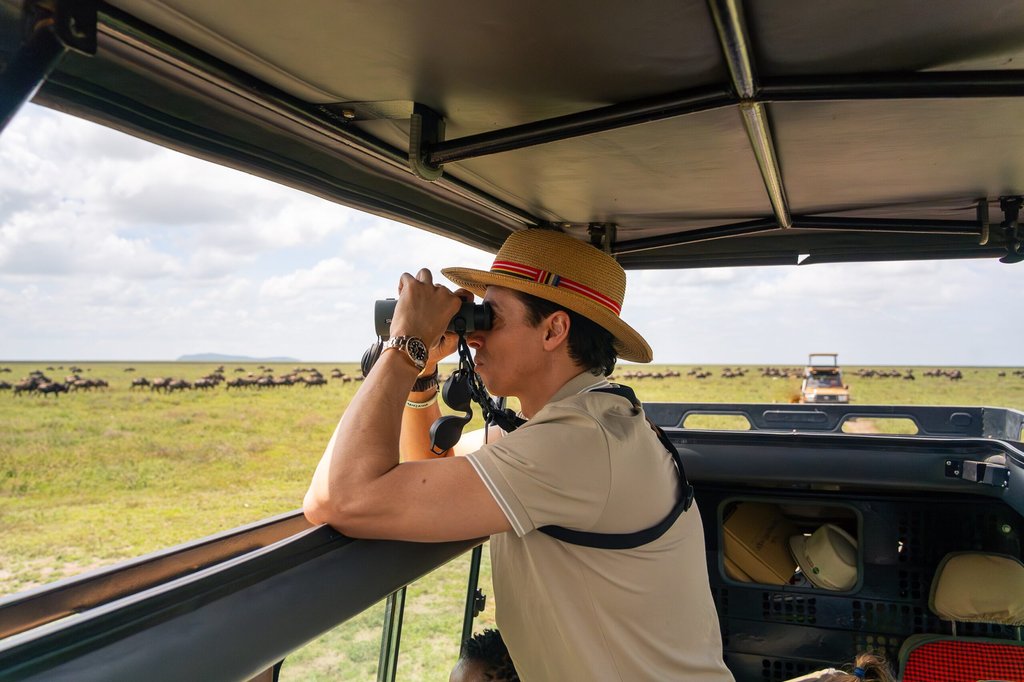
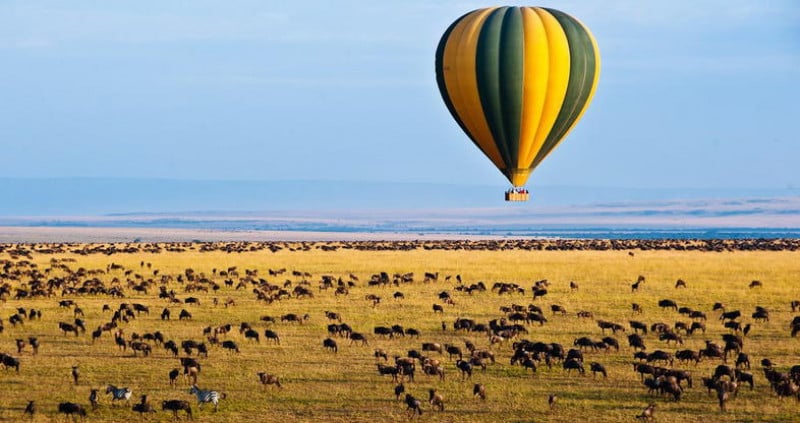
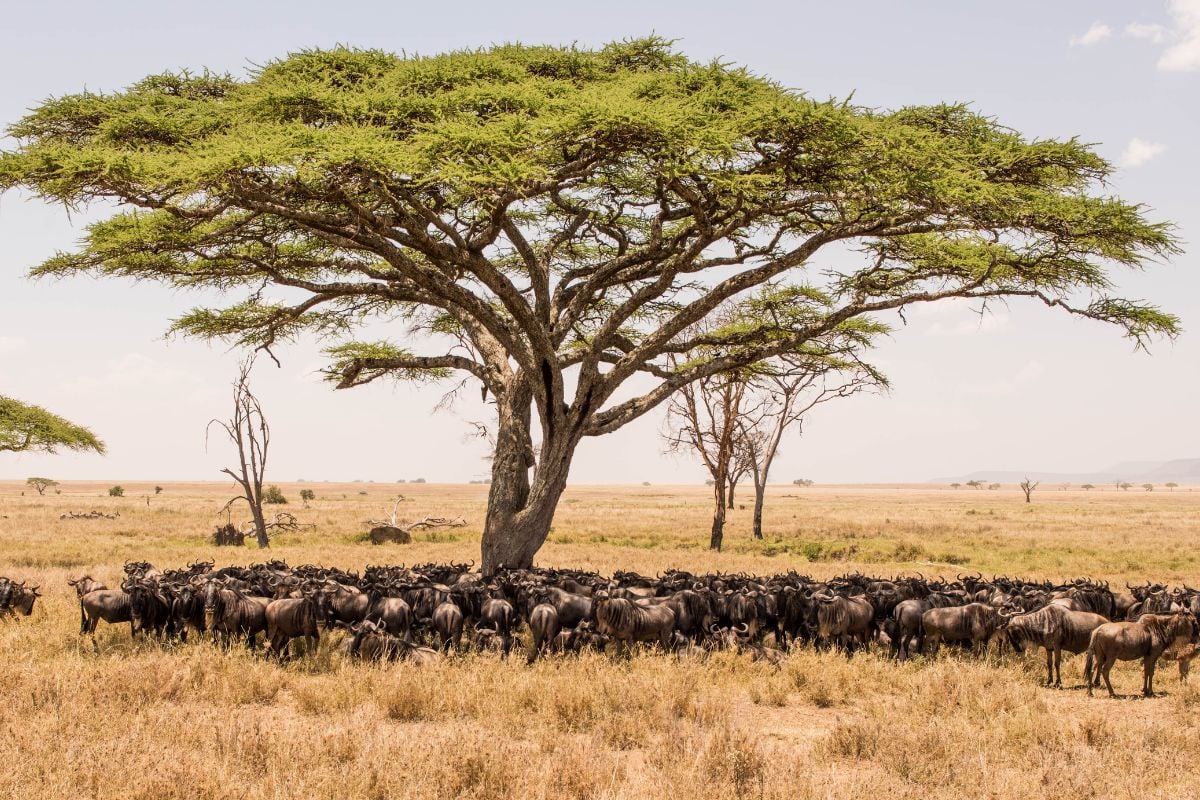
In the Great Wildebeest Migration, upwards of 1.5 million wildebeest, zebra and gazelles move across the plains of Tanzania and Kenya looking for grazing. Without doubt the most dramatic moment of this remarkable spectacle is the Mara River crossing, where enormous herds head for the Masai Mara while evading crocodiles and other threats.
3. National parks cover almost 30% of Tanzania
Some of the finest national parks on earth lie in Tanzania. Among the best known and most loved is Serengeti National Park, where more than a million different species of large mammals live. Besides being a World Heritage Site, it also holds the title of 7th World Wonder. During the Great Migration, wildebeest and zebras cross the Serengeti plains looking for fresh grasslands. You will also find large buffalo herds, elephants, giraffes, leopards, impala, gazelles and the endangered Eastern black rhinoceros. Tanzania is home to elephants too, with the largest population living in the Selous Game Reserve. Gombe Stream National Park, another famous Tanzanian park, is where Dr. Jane Goodall carried out her well-known research on chimpanzees.
4. Lake Tanganyika ranks as the world’s second-largest lake
Lake Tanganyika is among the biggest freshwater lakes on the planet, surpassed in volume and depth only by Lake Baikal in Siberia. It is so large that four countries share it: Tanzania, Burundi, Zambia and the Democratic Republic of the Congo. As an environment, the lake is one of the richest in biodiversity and most significant anywhere. At least 50 rivers and streams feed it. Holding a remarkable 8% of the world’s freshwater, Lake Tanganyika supports 500 different fish species, the majority of which stay within 20 meters of the surface.
5. Tanzania has a special kind of tree-climbing lion
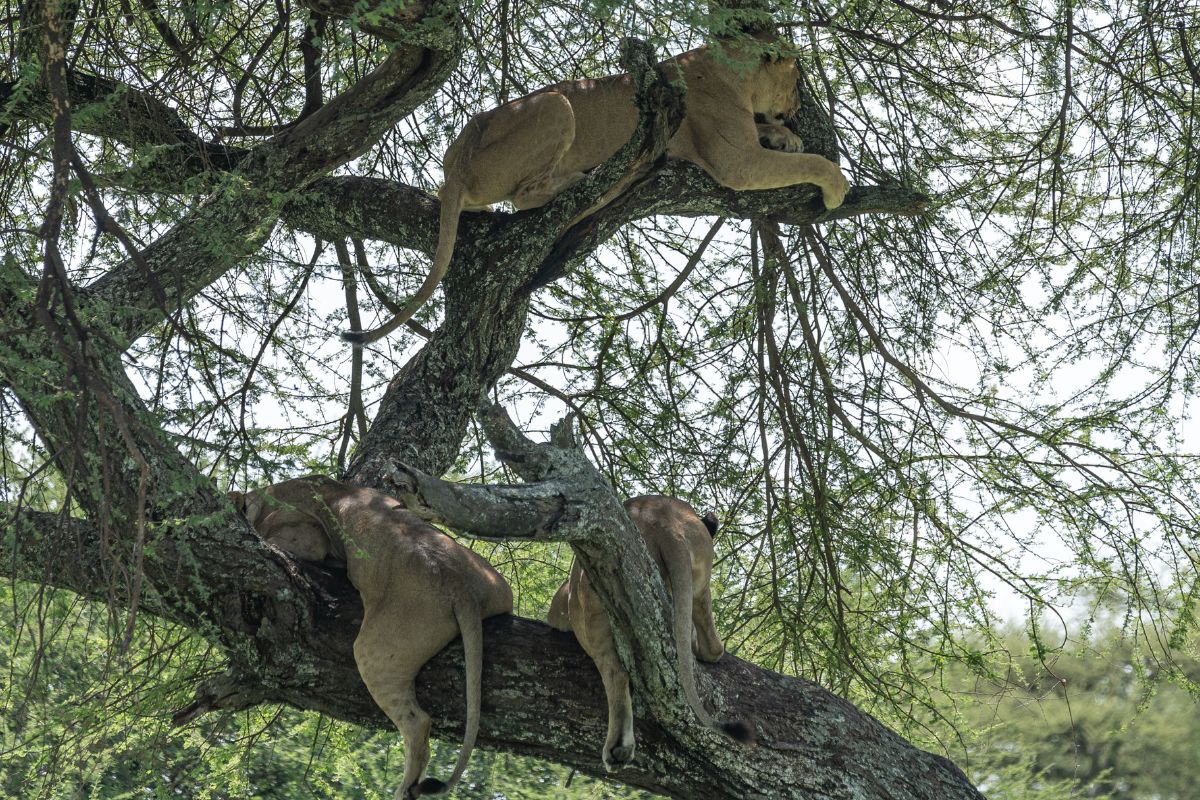
In Tarangire National Park you can come across lions that climb trees. Nobody knows for sure why they began doing this. Some say it helps them catch a cooling breeze, others that it keeps them away from tsetse flies. Then again, the lions may simply be enjoying the view from up high. Whatever the reason, watching them carefully pick their way along the branches is a striking sight.
6. Ngorongoro Crater is among the top spots to see the Big Five
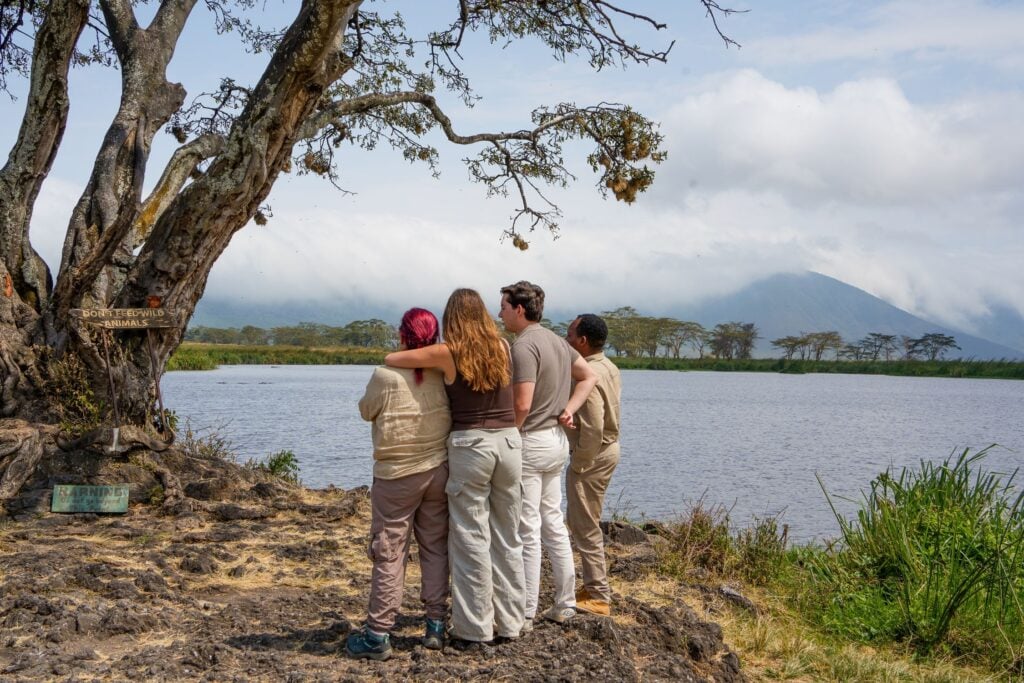
Located in northern Tanzania, the world-famous Ngorongoro Crater is another place you should not miss. Believed to have been formed by a volcanic eruption, this fertile valley is one of the most beautiful settings anywhere for a wildlife safari and has even been listed among Africa’s Seven Natural Wonders. Because the crater is so enclosed, a distinctive ecosystem has developed here that offers some of the best game-viewing opportunities. It also has the highest density of lions known. Here you can see buffalo, elephants, leopards and rhinoceroses, as well as many other famous African animals such as the ostrich, zebra, cheetah, wildebeest, gazelle and even hippos.
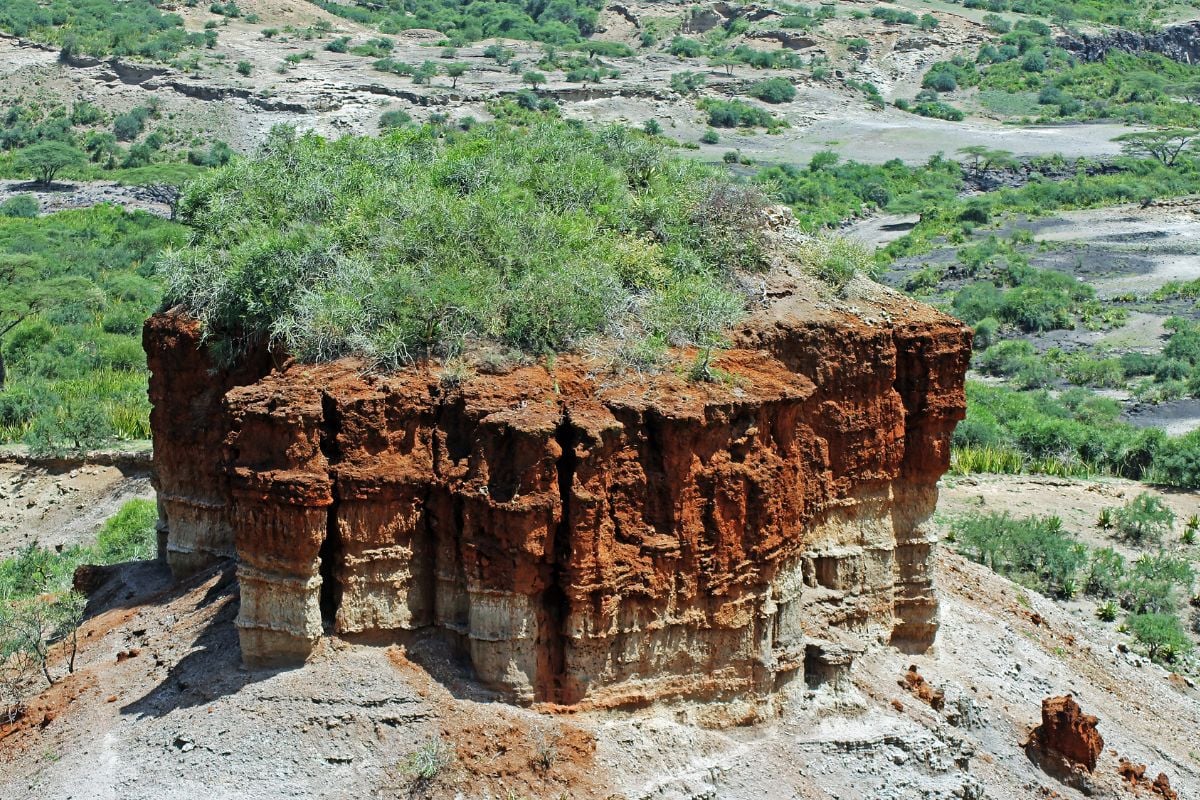
7. Olduvai Gorge holds human fossils millions of years old
A particularly fascinating fact about Tanzania is that ancient human remains were found in Olduvai Gorge, where one of the most scenic lakes in the country lies. Millions of years old, these early humanoid bones show that the first humans existed. The discoveries included the oldest human skull ever found.
8. Zanzibar was the hub of the Arab slave trade
For a long time, Arab and Indian traders, as well as the Portuguese and other Europeans, traded slaves in Zanzibar. Human beings were among the key goods sold here, and it is sad to say that slavery made up a large share of the trade on Zanzibar. The last active slave market in the world stood in the centre of Stone Town and today it is an important historical site on Zanzibar. Each year some 40–50,000 slaves were shipped to Zanzibar, and many were put to work on plantations in the region, which was ruled by the Omani at that time. The market closed in 1873 under pressure from the British.
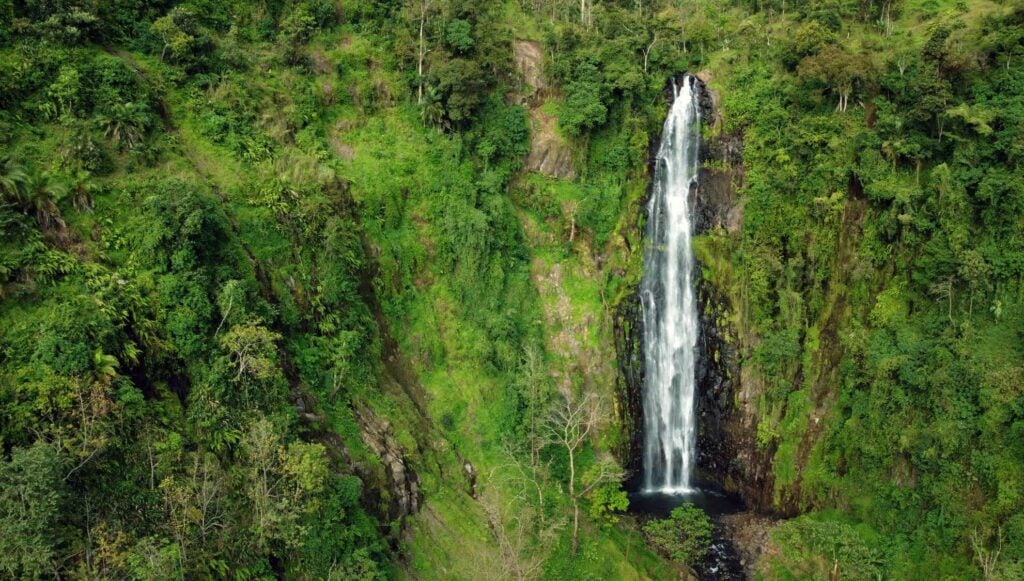
9. Some of Africa’s loveliest waterfalls are found here
With so many lakes and mountains in Tanzania, it is no surprise that the country has waterfalls too. Kalambo Falls, close to the border of Zambia and the Rukwa Region, is undoubtedly one of the most spectacular in Africa. Its water plunges 772 feet in one continuous drop, which makes it one of the tallest uninterrupted falls in Africa. It forms part of the Kalambo River on the border between Zambia and the Songwe Region. People have lived here for more than 200,000 years, so it is an important archaeological site as well. A visit to the Materuni Waterfalls is another great way to spend a day far from the rush of everyday life. On the hike to Materuni Waterfall, close to the Kilimanjaro Region, you get to see Tanzania’s natural beauty.
10. History’s shortest war was fought here
The Anglo-Zanzibar War was fought in Tanzania in 1896 and was over in under an hour – between 38 and 45 minutes, to be precise. The conflict started because the British did not want the late Sultan’s successor in power. Their preferred candidate was Hamud bin Muhammad, who was more favourable towards the British. They issued an ultimatum demanding a different successor. Because the new Sultan refused to cooperate, the British Navy fired 4,100 machine gun rounds, 1,000 rifle rounds and 500 shells at the palace. The chaos ended and the British got what they wanted.
Extra Facts
- Baobab trees can reach an age of 1,000 years. In Tarangire National Park you can see them alongside the tree-climbing lions. The oldest known baobab, in South Africa, is thought to be 6,000 years old.
- Tanzania was ruled by Germany until the close of World War 1, after which the British took control. In 1961 it stopped being part of the British Empire.
- No other African country has as many languages as Tanzania. More than 100 are spoken, although English and Swahili are the national languages.
- Both the highest and the lowest point in Africa lie in Tanzania. The summit of Mount Kilimanjaro is the highest, and the bed of Lake Tanganyika the lowest.
- Tanzania is the birthplace of Freddie Mercury. The Queen frontman was born on Zanzibar to Parsi-Indian parents and left for Middlesex, UK, in 1964 during the Zanzibar Revolution.
- More than 100 tribes live in Tanzania, each with its own tribal language and religion. They coexist in harmony, living side by side peacefully and respecting one another’s choices on culture and religion, including followers of Christianity and Islam.
Final Word
Tanzania has far more to offer than you might see at first glance. It is a truly fascinating country with a rich past, an interesting culture and beautiful scenery. These were only a few of the remarkable facts about this African country.