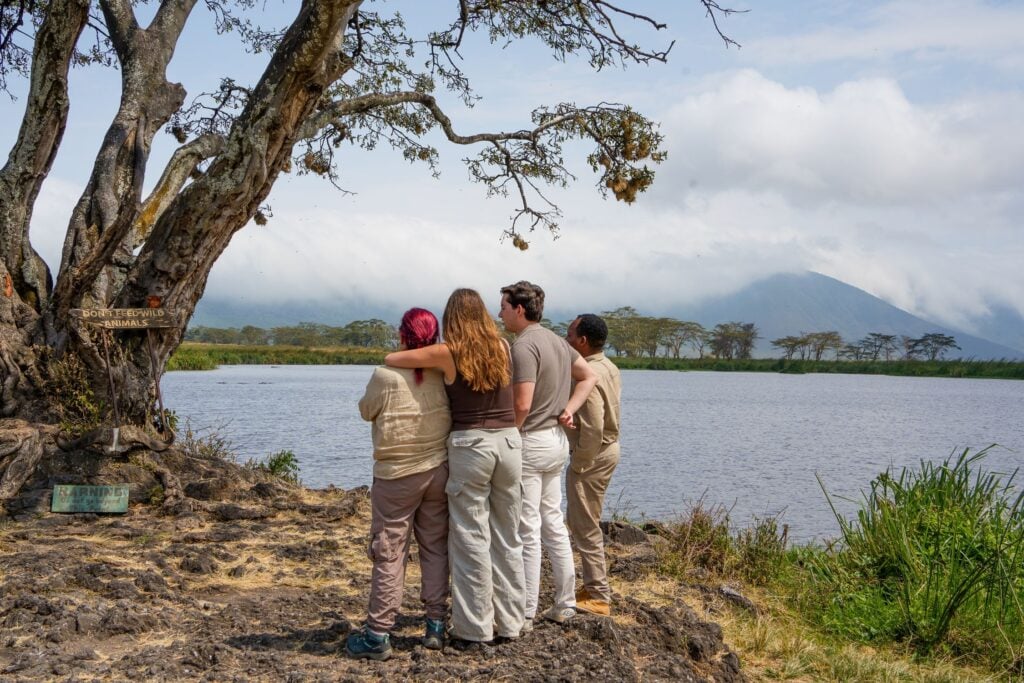
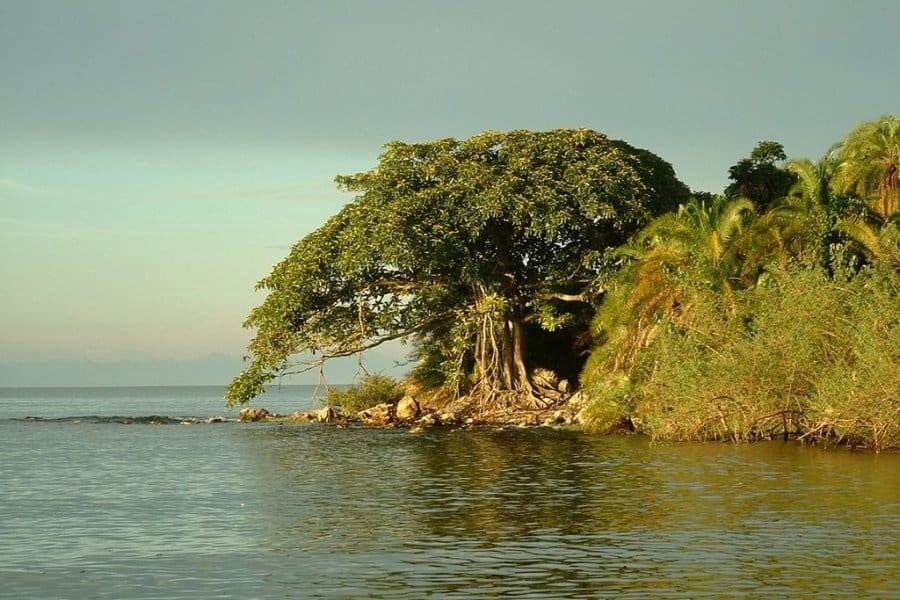
Covering 240 km², Rubondo Island national park is one of just two Tanzanian national parks set on an island in Lake Victoria, the second-largest lake on earth. You will find it in the lake's southwest corner. In 1965 Rubondo was made a game reserve so that animals would have a safe haven, and in 1977 Tanzania gazetted it as a national park. Nobody lives on the island, which is why 90% of it is still forest today. Rubondo also looks after nine smaller islands and with them some valuable fish breeding grounds.


Wildlife in Rubondo Island
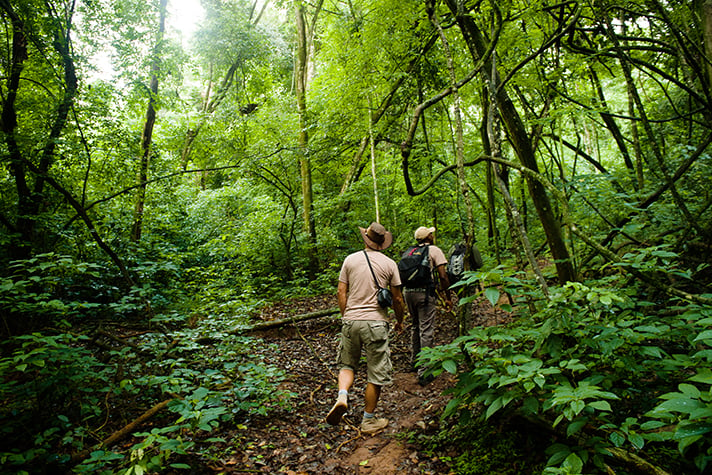
On Rubondo Island, many empty sandy beaches run straight up to the edge of the forest. This is where you will spot bushbucks slipping quietly and gracefully through a maze of tamarind, palm trees and sycamore figs. The water-loving sitatunga, with its shaggy coat and unmistakable webbed feet, is unusually easy to watch here. Tasty tilapia (Oreochromis niloticus) form the main diet of the yellow-spotted otters that hunt in the island's rocky bays, while the predatory Nile perch, which can weigh up to 100 kg, offers a tempting challenge to keen anglers in Rubondo Island national park.
The forest is home to wild jasmine and a great many colourful orchid species, and a mysterious blend of scents drifts out of it. Forest makes up 90% percent of the park, but there are open grasslands too, and papyrus groves along the lakeshore. Native animals such as hippos, crocodiles, vervet monkeys, genets, dikdiks and mongooses live side by side with the chimpanzees, black and white colobus monkeys, elephants and giraffes that were introduced later. Because the park is so remote, they can thrive undisturbed.
Rubondo National Park: a haven for bird watchers
Birds are everywhere on the island, which makes Rubondo National Park a well-kept secret among ornithologists. Over the years more than 400 species have been recorded. Flocks of African grey parrots, released on the island long ago, flit about excitedly and call in a range of tones. In the marshy areas along the shore, herons, storks and spoonbills nest in great numbers, and every year thousands of migratory birds from Eurasia arrive to join them.
Information and facts
Rubondo Island national park sits on an island in the middle of Lake Victoria, the world's second largest lake. No one lives there, and 90% of the island remains covered in forest. Native wildlife includes hippos, crocodiles and antelopes, alongside elephants and giraffes. Birds are present in every corner of the island too, which makes Rubondo Island national park a well-kept secret among ornithologists.
Most common animals
- black and white colobus monkeys
- elephants
- giraffes
- antelopes
- hippos
- crocodiles
- chimpanzee
- many bird species
- tilapia fish
Facts about Rubondo
- size of 240 km²
- located on an island in Lake Victoria
- became a game reserve in 1965
- national park since 1977
Rubondo Highlights
- uninhabited
- 90% of the island is forest
- includes nine smaller islands
- precious fish breeding grounds
- more than 400 bird species