
19 August 2022
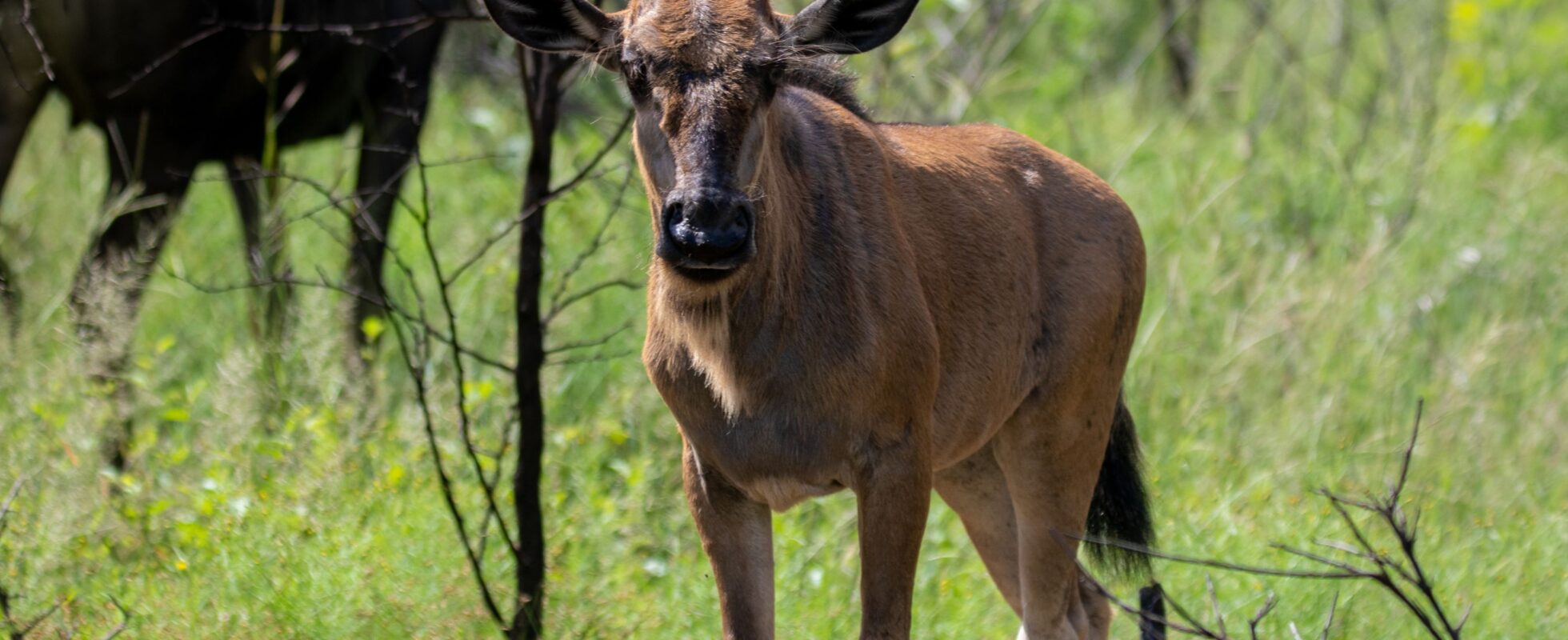
Seeing where young wildebeest calves come into the world, and following the long journey the wildebeest must make, can be fascinating. These are rare sights you can witness during the Great Wildebeest Migration through Tanzania and on into Kenya.
So where do the 1.5 million wildebeest come from, and how many calves are born along the way? Keep reading to learn more about this remarkable event, known as the wildebeest calving season, and about the other animals that take part in it.
Where Does The Calving Season Begin?
Our starting point is the southern plains of the Serengeti, where red oat and water grass grow in abundance after the short rains of November, and the plain is now full.
From this point, huge waves of wildebeest can be expected to move across the eastern side of the Serengeti.
Moving clockwise, the herd heads into neighbouring areas such as lake Masek and the Ngorongoro conservation area, and after the calves are born it travels north into Kenya’s Masai Mara.
In this season the area is packed, because the soil and grass are rich in calcium, phosphorus and potassium, which gives the calves the richest milk, and because the short grass leaves predators nowhere to hide for a surprise attack.
On their way north they head west to the Grumeti river, since it is low, and an adult wildebeest drinks 3 gallons (ca. 14 litres) of water every day.
One major danger at this stage is the pools full of crocodiles that they must get past before crossing the Mara river in Kenya.
That danger is the price of grazing on plentiful land. In this period you’ll see them grazing non-stop on long, stocky grass, because they need to keep their weight up for such a demanding season.
How Does The Process Work?
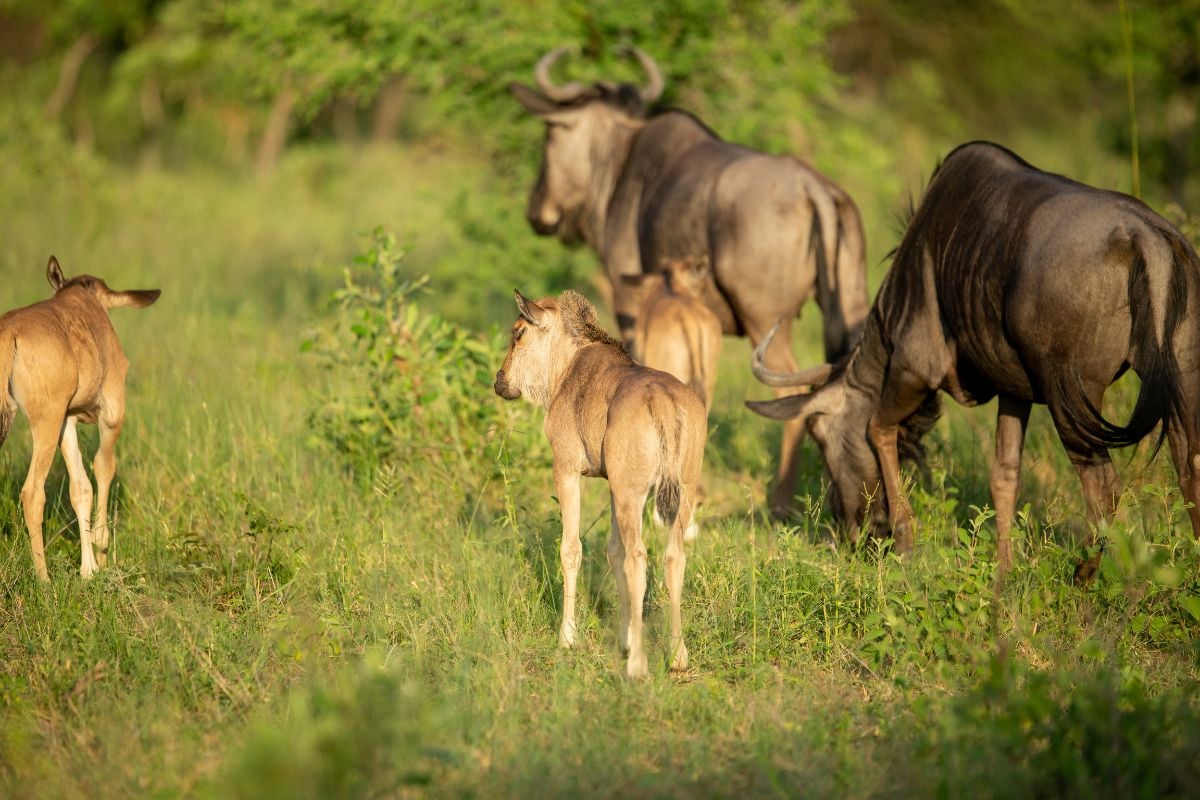
With the wildebeest herds sharing the same area in January, the pregnant females give birth, and this goes on into March, when up to 8,000 calves are born every day.
The calves are generally born in the centre of the herd, which protects the mothers and their young from predators, usually hyenas, cheetahs or lions.
Up to 500,000 calves are born over these months, so the herd is about to grow a great deal.
The result is more than a million wildebeest, a sight described as one of the seven wonders of the natural world.
Remarkably, the calves can walk within minutes of birth and run at full speed within an hour, and this is what makes their migration possible.
Does the calving season carry any risks?
Sadly, the young calves can struggle to keep pace with the older animals during the migration and fall behind, giving predators a chance to strike.
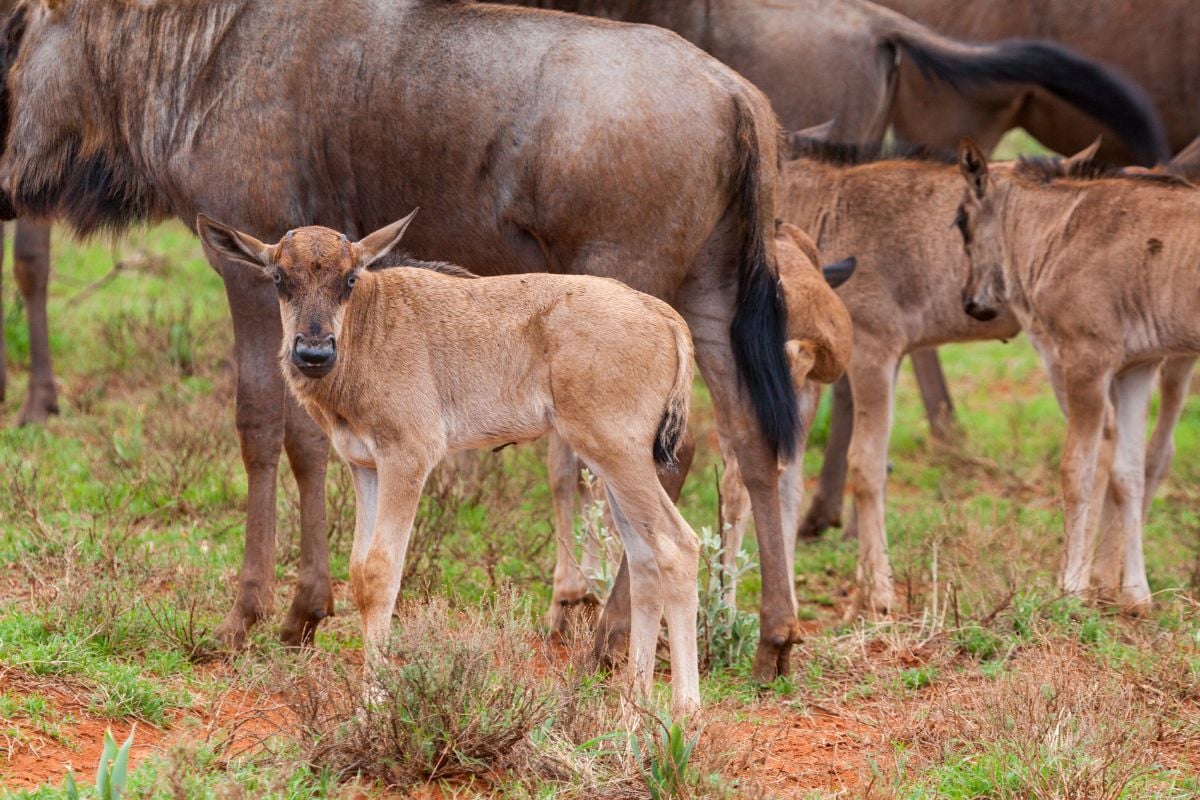
Often close to 250,000 wildebeests die during the migration, from causes such as thirst, starvation and weakness, while climate change can also threaten their survival in this season.
This may mean heavier rainfall and droughts, which affect the rivers and how much grass is available for grazing, and that matters because wildebeests are vital to the sustainable renewal of the ecosystem.
Will I See Other Animals In The Mix?
All year long, the wildebeests have been joined by tens of thousands of gazelles and zebras.
This stage is no different: they take the chance to give birth to their own young, since being surrounded by so many wildebeests gives them good protection.
On the return migration to the northern Serengeti and during the river crossings, there can be up to 200,000 zebras and 500,000 gazelles.
That adds up to more than 2 million animals in one concentration, and there are even more once you count the 7,500 hyenas, 4,000 lions and as many as 600 cheetahs.
When is the best time to see the wildebeest calving season?
To see the calving season, it is best to plan a safari for some time between late December and March; February is the peak of the season, and many tented camps are set up along the migration route.
As you may already know, the great wildebeest migration continues all year, so you can also watch this amazing spectacle in the central and northern Serengeti at other times.
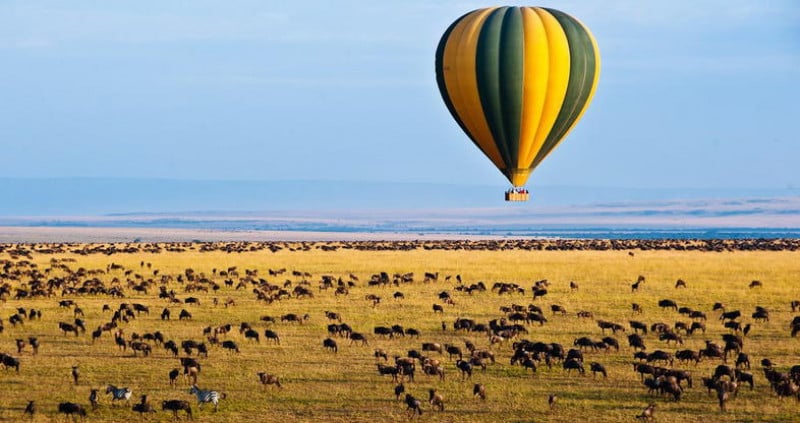
For the famous river crossing, plan your visit in July and August. Our tip: a hot air balloon safari is one of the best ways to take in the full scale of it all, though walking and driving tours can be every bit as exciting.
You now know how this season unfolds, so you can get ready for a safari tour that nature lovers really enjoy. Our travel consultants are happy to help you with the next steps!