
3 February 2023
Visitors will already know many of the Serengeti antelopes from books, television or films.
Yet there are also plenty of antelope that are less famous or familiar, even though they matter just as much to the ecology of the landscape.
As part of our safari guide to Tanzania, we look at the antelopes of the Serengeti and list all the wonderful animals you should not miss when you visit this beautiful part of Africa.
Types Of Antelopes In Serengeti
Covering more than 14,750 square kilometers, the Serengeti National Park is home to 300 species of mammal. The park is best known for its large herds of plains animals.
They include the various types of antelope that live in different parts of the Serengeti.
This part of Africa has a wide variety of wonderful antelope, sixteen types altogether, ranging from the large wildebeest and eland to the tiny dik-dik and klipspringer.
Some of them are remarkably pretty, while others are simply tough. Even so, this incredible variety of antelope all share the same area, admittedly a fairly large one.
Let’s have a closer look at these incredible Serengeti antelopes.
Wildebeest
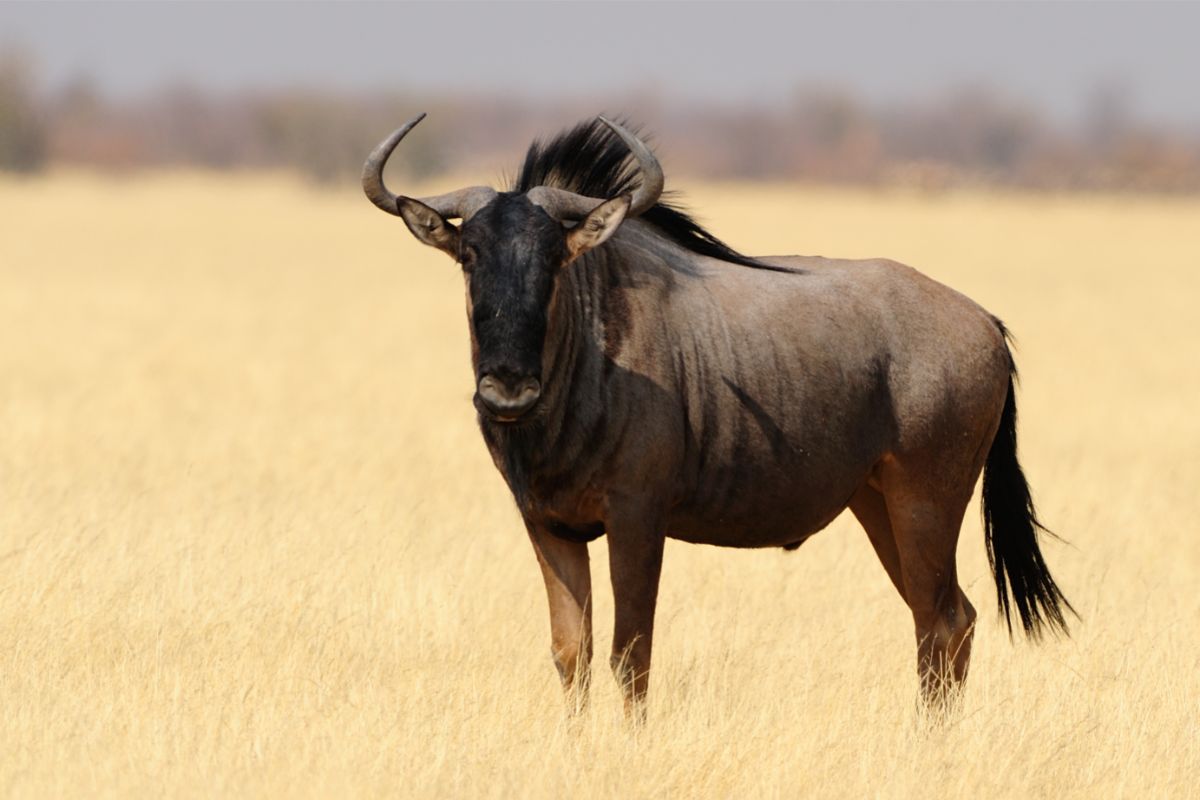
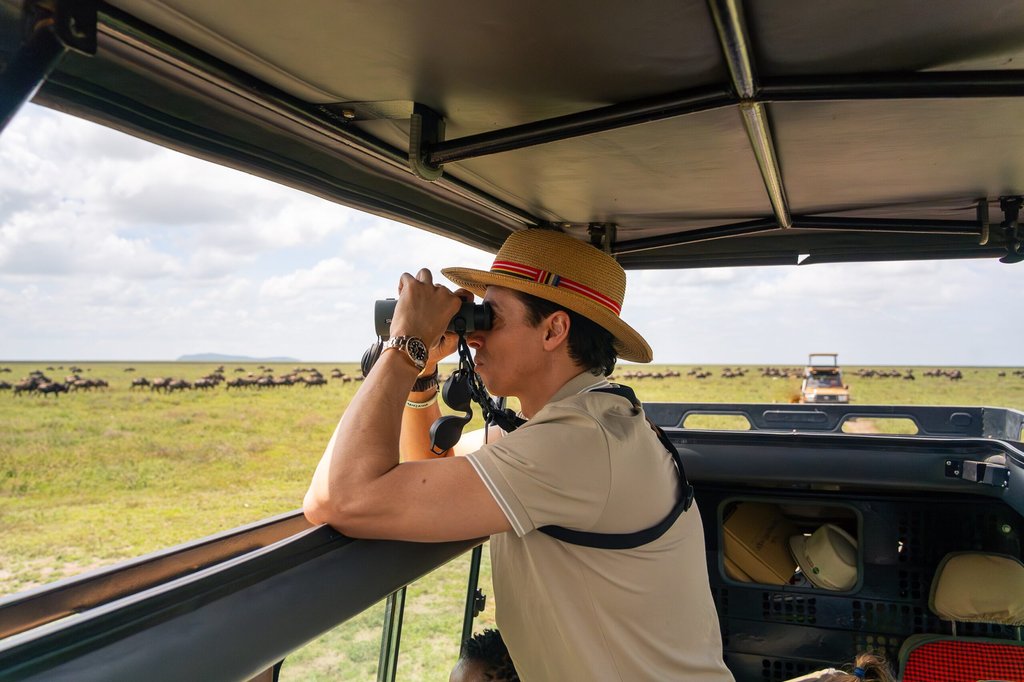
Of all the antelope on the Serengeti, the wildebeest is probably the best known. It ranks among the largest antelope and is also called the gnu, blue wildebeest or brindled gnu.
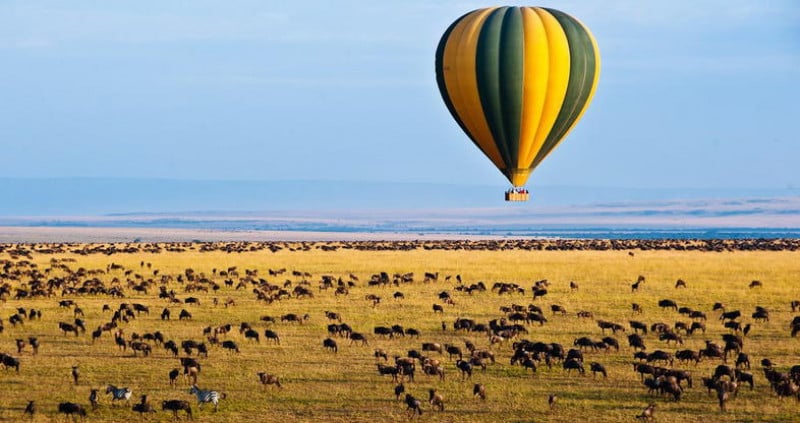
They are best known for the huge numbers that join the Great Migration, when millions of large animals travel in a wide circular route in search of food and water.
Although wildebeest make up a large share of this migration, they are not the only animals taking part.
These large antelope are herbivores, which means they feed on plants such as grass and leaves.
Their head is long and rectangular, and a mane runs down the ridge of their back.
Male and female wildebeest both have long, curved horns, although the males are usually larger and have a slightly darker coat.
Colour differs by subspecies, from slate gray to dark brown.
Eland
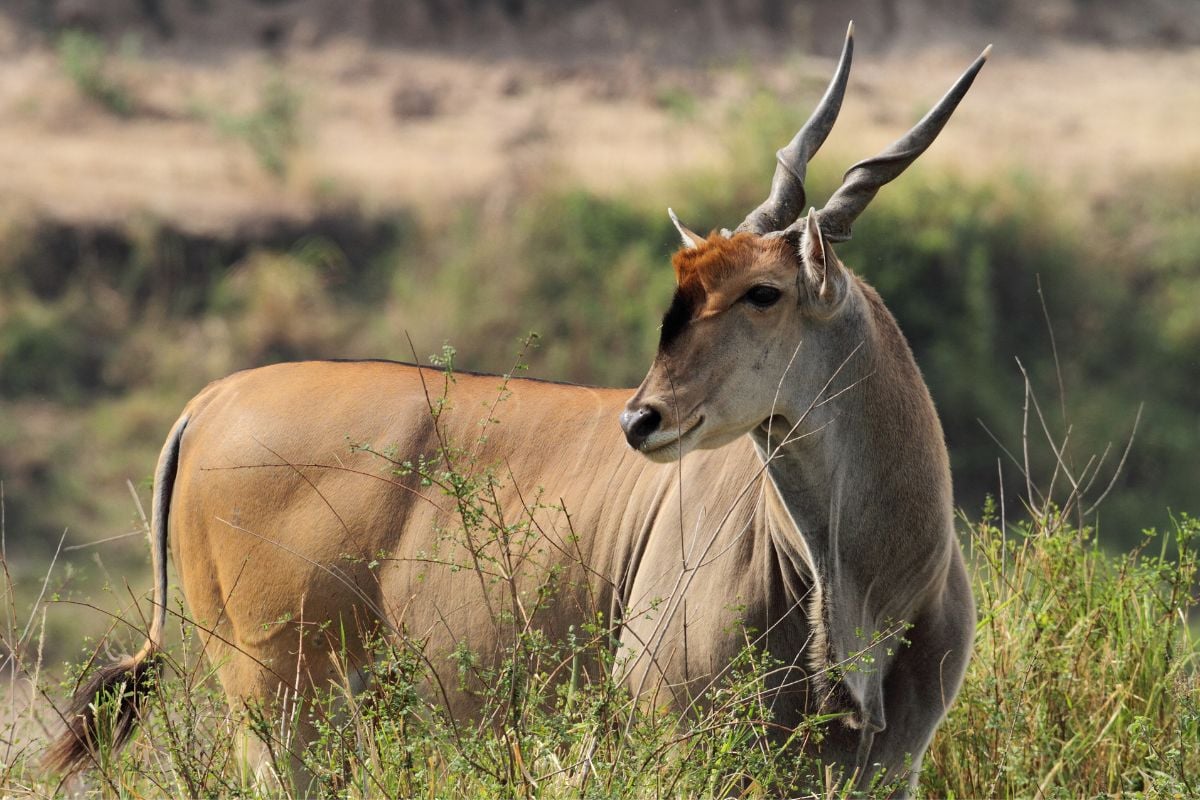
Eland are very large antelope, weighing up to 2,000 pounds and standing around 4.9 feet at the shoulder. The males are usually larger than the females.
Their spiral horns are among the most recognisable features of the eland.
A prominent black stripe also runs down the middle of their back, and they have dewlaps beneath the neck, which help them regulate their temperature in dry climates.
Eland are described as ‘track on track’ walkers.
In other words, the rear foot lands exactly where the front foot touched down, so they make as little noise as possible when moving through the bush.
They can leap more than three meters high and are able to survive in desert, mountain or bush habitats. In the dry season you will find eland in the northern woodlands of the Serengeti.
During the wet season they are more likely to be in the southern or eastern plains of the park.
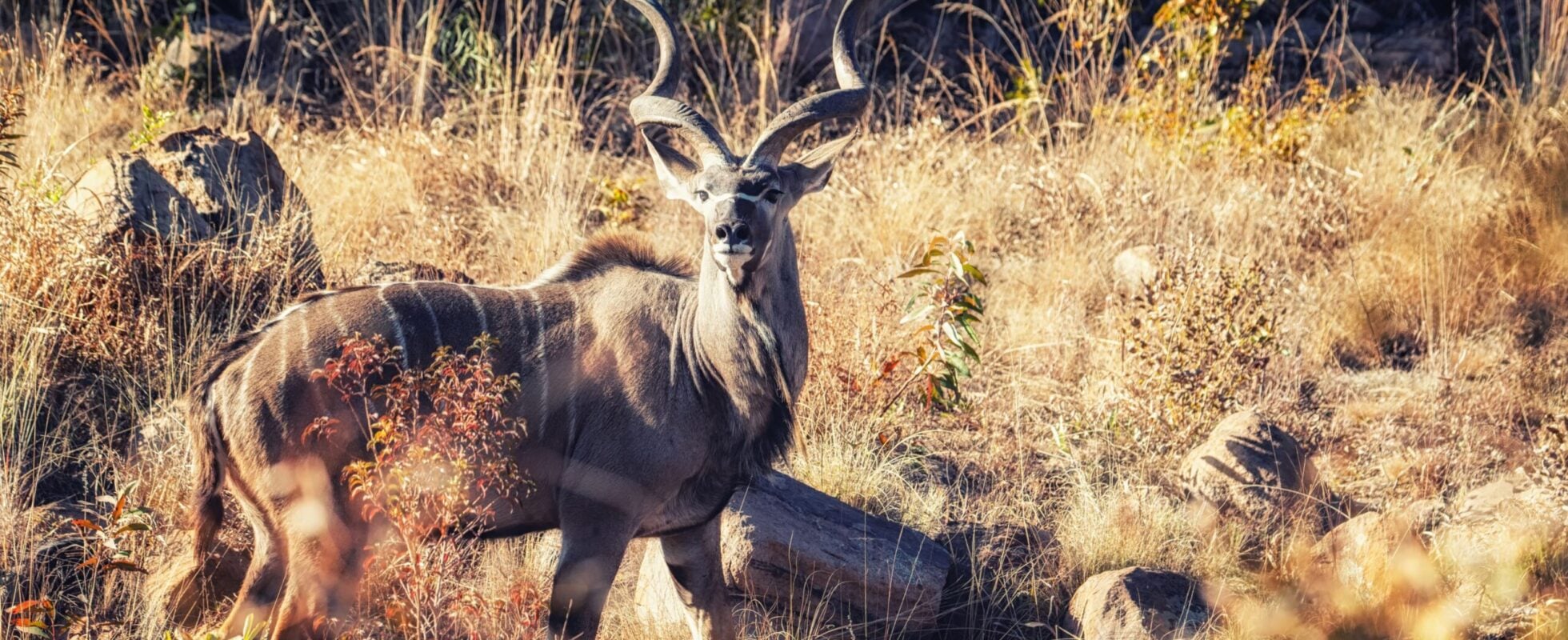
Lesser Kudu
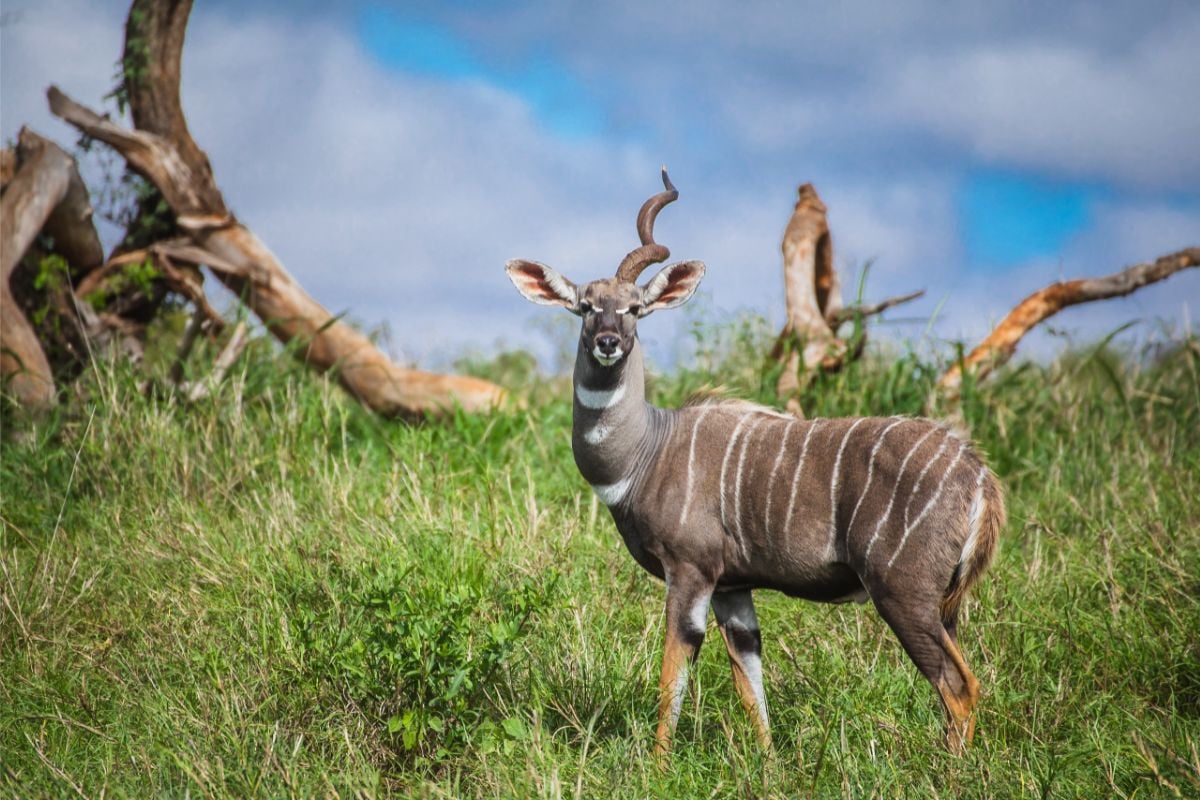
This Serengeti antelope is a striking animal and fairly easy to recognise. Spotting one can be tricky, though, because they are very shy and spend most of their time in dense vegetation.
The males have spiral horns and are usually bigger than the females.
Thin white stripes run across their bodies and down their backs, with two broader white stripes on the throat and neck. The males’ coat is dark brown, while the females are a more reddish brown.
The lesser kudu spends most of its time in the forests of the southwestern Serengeti.
Because they are hard to see, you are more likely to catch a flash of white from beneath their tail as they move away from you.
You can tell the lesser kudu apart from the greater kudu by the orange tinge on its legs and horns.
Bohor Reedbuck
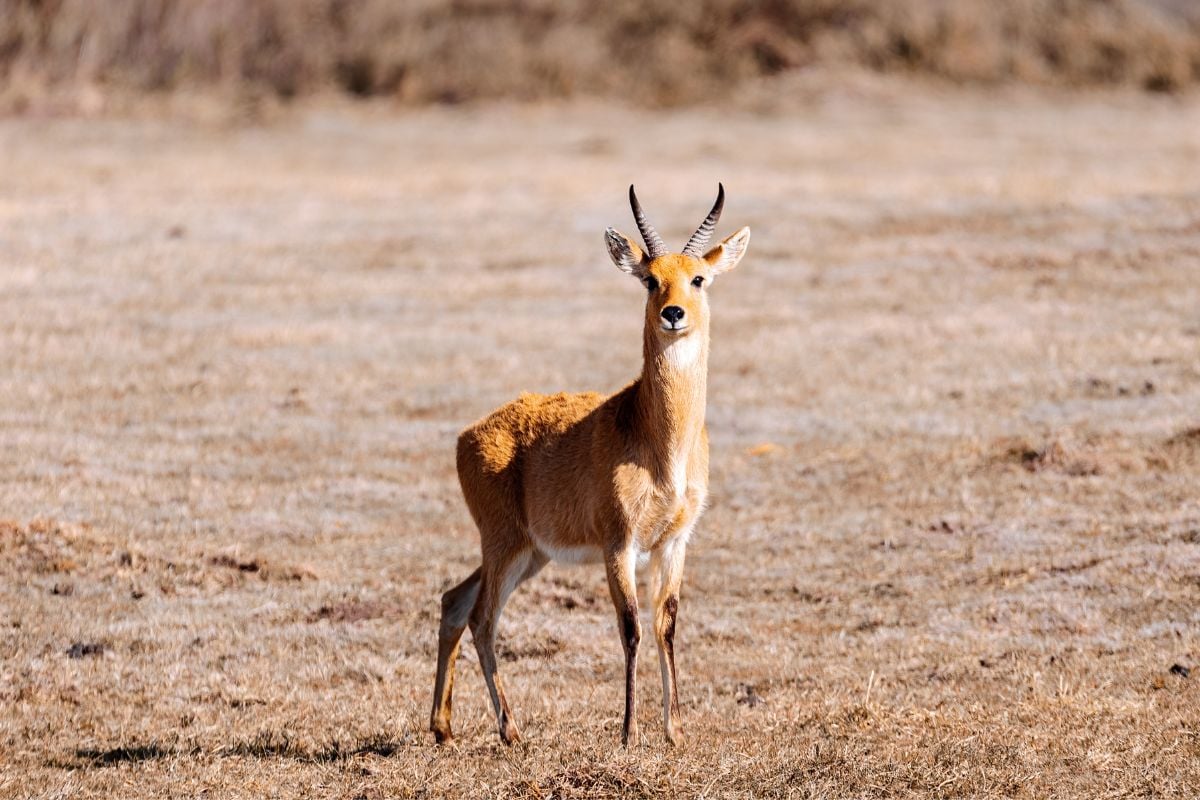
In the Serengeti, Bohor reedbuck are often seen near water, usually hidden in the tall grass. They are medium-sized antelope with long legs.
Rams are more solidly built than females and have thicker necks. They also carry small horns that point forwards, whereas females have none.
Their coat ranges from yellow to grayish brown with white undersides, and there is a dark stripe on the front of each foreleg.
Males weigh between 100-133 lbs, while the smaller females weigh 77-100 lbs.
Bohor reedbuck live in pairs or small groups and are mostly nocturnal, preferring to graze after dark.
After a gestation of more than 7 months, the female gives birth to a single calf.
For the first two to three months the young stay hidden, emerging only to nurse for 10-30 minutes at a time.
East African Oryx
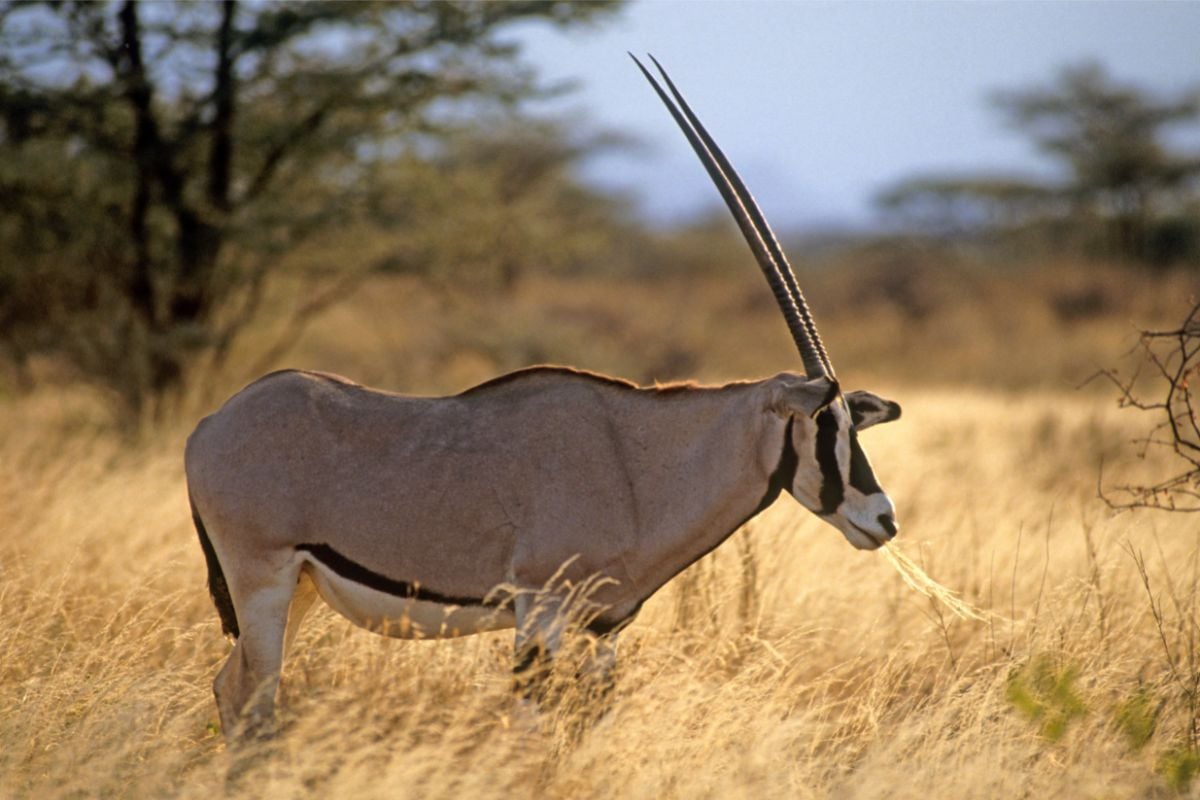
The East African oryx, also called beisa, is a threatened species in the Serengeti, and its numbers are falling.
They have been hunted illegally by people who believe that their blood and meat can cure illness or give exceptional strength.
In the Serengeti, the subspecies you will find is the fringe-eared oryx.
This Serengeti antelope is very distinctive: fawn in colour, with black bands and white stripes on its face. A black line marks the point on its body where the fawn colouring changes to a white belly.
Males and females look much alike, and both have long, straight horns with a ringed appearance.
They are territorial animals and rely on their speed to defend themselves against predators.
Grant’s Gazelle
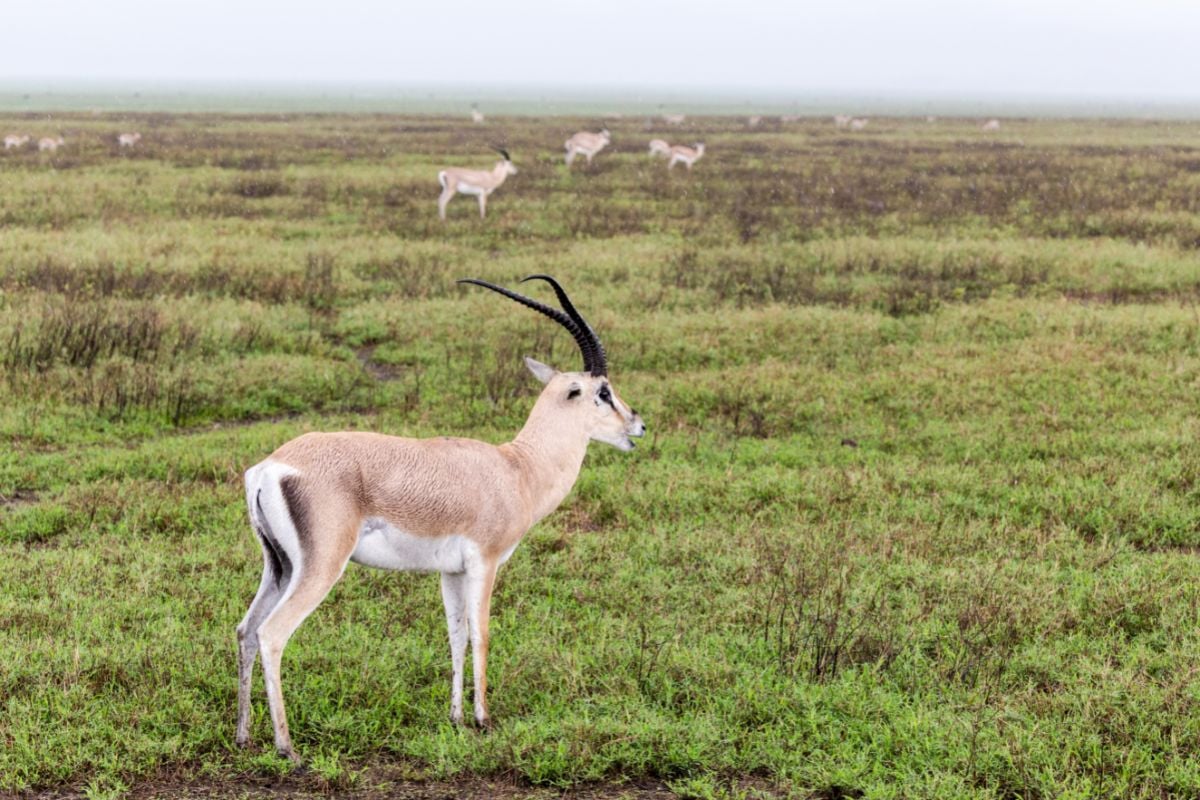
This lovely antelope is often mistaken for the better-known Thomson’s gazelle.
The Grant’s gazelle, however, is bigger and lacks the black stripe along its side. It also has a white patch on the tail that runs up its back.
These Serengeti antelope live in large herds and join the Great Migration every year. They can manage for long periods without water.
They can do this because they are able to let their body temperature rise, so they sweat less in the heat and save water.
Male Grant’s gazelles weigh 121-176 lbs and females 77-100 lbs.
Males and females both carry lyre-shaped horns with a ringed appearance, measuring 18-30 inches in length.
After a gestation of 7 months, the female gives birth to one calf. She keeps the calf hidden in the long grass and goes off to graze, coming back several times a day to feed the young gazelle.
Thomson’s Gazelle
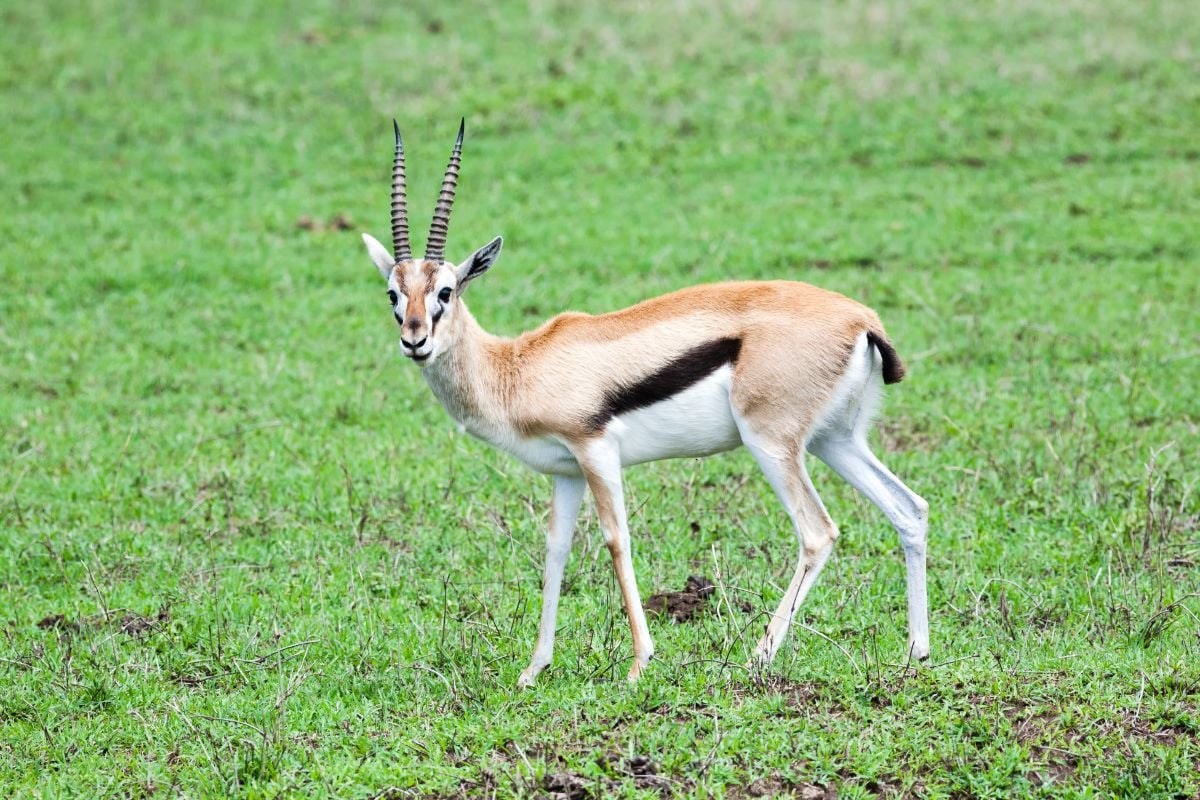
The Thomson’s gazelle is one of the better-known antelopes of the Serengeti.
It is smaller than its relative, the Grant’s gazelle, and a distinctive stripe along the side of its belly helps to tell the two apart.
Thomson’s gazelles come in two subspecies: the eastern and the Serengeti Thomson’s gazelle.
The type found in the Serengeti has a whiter face than the eastern gazelle, plus a black stripe running from the inner corner of the eye to the mouth.
Around 500,000 gazelles are estimated to live in the Serengeti, a mix of Thomson’s and Grant’s gazelles.
That makes them the second most numerous antelope in the park, after the wildebeest.
The horns of female Thomson’s gazelles are shorter than those of the males.
After a gestation of 6 months they give birth to a single calf. During calving season, young Thomson’s gazelles are often taken by predators.
Waterbuck
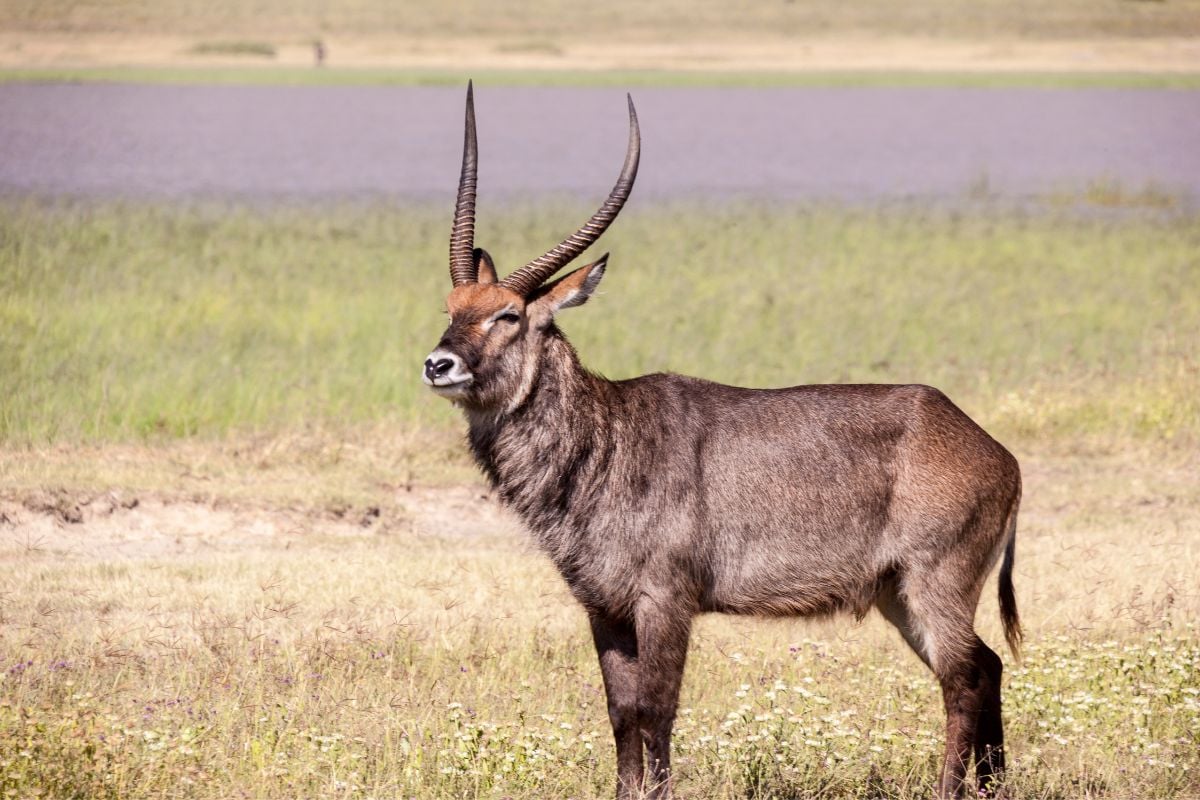
As the name suggests, the waterbuck usually stays near water, and it needs plenty of grass to eat.
That is why it lives only in quite specific parts of the Serengeti, such as the woodlands in the centre of the park.
These Serengeti antelopes are fairly easy to recognise, thanks to the long, shaggy hair on their neck and the white ring on their rump.
An oily coating makes their coat water-repellent, and the males’ long, sweeping horns are lightly ringed, reaching up to 40 inches in length.
Large predators rarely hunt waterbuck, possibly because of their thick coat. This may be why usually only very hungry lions attack them.
Male waterbuck are generally about 25% bigger than the females.
Breeding can take place at any time of year, and many young die because of predators such as big cats.
Hartebeest
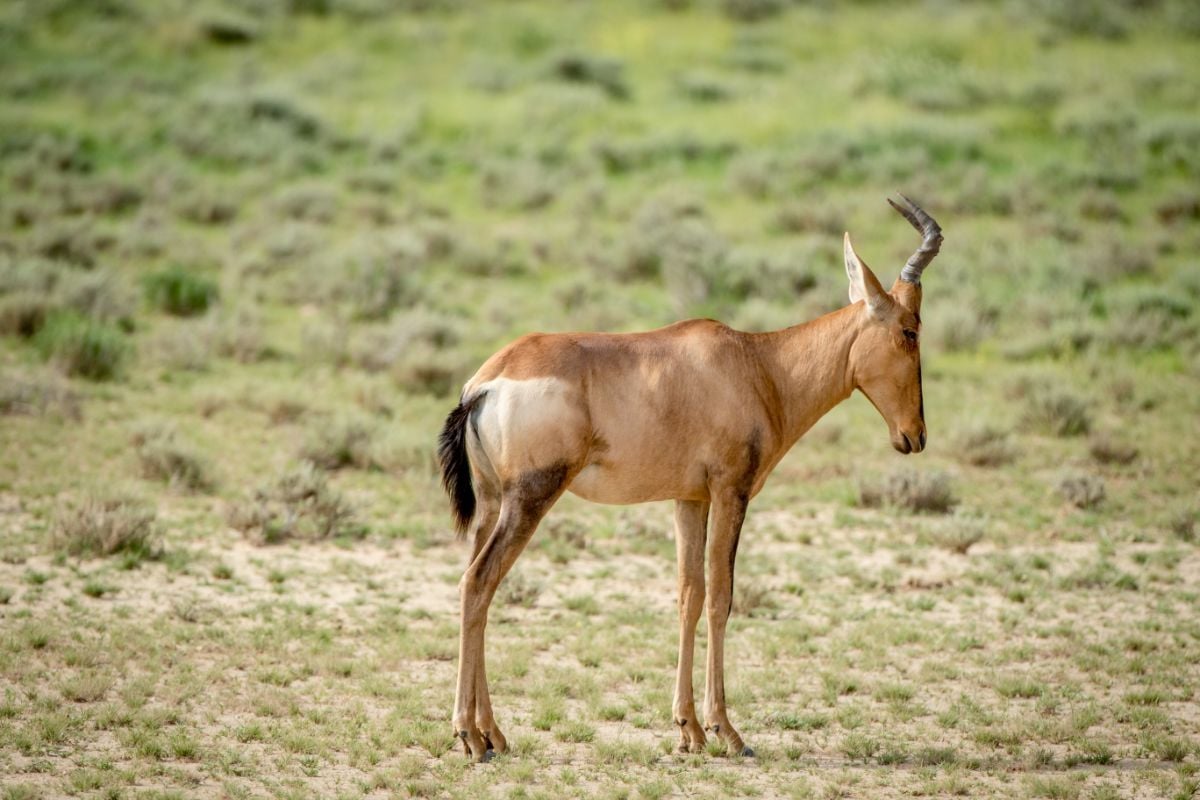
Hartebeests are also called kongoni or kaama.
Although it is large and looks rather awkward, the hartebeest is among the fastest antelope and can reach 43 miles an hour. For such a big mammal it is also surprisingly elegant.
These Serengeti antelope are easy to recognise by their long faces and sharply sloping backs.
Their horns also sweep out widely, unlike the parallel horns that are more common in other antelope.
The name in fact means ‘tough ox’, and they are certainly hardy.
Hartebeests are not fussy and will eat whatever they can find. Females, however, only give birth when food is available.
Hartebeest measure around 3-5 feet at the shoulder and weigh 165-440 pounds. They live in organised herds that can number more than 300 animals.
Klipspringer
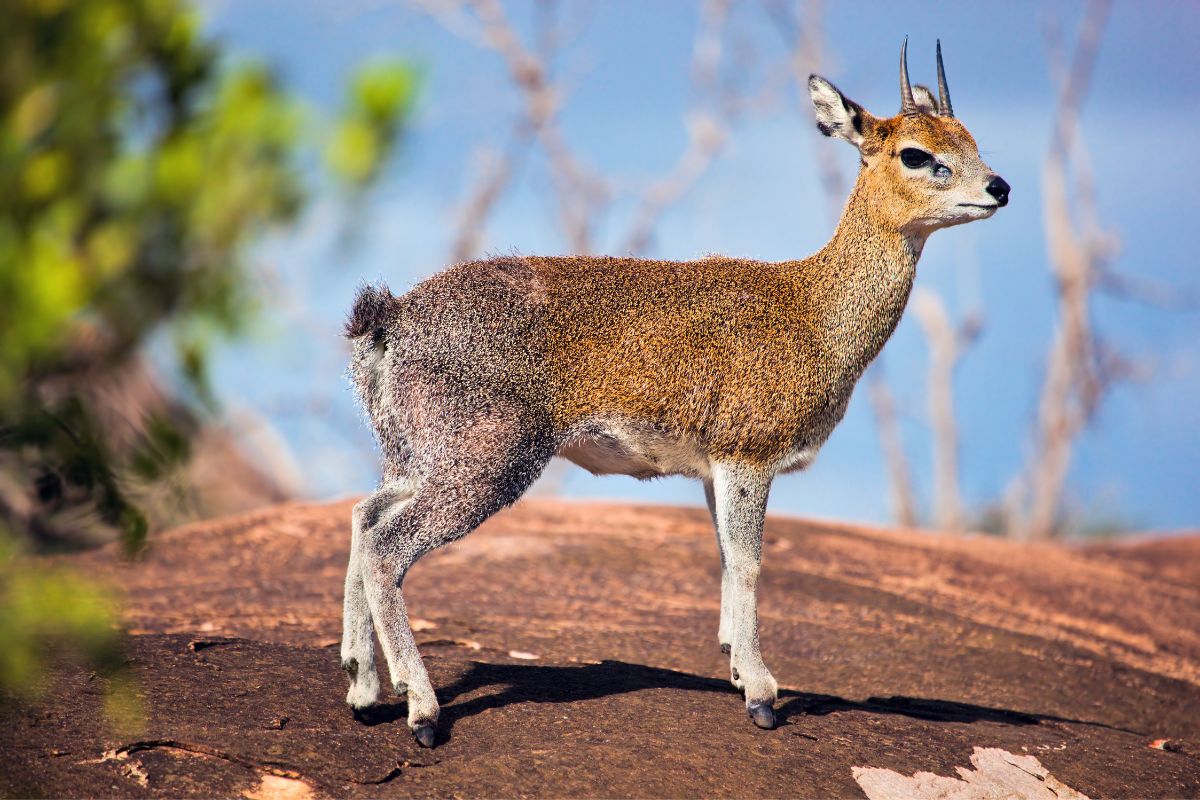
These small antelope are adorable, and most people will be charmed by both their behaviour and their cute looks.
They may look fragile, but these are hardy animals that live in the mountainous parts of the Serengeti, often in extreme temperatures.
Klipspringers feed on a wide range of grasses and plants, which provide most of the water they need.
Like other dwarf antelope, such as the dik-dik, they live in monogamous pairs and defend their territory together.
The males are especially watchful and keep guard for long periods to protect the pair’s territory and young, leaving the female to look after the single calf.
Young klipspringers stay hidden from predators such as eagles for 2-3 months and leave their parents when they are a year old.
Bushbuck
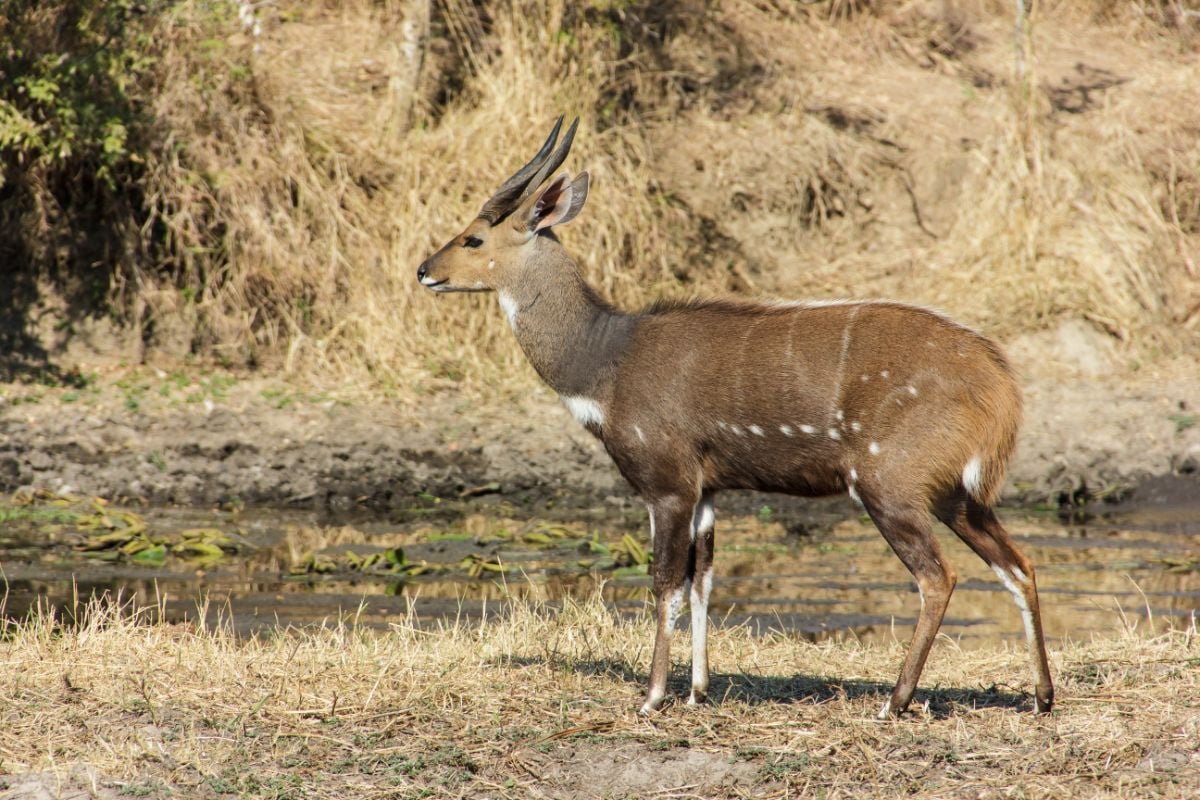
The bushbuck is a shy, elusive Serengeti antelope that spends most of its time in dense vegetation.
It does, however, have white patches on its ears, legs, tail, chin and neck, the parts of its body that move the most. With a bit of luck, you may get a glimpse of one.
The males carry large spiral horns measuring 10-20 inches. They are not territorial and live very solitary lives.
Females have no horns, and their pelage, or fur, is quite different too. The male’s coat is dark gray, whereas the female’s is reddish brown with more white spots across the body.
The greatest threat to the bushbuck is habitat loss, as people move into the areas where it lives with roads, farming and settlements.
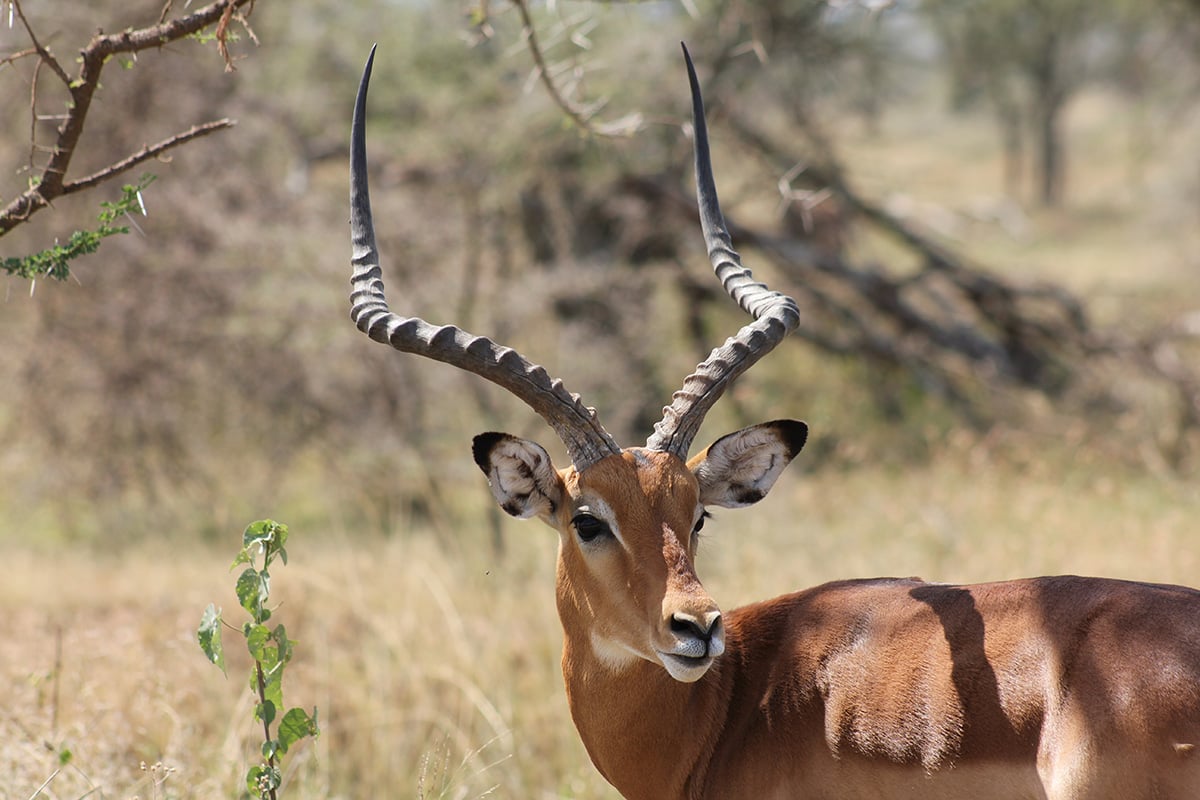
Impala
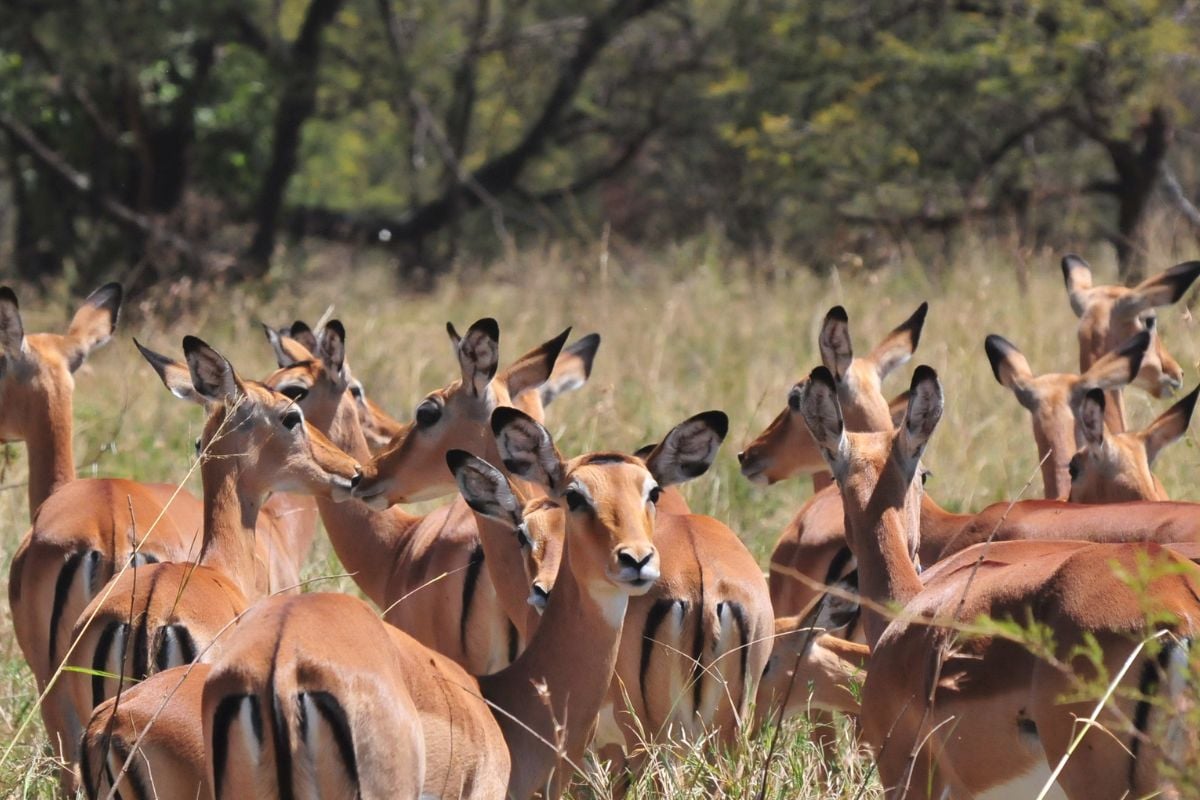
The impala is another familiar antelope of the Serengeti, and one of the most plentiful.
Medium-sized and very graceful, they have an easily recognised face with a white spot above the eyes. A black stripe also runs down the centre of their tail.
The males have lyre-shaped horns with a distinctive ringed look, while the females have none. Impala are very fast runners and nimble jumpers, and they use both skills to escape predators.
On average they stand 28-36 inches at the shoulder and weigh 88-165 pounds. They travel in breeding herds, with a territorial male keeping the females together.
The female gives birth to a single calf, which stays hidden for only a couple of days before joining a creche of other young impala.
Oribi
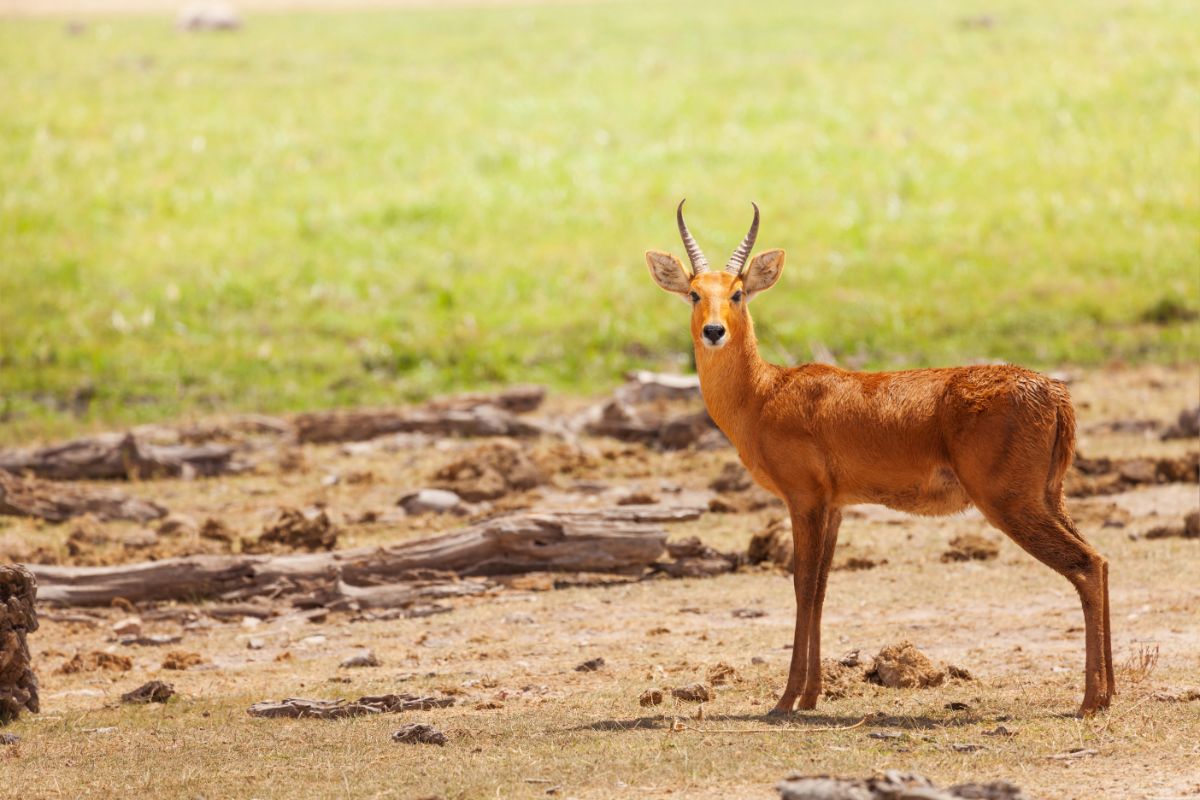
The oribi lives in the northern parts of the Serengeti. It is a small, slender antelope with reddish brown fur, or pelage, and a white underside.
The dark spot, or sweat gland, below its ears makes it easy to identify.
Male oribis carry small, sharp horns that are perfectly straight, while the females have none. They are in fact a kind of dwarf antelope, and with their long neck and long legs they look almost like a gazelle.
They live in pairs or small herds, but they are the least widely distributed antelope in the Serengeti, so you can count yourself lucky if you see some.
The females are a little larger than the males, standing 20-30 inches tall. They weigh about 31 pounds on average.
Steenbok
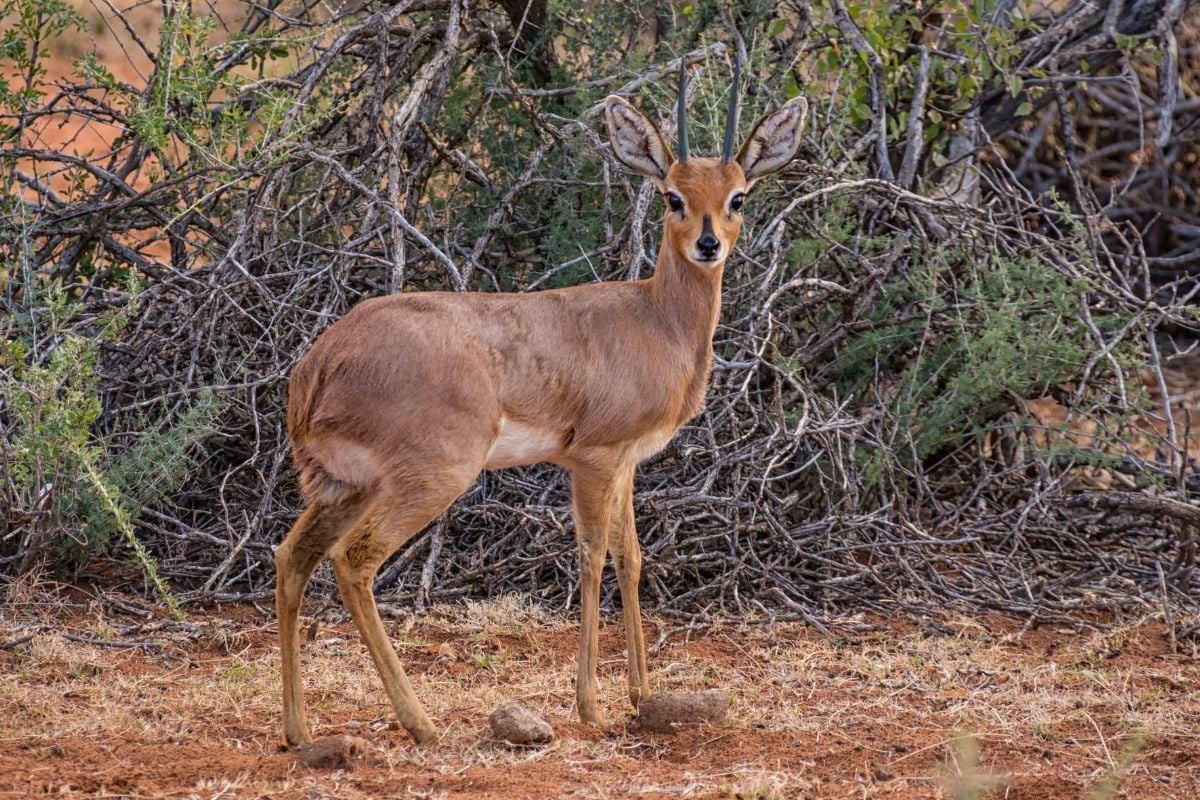
The steenbok is another small antelope, found in the woodlands of the southwestern Serengeti and in parts of the north.
With their large eyes and ears, they are a very pretty antelope.
Their fawn coat has an orange tinge, and a distinctive black patch shaped like a teardrop sits above the nose.
Steenboks eat young plants, foliage and leaves, and they can roam a long way from water.
If a predator threatens them, steenboks run in a zig-zag to confuse or shake off whatever is chasing them. In the hottest part of the day they usually stay in the shade.
Male steenbok carry a pair of menacingly sharp horns. Females have none, but they are bigger than the males.
Dik-Dik
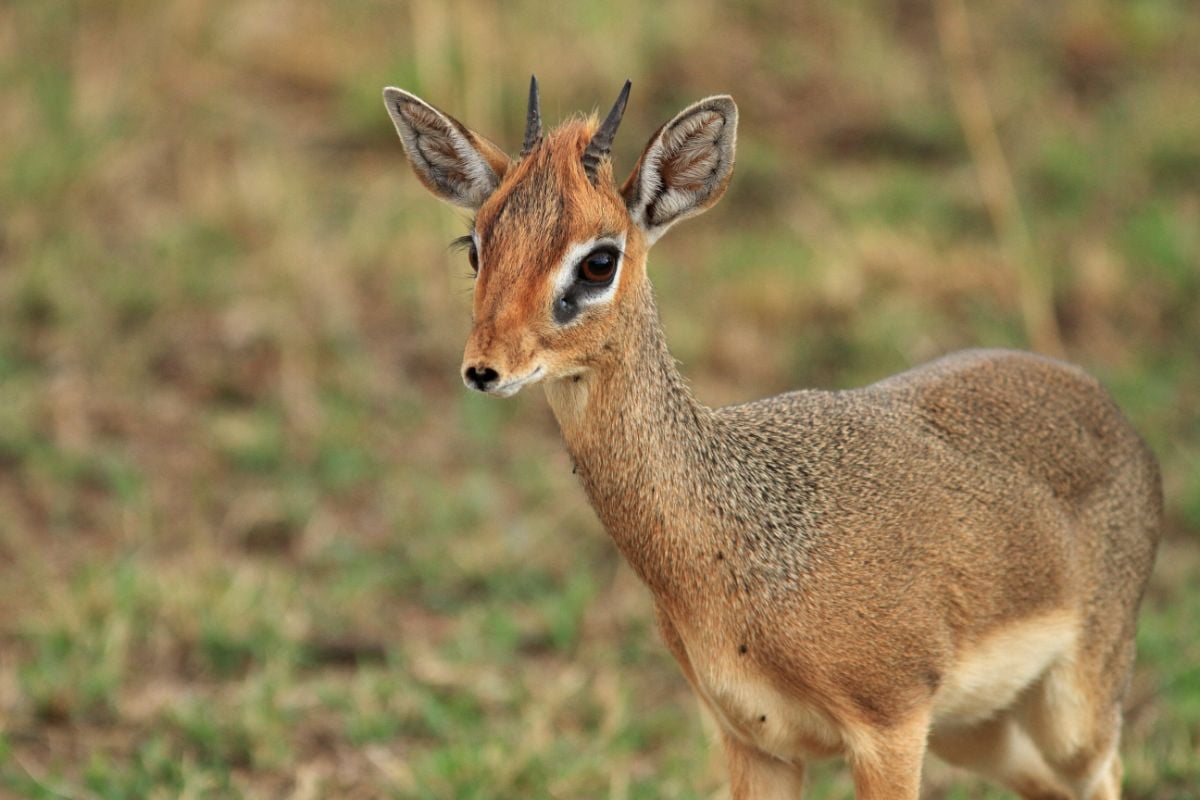
These delicate little antelope are very cute and occur throughout the Serengeti. They usually stay in dense vegetation, where their small size can make them hard to spot.
Standing just 12-16 inches high, they are in fact the smallest antelope in the Serengeti.
Dik-dik tend to stay in one place, but they can run at up to 26 miles per hour when they have to.
When a predator comes close, the female gives an alarm call that sounds like ‘dik-dik’, which is where their name comes from. Pairs stay together for life.
The males have small horns that are often hidden by the little tuft of hair on their head. Their large eyes are ringed with white fur, which makes them stand out.
Beneath each eye is a gland used for scent marking.
Topi
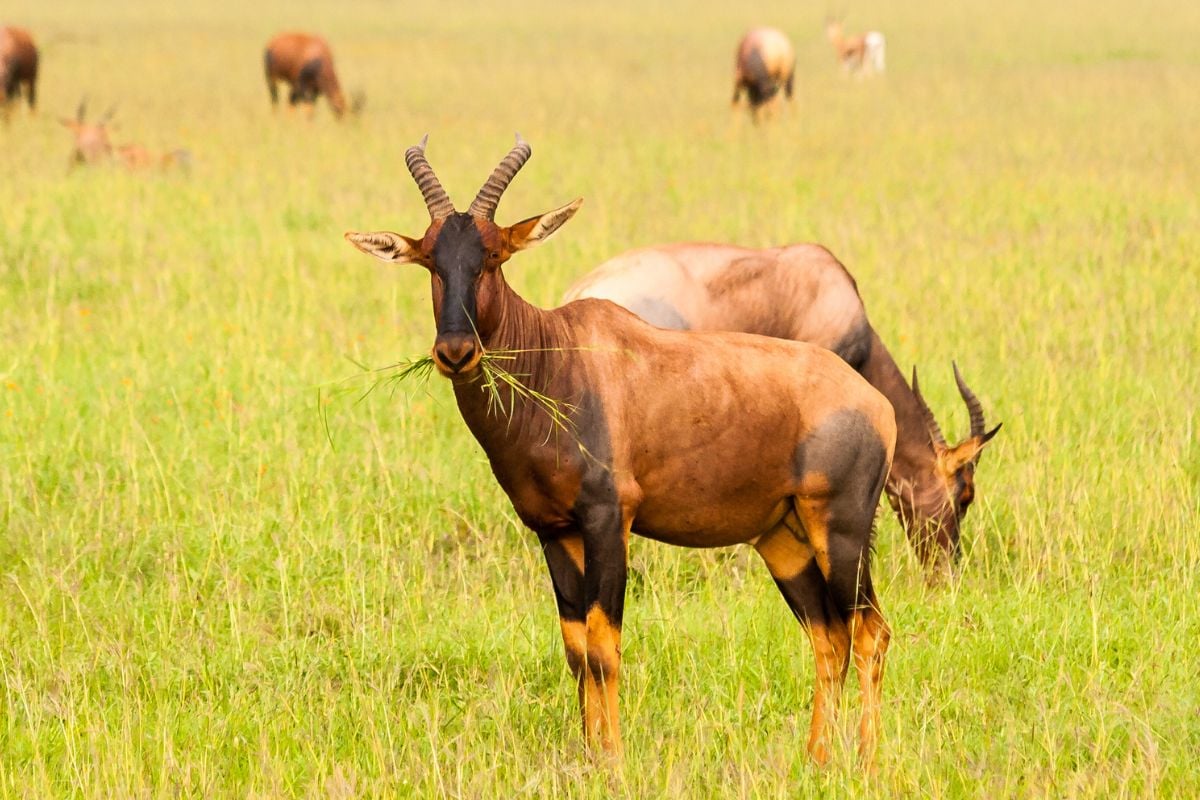
Topi look strikingly like the hartebeest, because the two belong to the same sub-family.
Both have short necks, long legs and long faces, although the topi is darker on the upper legs. The topi is medium-sized with a reddish brown coat.
These antelope are very sociable and gather in large numbers on the plains of the eastern Serengeti.
Males keep groups of females together, though their social structure is fairly flexible.
Their breeding is just as flexible. Calving usually happens once a year, but when food is abundant they will calve more than once. If a female senses danger, she can postpone giving birth.
Gerenuk
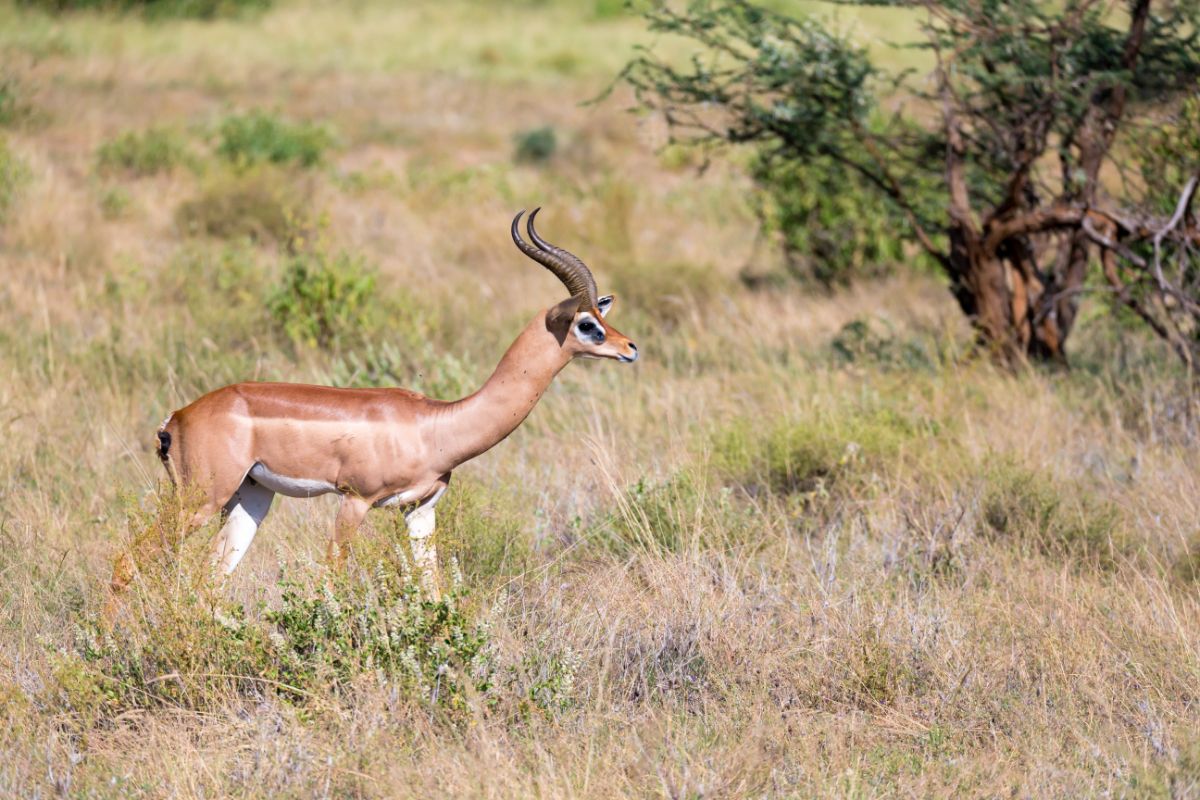
The gerenuk is a tall, elegant antelope that looks very much like a gazelle. Its neck and legs are long and slender, which explains why it is also known as the giraffe gazelle.
Its flat, wedge-shaped head and large, round eyes add to the beauty of this graceful Serengeti antelope.
Male gerenuk are about 35-41 inches tall, while the females are a little shorter at an average of 31-39 inches.
Males weigh anywhere from 68-115 pounds, and the smaller females average 62-99 pounds.
As for colouring, the gerenuk has a reddish brown back with paler flanks in fawn to buff. The inner legs and the belly are cream, and white fur surrounds the eyes and mouth.
Female gerenuk have a distinctive dark patch on top of the head, and the males carry lyre-shaped horns. The gerenuk is mostly active during the day, and you may see it sheltering from the midday sun or browsing on foliage.
Closing thoughts on the Serengeti antelope
We hope you have enjoyed this guide to the Serengeti’s antelopes, part of our safari guide to Tanzania.