
28 December 2023
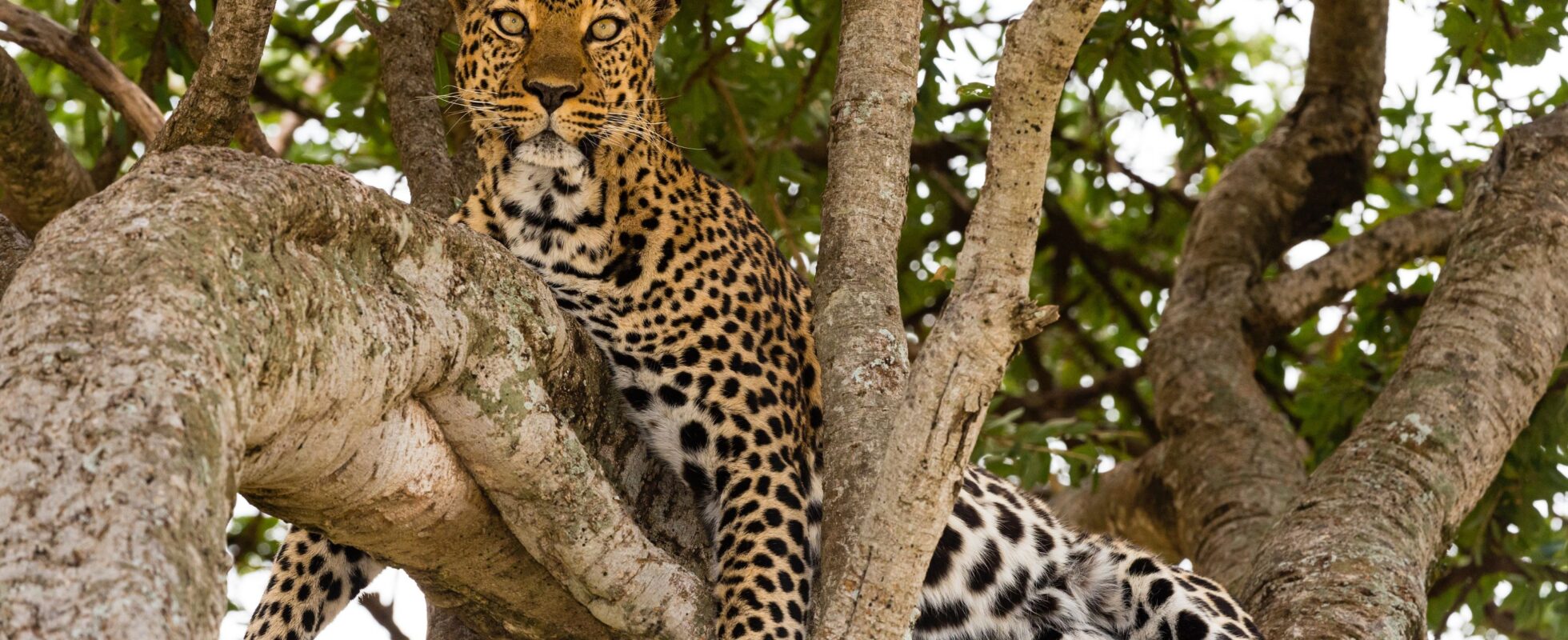
Tanzania is a lovely country with striking beaches, intriguing archaeological sites, culturally important ancient monuments, remarkable scenery and, naturally, superb safari experiences and wonderful wildlife.
Thanks to the sheer number of wildlife spectacles on offer, from herds of elephants and the annual wildebeest migrations to its many wildlife reserves, Tanzania ranks among the world's best-known safari destinations.
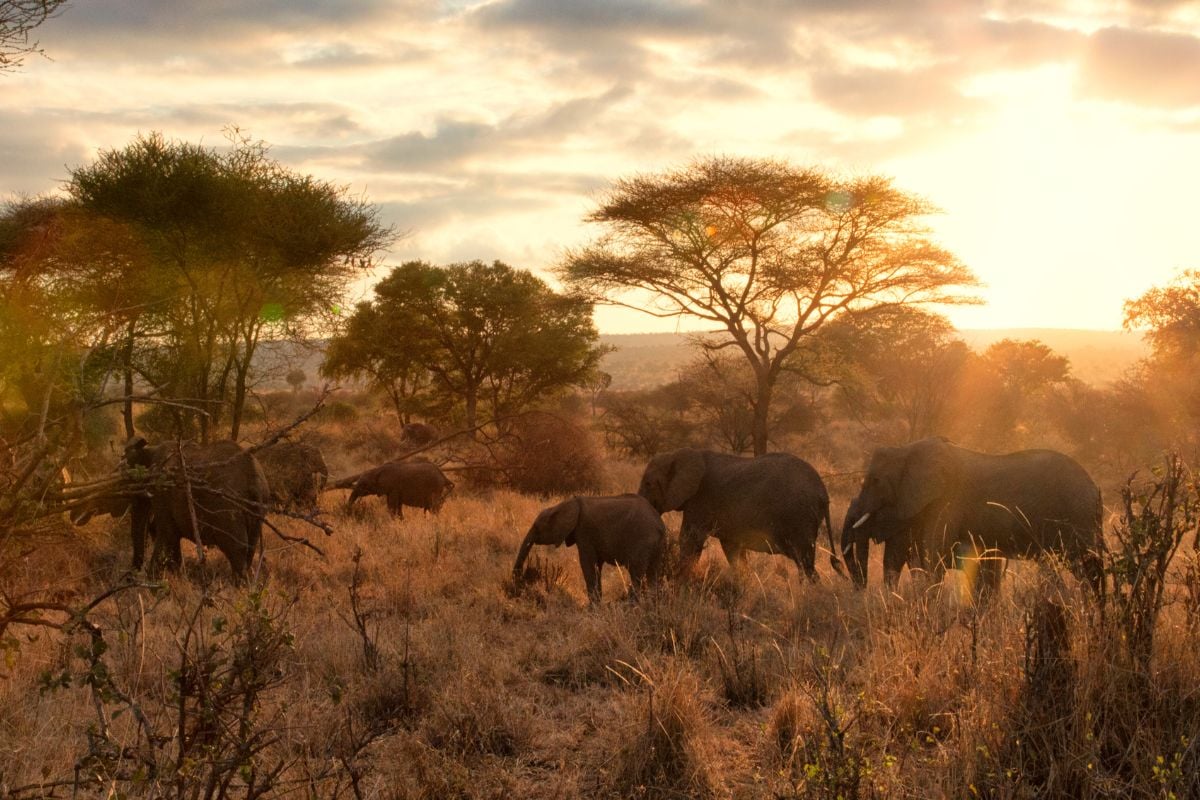
If your aim is to see as much wildlife as you can, it is a genuinely remarkable place to go.
Among Tanzania's best-known wildlife are five animals that together go by the name “The Big Five.”
Within Tanzania's animal kingdom, this group is regarded as sitting at the very top of the natural order, ruling over the food chain hierarchy.
Hunting them is difficult, and they are both dangerous and deadly.
The Big Five are as follows:
- Lions
- Rhinos
- Leopards
- Cape Buffalos
- Elephants
Bear in mind that although these species count as the apex animals of Tanzanian wildlife, some are easier to find than others. That is why a few of them appear on this list and others do not.
With that in mind, we will now look at ten of the most common animals in Tanzania that you can expect to see on your safari adventure, along with the places where you are most likely to find them!
1. Lions
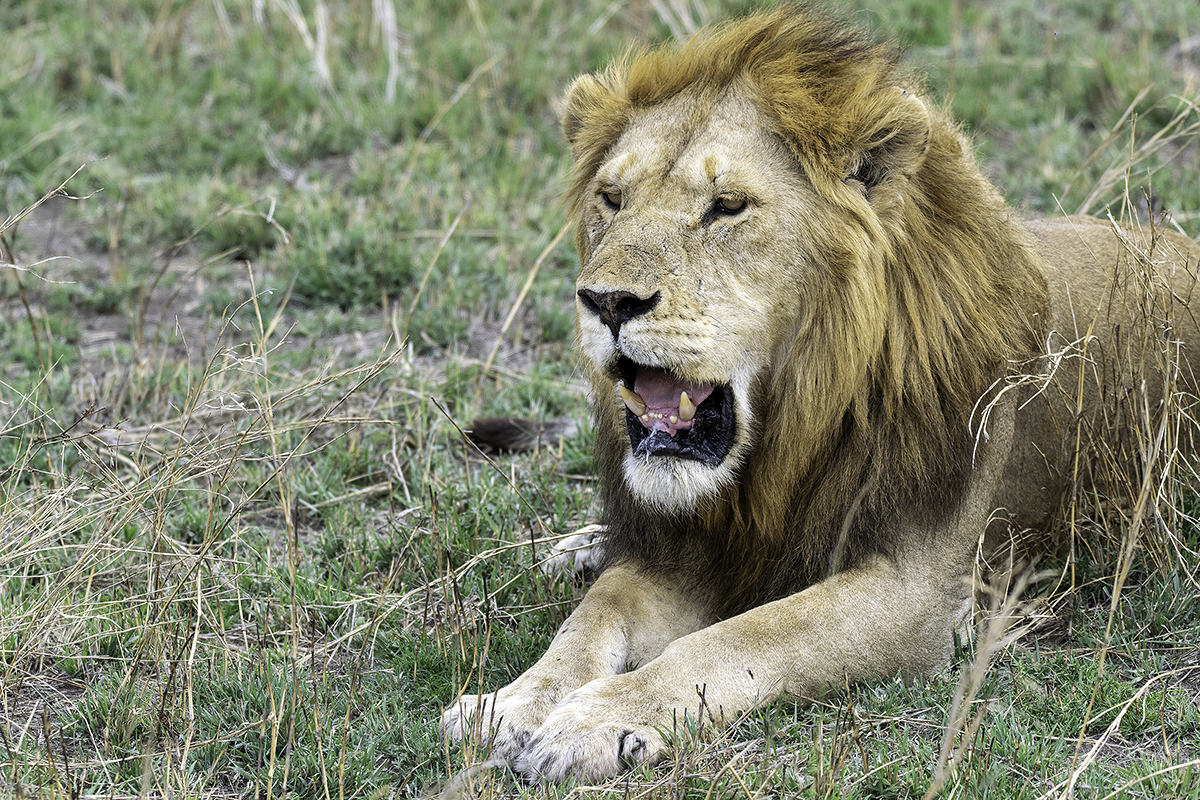
A safari tour in Tanzania without coming across a lion or two (or twelve!) is simply impossible.
Tanzania has roughly 16,000 lions. As social animals, they live together in a group called a pride, typically made up of six to twelve lionesses, three male lions and a number of cubs.
Hunting is the job of the lionesses, who do it to feed the cubs. The males hold their territory by marking it as theirs and defeating any other apex alpha male lions in the surrounding area.
Best Places To See Lions In Tanzania
- Serengeti National Park
- Ngorongoro Crater
- Lake Manyara
- Mikumi National Park
- Ruaha National Park
2. Elephants
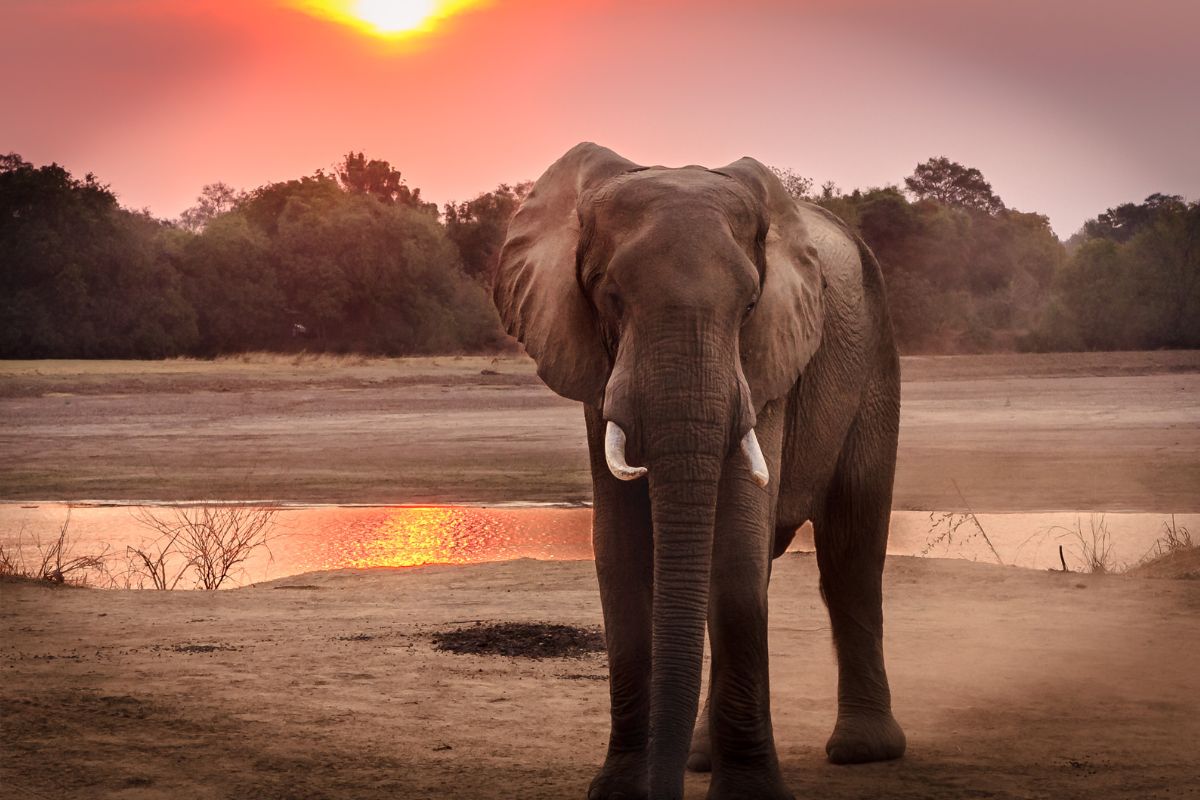
Being the largest land animal on the whole planet, the African elephant is a well-known member of Tanzania's big five and one that is fairly easy to spot!
Compared with Asian elephants, these elephants are far bigger, and their ears are a distinctive feature that sets them apart purely because of their size.
They are the heaviest land mammals too, with a fully grown African elephant weighing as much as six and a half tons (or 15,000 pounds).
Like lions, elephants are highly social and live in groups.
An elephant herd can be enormous – it’s possible to see over a hundred elephants living together in a single herd.
Female elephants lead these herds, and they communicate with each other using low-frequency sounds, even across distances of several miles!
The females usually remain in their own herd for their whole lives. Younger males, on the other hand, often break away from the herd to form bachelor groups.
They stay in these groups until they are mature enough to start herds of their own.
Where to see elephants in Tanzania
- Serengeti National Park
- Ngorongoro Crater
- Tarangire National Park
- Mikumi National Park
- Ruaha National Park
- Nyerere National Park
3. Cape Buffalo
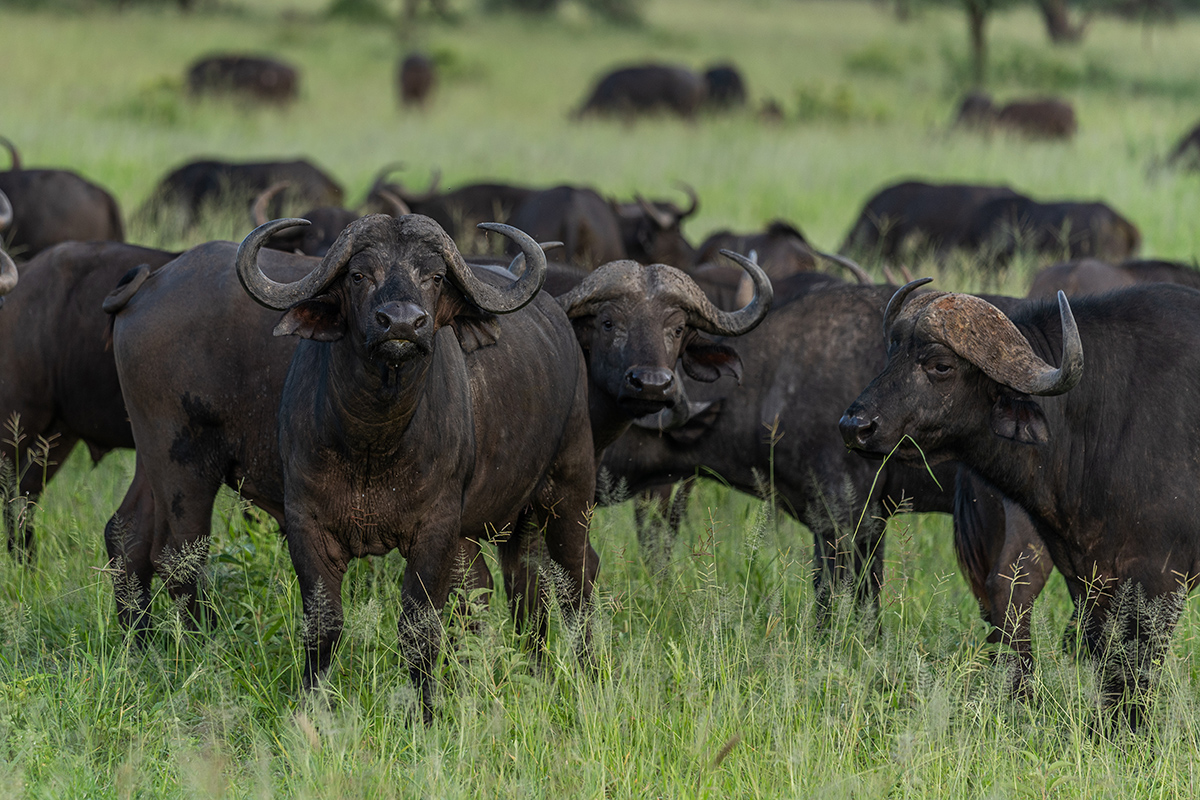
The next member of Tanzania’s Big Five is a somewhat surprising one: the Cape Buffalo.
Also known as the African Buffalo, the Cape Buffalo is an unusual apex animal, since as a bovine it goes against what you might expect.
Judging Cape Buffaloes by their looks would be a mistake. When provoked, they are fierce, dangerous and extremely strong.
To underline the point, these animals of Tanzania are regarded as the most dangerous species to hunt in Africa!
The main predator of the Cape Buffalo is the lion, another of the Big Five. Because these prey animals are so dangerous, lions use tactical strategies when hunting them.
The biggest danger these buffalo present to lions comes from the thick, curved, pointed horns on their heads, which are so strong they are effectively bulletproof!
However calm they may look, you really don’t want to underestimate the Cape Buffalo.
Where to see Cape Buffalo in Tanzania
- Serengeti National Park
- Ngorongoro Crater
- Arusha National Park
- Mikumi National Park
- Ruaha National Park
- Katavi National Park
- Nyerere National Park
4. Hippos
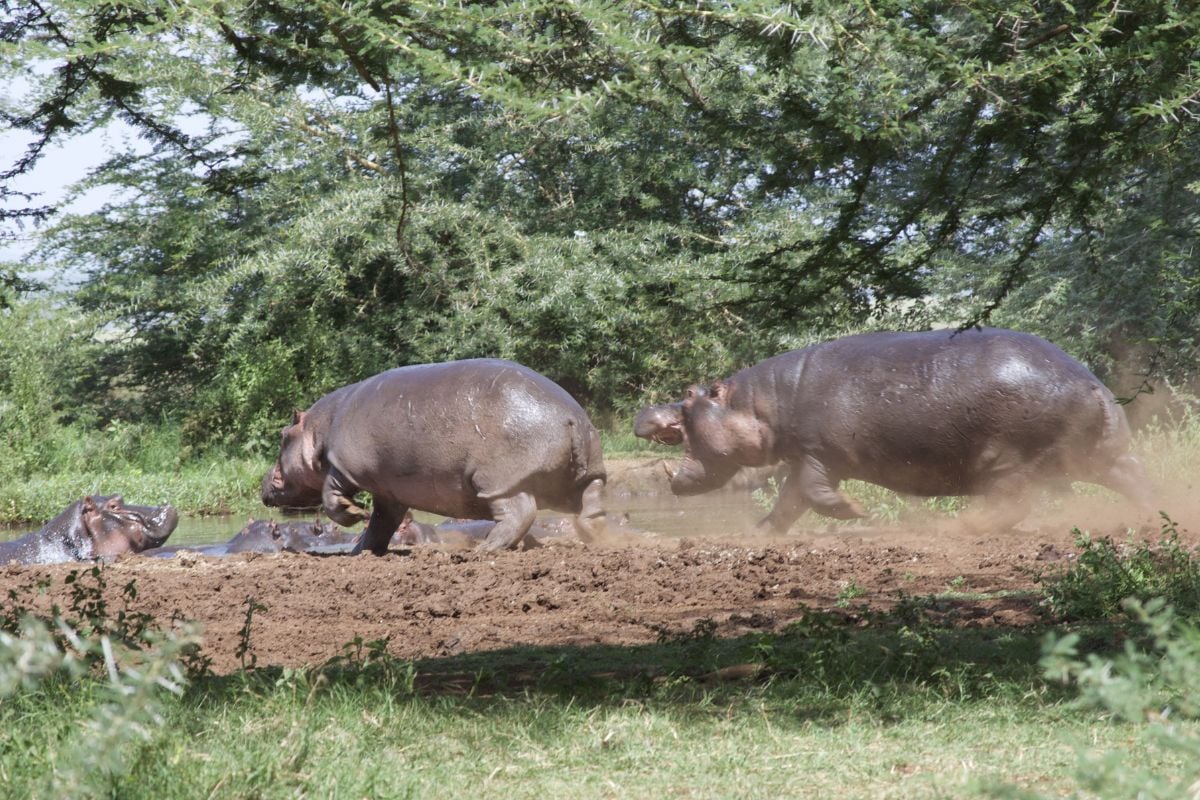
Hippos are large, impressive animals with a distinctively round shape and a strong attachment to water. For the best chance of seeing them in Tanzania, go to areas close to rivers and wetlands, such as the swamps in Tarangire National Park or the crater lake tucked inside Ngorongoro.
To stop their skin’s surface from drying out and overheating, these remarkable Tanzanian animals need to spend a large part of their time underwater. They are often even thought of as amphibious, because they can stay in the water for as much as sixteen hours a day.
As very social animals, hippos have several collective nouns for their groups. A gathering of hippos can be called a “pod,” a “school,” a “siege,” or even a “bloat.”
Such groups are usually a mix of male and female hippos, and their size varies, with anywhere between ten and thirty members in each.
Even so, a few hippo groups can number as many as 200!
Besides their considerable bulk, hippos are also known for their remarkable vocal abilities.
Some of their calls have been measured at a striking 115 decibels, which makes them very loud animals indeed. Their typical sound, commonly called the “wheeze honk,” can travel more than half a mile, adding to their name as one of the noisiest animals in the animal kingdom.
These calls are how they communicate with other hippos.
Always remember to keep your distance from hippos! Beautiful as they are, they are aggressive and regarded as dangerous.
They will turn their sharp tusks and big teeth on any kind of threat, humans included.
Best Places To See Hippos In Tanzania
- Serengeti National Park
- Ngorongoro Crater
- Tarangire National Park
- Ruaha National Park
- Katabi National Park
- Nyerere National Park
5. Gazelles
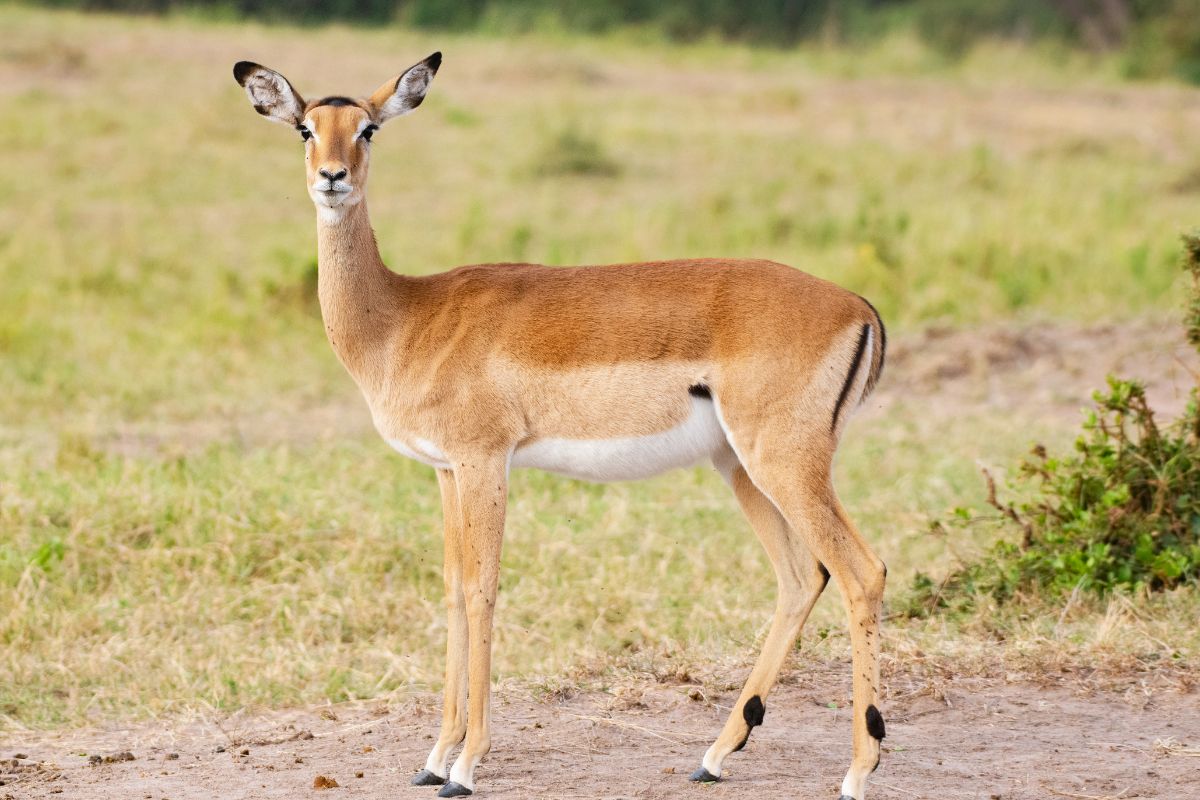
Despite their speed, gazelles are so common that they are the animal you are most likely to see on your Tanzania safari.
One of the gazelle's most notable traits is its speed, and the animal is often called the “swift deer” of the grasslands.
They are so fast that they can easily change direction mid-run without losing any momentum!
Gazelles have been recorded running at top speeds of around 97 kilometers per hour. For the average gazelle, a sustained speed of 50 kilometers per hour is normal.
Gazelles belong to the antelope category, though they are smaller than the others in it, standing roughly 60cm to 110cm tall.
There are many different species of gazelle, among them the following:
- Thomson’s gazelle: Also called the tommie, this is the best-known gazelle species.
- Dama gazelle: A native of Africa that lives in the Sahel region and the Saharan desert. It is among the most endangered gazelle species.
- Rhim gazelle: Usually found in desert regions (for example in Egypt, Suda and Algeria). They are also known as African sand gazelles.
- Dorcas gazelle: Widespread in Saharan and Northern Africa, living in grassland habitats.
- Red-fronted gazelle: Found from northeastern Ethiopia to the middle of Africa, red-fronted gazelles inhabit arid grasslands and wooded savannas.
- Chinkara gazelle: Living in India, Pakistan or Iran, these gazelles inhabit deserts, hills, light forests and arid plains.
- Speke’s gazelle: A further African gazelle, found on the Horn of Africa peninsula. It is the smallest gazelle species and lives in semi-deserts and stony brush areas.
Best Places To See Gazelles In Tanzania
- Serengeti National Park
- Ngorongoro Crater
- Lake Manyara
- Tarangire National Park
- Mikumi National Park
- Ruaha National Park
- Nyerere National Park
6. Cheetah
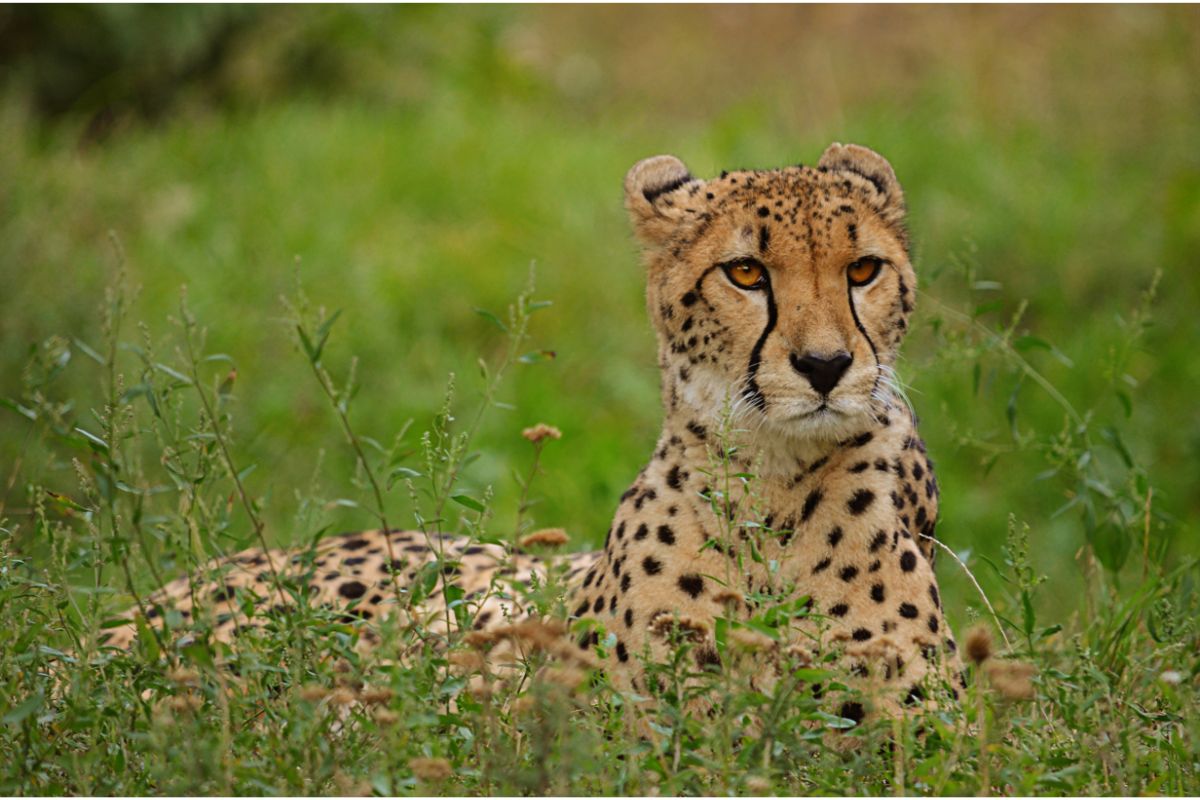
Cheetahs are famous as the fastest animals on Earth. They’re among the most thrilling species you may get to see on safari in Tanzania.
Tanzania's cheetahs are East African cheetahs, an endemic species often seen throughout the Serengeti.
The coat of these Tanzanian animals varies from tan to a whitish-yellow, the palest of all cheetah species. Dark spots cover them everywhere except their bellies, which are plain white.
Cheetahs are famous for their distinctive eye markings: dark lines that start at the corner of the eye and run down to the edge of the mouth, resembling teardrops.
In Tanzania, cheetahs live in grasslands, savannas and scrub forests, yet the International Union for Conservation of Nature (IUCN) currently lists them as vulnerable because of habitat loss, hunting threats and high cub mortality.
Best Places To See Cheetahs In Tanzania
- Serengeti National Park
- Ngorongoro Crater
- Katavi National Park
7. Giraffes
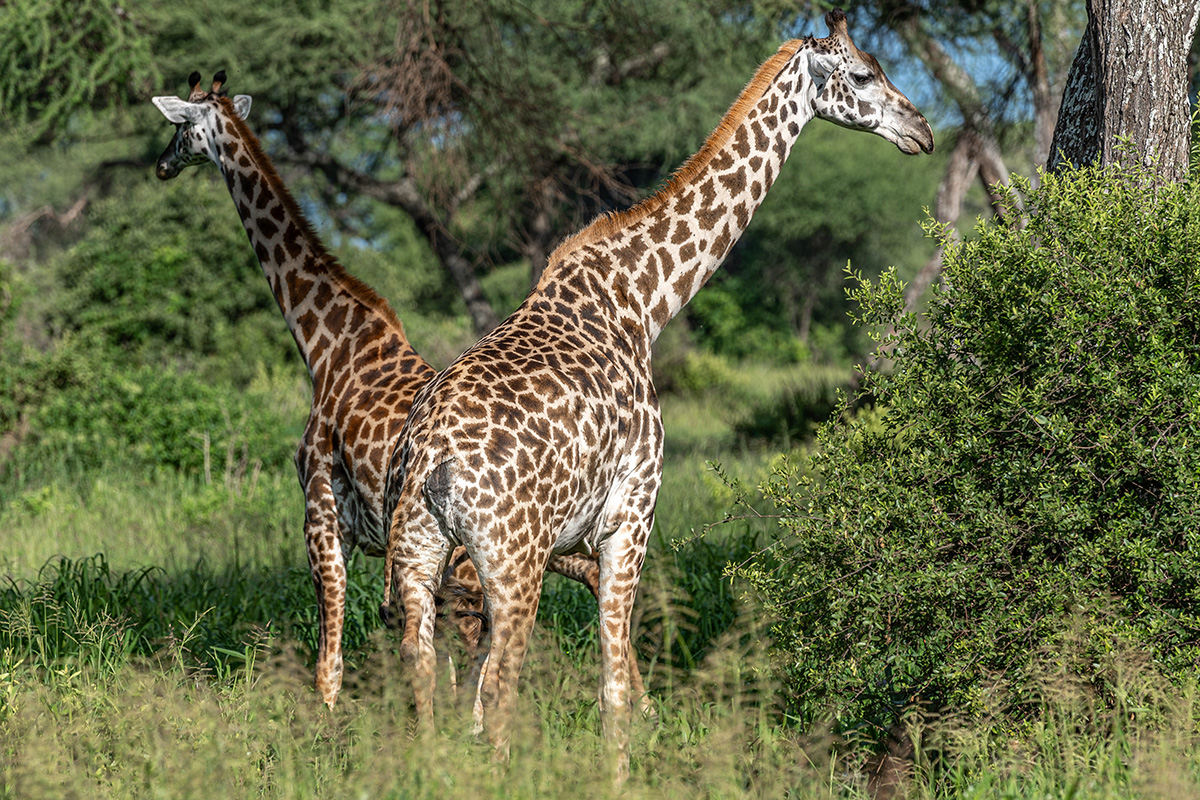
Only one giraffe species lives in Tanzania – the Masai Giraffe. As the national animal of Tanzania, you are certain to come across them!
Giraffes are by far the tallest land animals, and adults can reach a remarkable 20 feet in length.
As for habitat, giraffes usually live in open grasslands, woodlands and scrublands, because these areas have the tall trees they feed on.
Their diet consists of the leaves, stems, flowers and fruits of trees, which they reach with that famous long neck!
Apart from their height and neck, giraffes have a few other distinctive features, including their jagged brown spots.
The spots cover their whole body and run from the tops of their legs right down to their hooves.
Sadly, the giraffe population has also fallen, largely because of disease, illegal poaching and hunting, and the loss of their habitat.
Like the rhino and the cheetah, they rank among Tanzania's most endangered animals.
Best Places To See Giraffes In Tanzania
- Serengeti National Park
- Lake Manyara
- Tarangire National Park
- Arusha National Park
- Mikumi National Park
- Ruaha National Park
- Nyerere National Park
8. Nile Crocodile
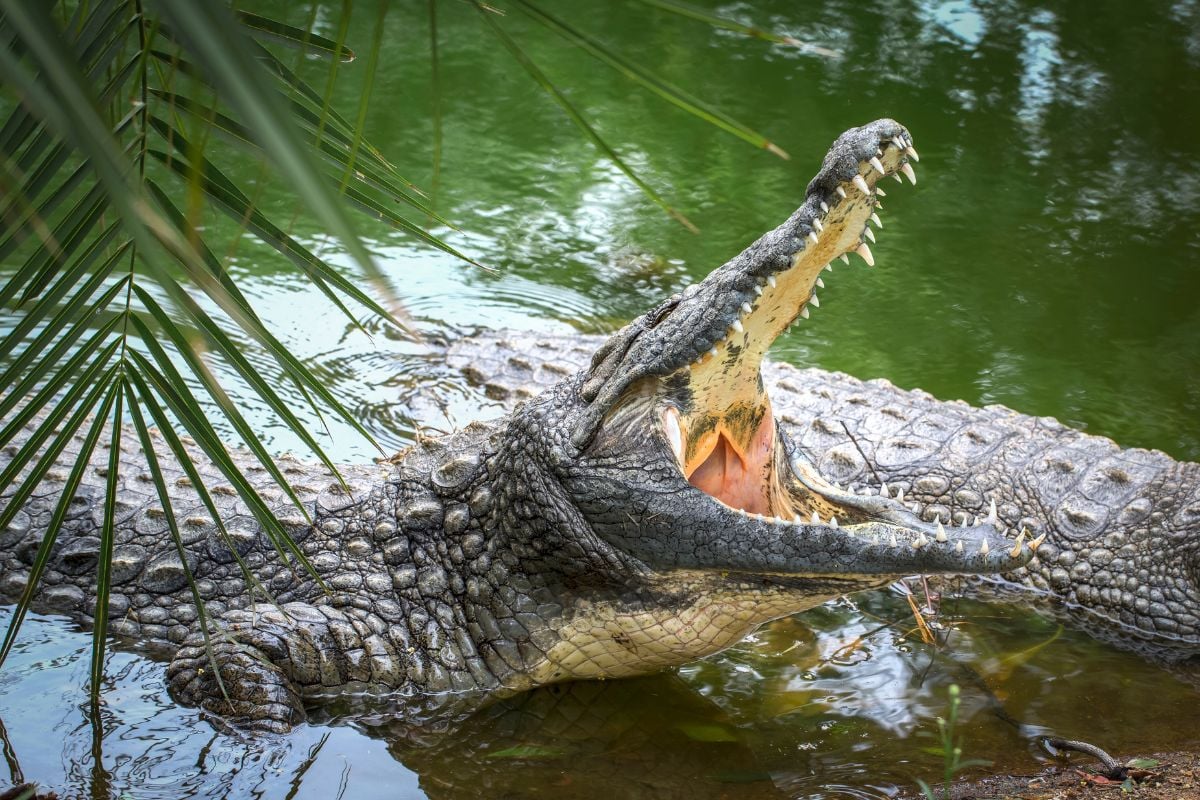
Because their numbers have grown, the Nile Crocodile is one part of Tanzania's wildlife you have a good chance of seeing.
Even so, you really don’t want to get too close to these crocs.
Reaching up to four meters long and weighing more than 450 kilograms, these crocodiles are regarded as one of the most fearsome predators in Africa's animal kingdom.
Their considerable appetite is yet another reason to stay well away from these deadly reptiles!
Nile Crocodiles live in rivers, large freshwater lakes, freshwater swamps, mangrove swamps, coastal estuaries and dams (generally those near rivers).
They are extremely aggressive and will attack and feed on anything that comes too close.
That covers both small and large animals, since in a single feeding session they can eat as much as half their own body weight.
Their powerful bite, eight times stronger than that of a great white shark, also lets them bring down animals larger than themselves.
Keep well clear of young Nile Crocodiles too, as the adults are fiercely protective and will guard their offspring aggressively until they hatch.
As noted, Nile Crocodile numbers have risen, though this wasn’t always so. During the 1950s and 1960s, their population fell sharply because they were widely hunted for their skin.
Where to see Nile crocodiles in Tanzania
- Serengeti National Park
- Ngorongoro Crater
- Lake Manyara
- Tarangire National Park
- Mikumi National Park
9. Burchell’s Zebra
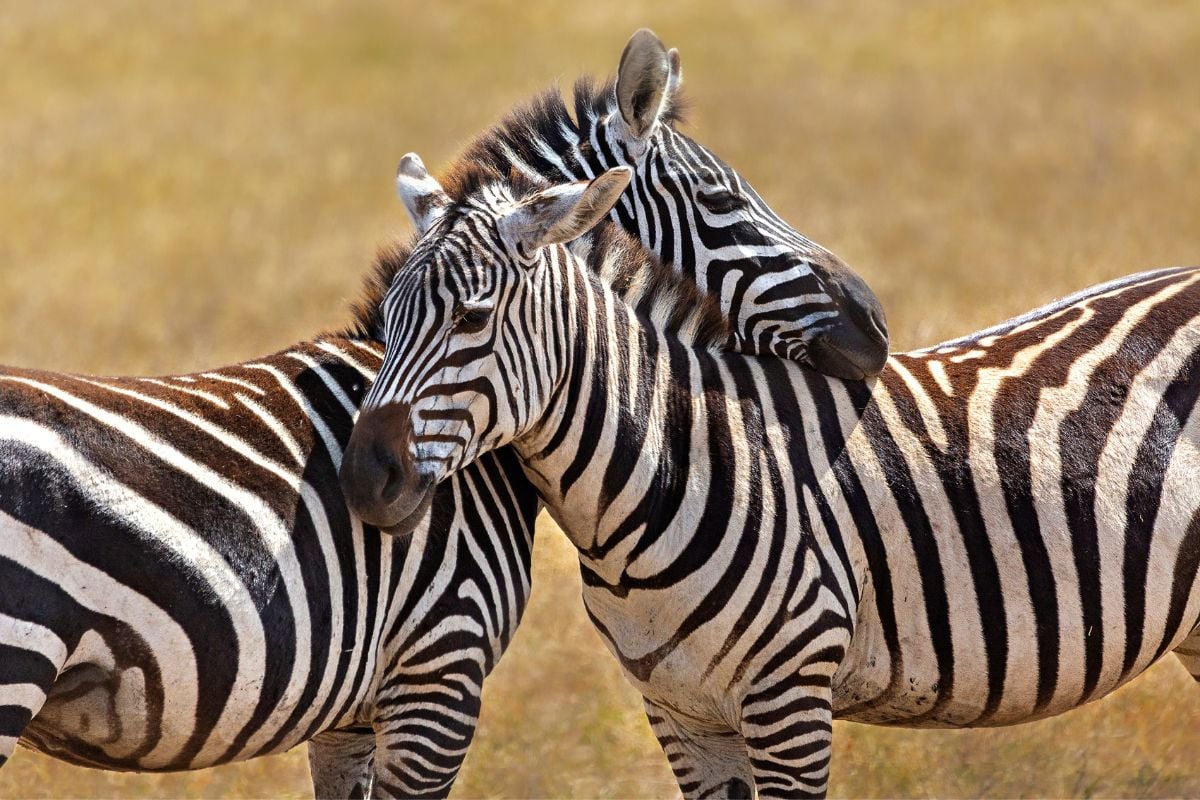
The Burchell’s zebra, a southern subspecies of the classic plains zebra, takes its name from William John Burchell, a British naturalist and explorer.
You are likely to see a few of these zebras on your safari, as they are common throughout Tanzania's reserves and national parks.
Everyone knows the zebra's black-and-white stripes, but did you know there is more to them than you might think?
Just like human fingerprints, the famous black or dark brown stripes on each zebra are unique to that individual.
The stripes are thought to provide camouflage when zebras are in herds, and some scientists believe they may also help keep biting flies away.
Zebras are social animals that live in herds. Within a larger herd, female zebras will even form a kind of small harem!
Native to Africa, they also play a part in the wildlife spectacle of the Masai Mara and Serengeti Migration, which takes place every year from June to September. During the migration, more than one and a half million zebra and wildebeest move from the northern Serengeti into the Masai Mara in search of green pastures such as red oat grass.
While the Burchell’s zebra is the species you will see on a safari in Tanzania, Africa has two other common zebra species: the Grevy’s zebra and the mountain zebra.
Sadly, both of these zebra species are classed as endangered.
Where to see Burchell’s zebra in Tanzania
- Serengeti National Park
- Tarangire National Park
- Arusha National Park
- Mikumi National Park
- Ruaha National Park
- Katavi National Park
- Nyerere National Park
10. Blue Wildebeest
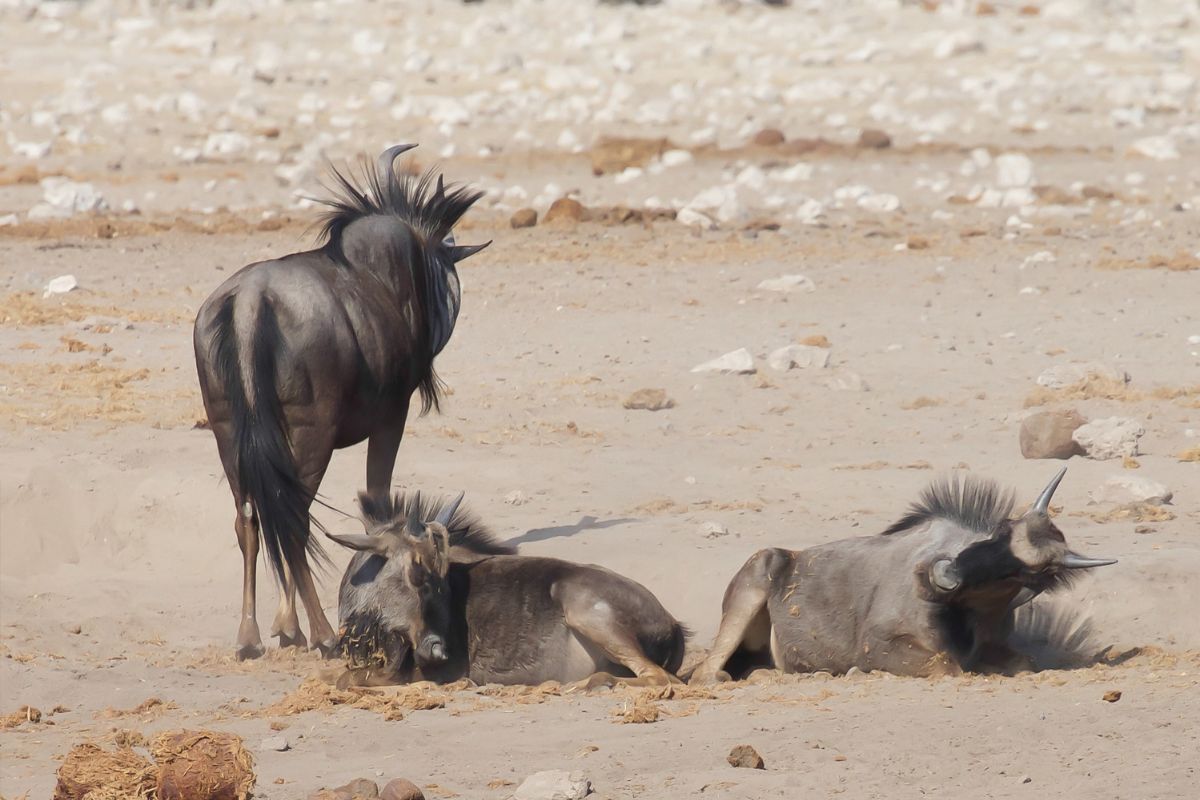
You might be surprised to learn that the blue wildebeest, which also goes by the name brindled gnu, is in fact an antelope species!
Like Tanzania's other antelope species, blue wildebeests are a common sight on safari.
From a distance, though, they are easily mistaken for buffalo, as both animals share flattened horns and an off-black coat that make them look very alike.
Look more carefully, however, and you will see that the wildebeest is smaller than the buffalo and has a longer face, closer to that of other antelope species.
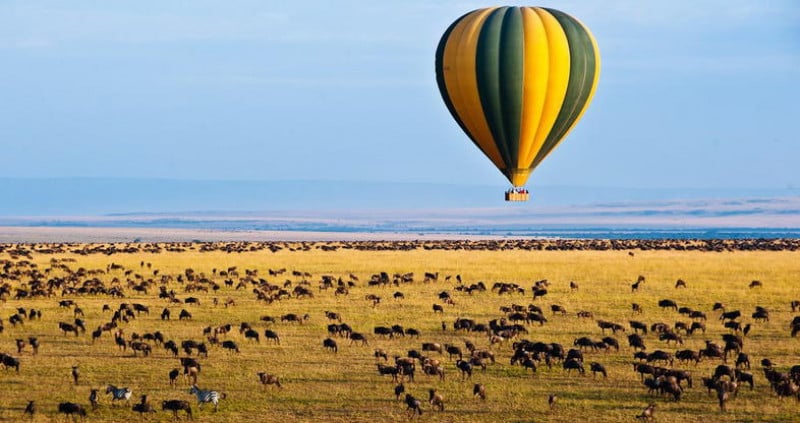
The wildebeest plays a central role in one of the world's largest mammal migrations, involving two million wildebeest, which takes place within the Serengeti ecosystem.
Other Tanzanian animals join them on this migration, including zebras, gazelles and elands.
If you want to witness the migration, the wildebeest generally begin spreading out into the southeastern part of the Serengeti from December right through to May.
After that they form a column up to 40km long and cross the Grumeti River, usually around June and into July.
With the river behind them, the animals move on into the northern Serengeti and into Kenya.
This continues until October, at which point they head back to the southern Serengeti.
They arrive around November and then start the whole cycle again in December!
Where to see blue wildebeest in Tanzania
- Serengeti National Park
- Ngorongoro Crater
- Lake Manyara
- Tarangire National Park
- Mikumi National Park
- Ruaha National Parl
- Nyerere National Parl
Final Thoughts
That gives you ten Tanzanian animals that are frequently seen on safari, together with the areas where you have the best chance of finding them!
Even the harder-to-find animals – the cheetah, for example – can be seen if you keep an eye out for them.
We hope this guide gives you a clearer picture of which animals you might see on your safari and where to go for a better chance of spotting them.
Provided you respect the natural habitat of every creature you meet during your stay in Tanzania, you can look forward to an exciting, invigorating and fascinating safari experience!
Contact us if you would like to book an unforgettable safari experience in Tanzania.