
20 October 2017
Currency Tanzania
Tanzania’s official currency is the Tanzanian Shilling. Shillings are handy for the smaller things: a visit to a local market, a meal in a restaurant or a trip to the supermarket. US Dollars are accepted everywhere as well, and in tourist areas they are actually preferred over the local currency. It is therefore wise to carry both shillings and dollars. If you bring US Dollars in cash, check that the notes are in good condition and printed no earlier than 2006. Exchanging money is only possible at a bank (take your passport with you). Never change money on the street.
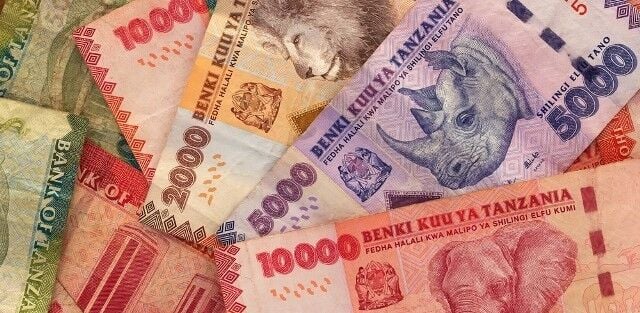
Tanzanian banknotes come in 500, 1,000, 2,000, 5,000 and 10,000 Shilling. Coins exist in 1, 5, 10, 20, 50, 100 and 200 Shilling.
One US Dollar equals roughly 2,250 Tanzanian Shilling. For the current rate, have a look at a currency converter.
ATM and credit cards in Tanzania
Our advice is to carry sufficient cash with you on safari. Airports and larger cities such as Dar es Salaam, Arusha and Moshi have plenty of ATMs, but in smaller villages they are hard to find. Travelling through northern Tanzania, you will also come across ATMs in the towns of Karatu and Mto wa Mbu, en route to the national parks. The usual withdrawal limit is 400,000 TSH, though it is lower in rural areas. As you probably don’t want to walk around with pockets stuffed with notes, it is sensible to bring a credit card too.
How much money to bring on safari?
How much money you should take on safari is a personal matter: do you want to join plenty of extra activities, or are you planning to buy a lot of souvenirs? A tip for your guide of $8-10 per day is also customary. Your safari itself (with accommodation and meals) has been paid beforehand, yet in our experience most travellers end up spending more than they expected. Prices in the tourist areas are roughly on a par with those in western countries, so bring enough money to cover several days.
Money in Zanzibar
For Zanzibar, be sure to take enough cash along. ATMs are found only at the airport and in Stone Town (Barclay’s being the most dependable). There are none at the beaches, nor on the islands of Pemba and Mafia. We have noticed that travellers tend to spend more on Zanzibar than on the mainland, simply because there is so much free time for excursions, drinks and restaurant dinners. You can of course just stay on the beach all day and spend very little. That is up to you, but we do suggest bringing plenty of cash to Zanzibar so you don’t end up short.
Any other questions about money? Just get in touch with us. You may also like to read our blog on Tipping in Tanzania.