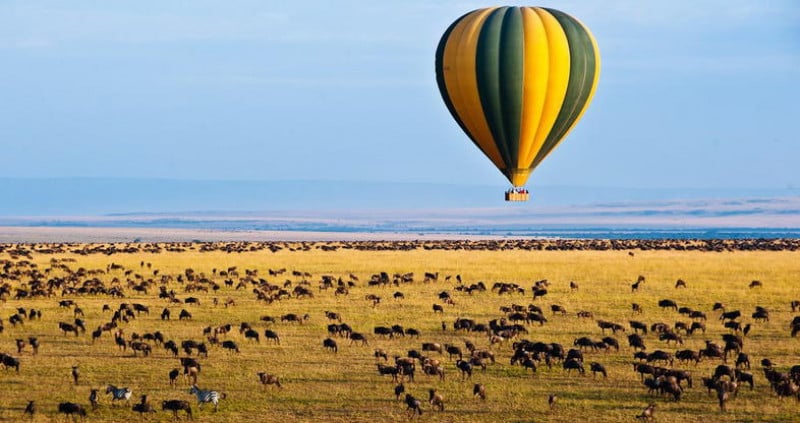

18 December 2022
The wildebeest belongs to the antelope family, and as of 2020 its population numbers 1.5 million.
These horned mammals have a reputation for being surprisingly lively and energetic, and in fact they are remarkably quick.
In this guide you will find everything worth knowing about the wildebeest and just how fast it can run. Would you like to see these remarkable animals with your own eyes, or witness The Great Migration? Take a look at our Tanzania Safari packages.
About The Wildebeest
Appearance
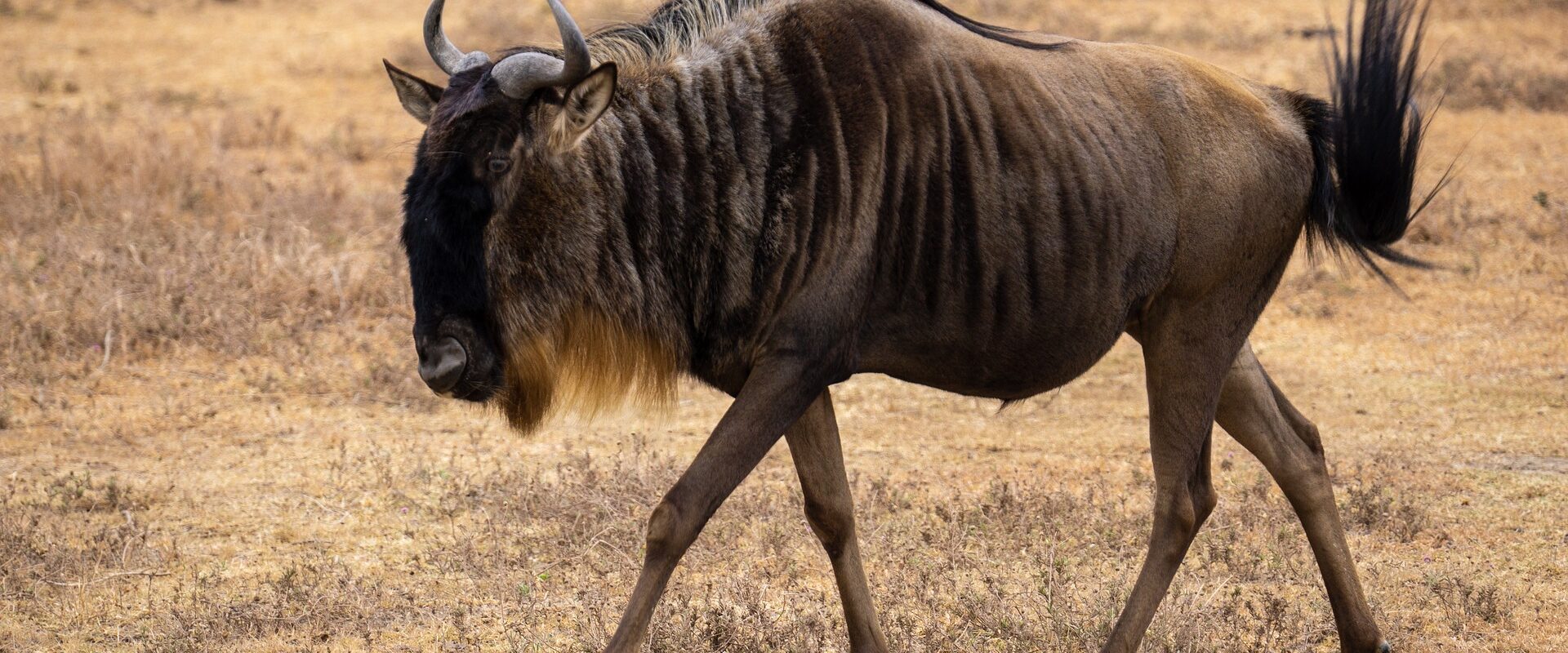
A wildebeest’s build is oddly out of balance: the animal’s legs and back are slim, yet the front end is heavy.
It has broad shoulders and a boxy, rectangular head. The wide forequarters, cushioned with thick muscle, go together with a huge muzzle.
Some are more blue-grey in colour, others carry a light grey sheen. The deepest colouring belongs to the grey-brown wildebeest.
On their shoulders you can make out dark brown stripes running vertically down the body.
A dense, lengthy black mane runs along the wildebeest, and from its throat hangs a lengthy beard, which can be dark or pale.
Their horns curve outwards, away from the head. A male's horns are twice the size of a female's.
On a bull the horns reach 84 cm (33 inches); on a cow they measure anywhere between 30.5 and 40.5 cm (12 to 16 inches).
The typical blue wildebeest stands 1.38 metres (4.5 feet) at the shoulder, and its weight can go as high as 272.2 kilograms (600 pounds).
Habitat
Wildebeest make their home on grassy plains and in woodland. The majority of them are found across various parts of Eastern Africa.
In the south of the continent, wildebeest also live near the Orange River in South Africa.
The Acacia savannas are where this animal prefers to spend the bulk of its time.
Because of the soil’s dampness, the grass shoots up quickly, which makes it an ideal spot to find plenty to eat while grazing.
Wildebeest usually keep company with their own kind, but they have also been seen sharing temporary quarters with zebras they meet on the plains.
The zebras nibble off the top layer of grass, which in turn lets the wildebeest get at the grass beneath.
Diet
Their diet turns wildebeest into permanent wanderers: they are forever searching for grass and water, which they take in twice a day.
When it’s dry, they feed on freshly sprouted grass and then make the journey home before the rains set in.
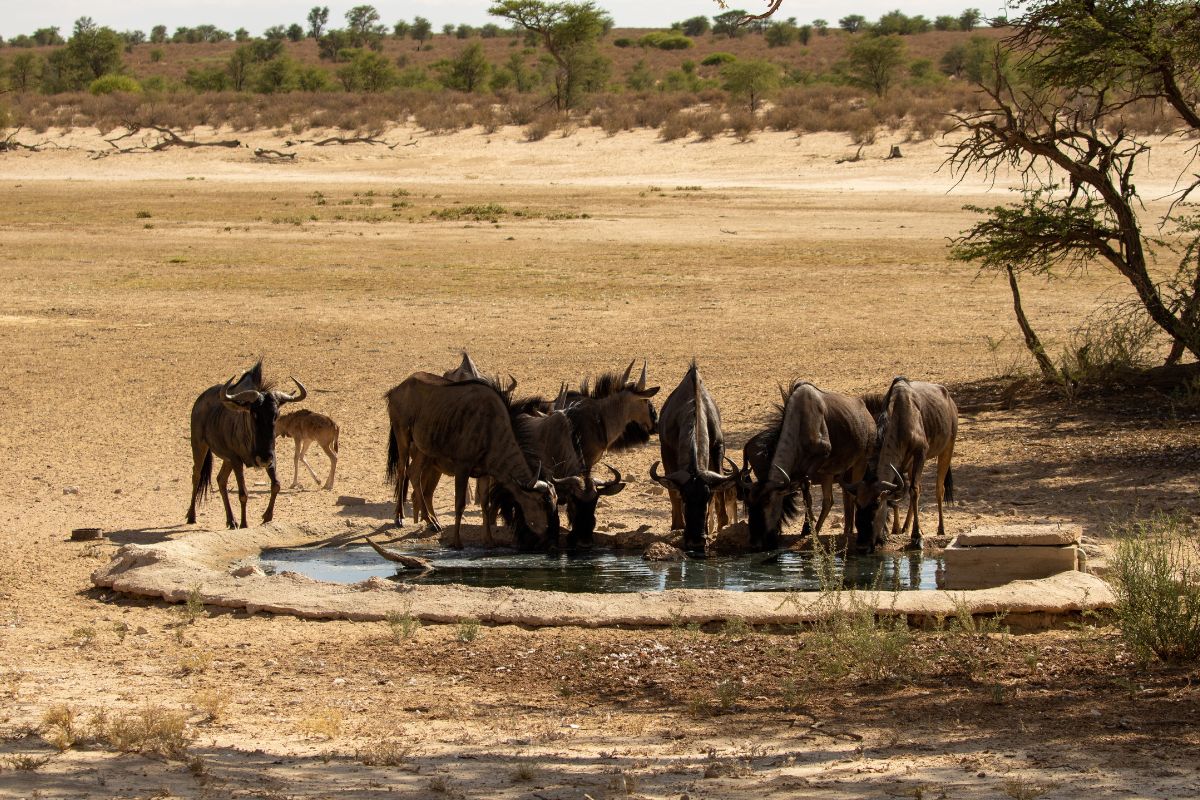
Once the rainy season has passed, they come back to the area and carry on grazing.
Thanks to its wide mouth, a wildebeest can take in large quantities of grass in a short time. When grass runs short, it turns to trees and shrubs for food.
Threats
A wildebeest’s exposure to its hunters grows with its size. In defence, a herd will gather together and begin stamping the ground.
They also make loud calls to draw attention and warn the rest of the herd that danger is near.
The breaking-up of the wildebeest’s habitat poses a further threat.
As farming and human settlement expand, and certain regions’ water sources keep drying up, wildebeest populations around the world are coming under growing pressure.
In spite of these problems, they are not threatened enough to be classed as endangered.
Although wildebeest numbers worldwide have been falling steadily, in the Serengeti they have actually increased in recent years.
Only conservation work can prevent the wildebeest from dying out.
How Fast Can A Wildebeest Run?
The blue wildebeest is an extremely cautious animal that spooks easily. That is because so many of Africa's apex predators, cheetahs and lions among them, hunt it.
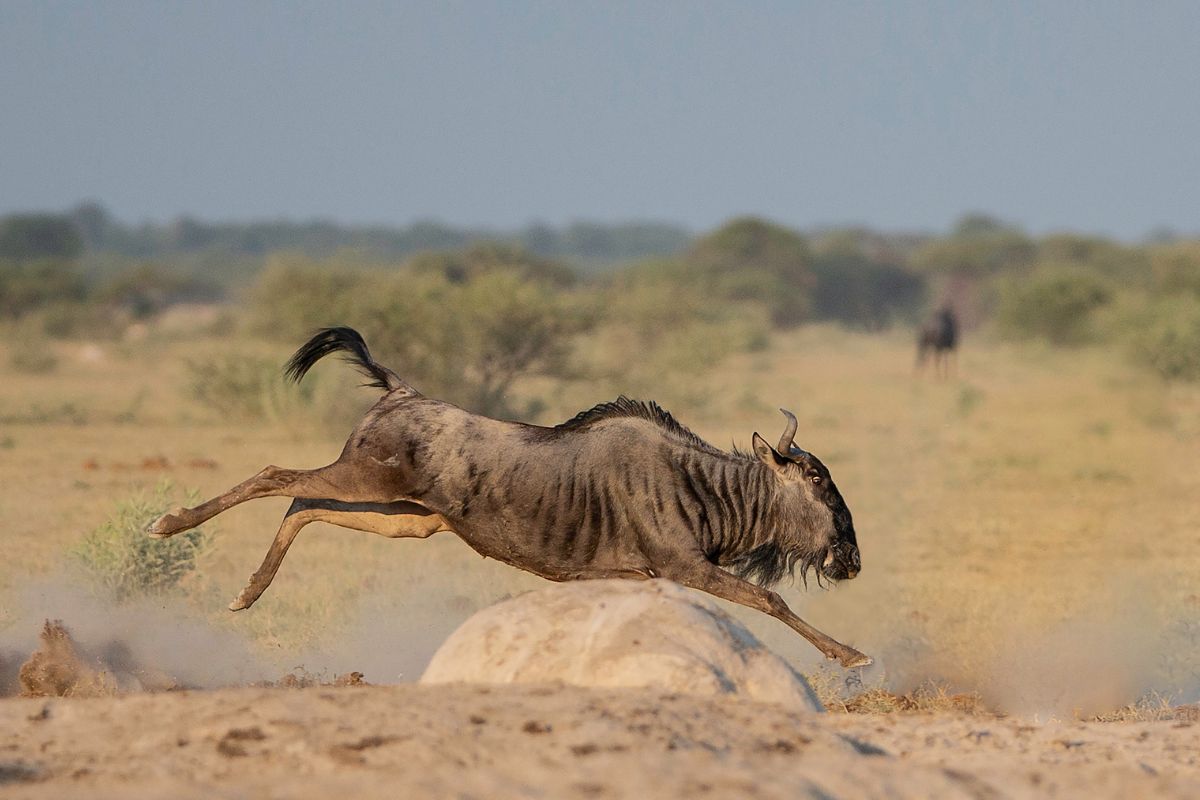
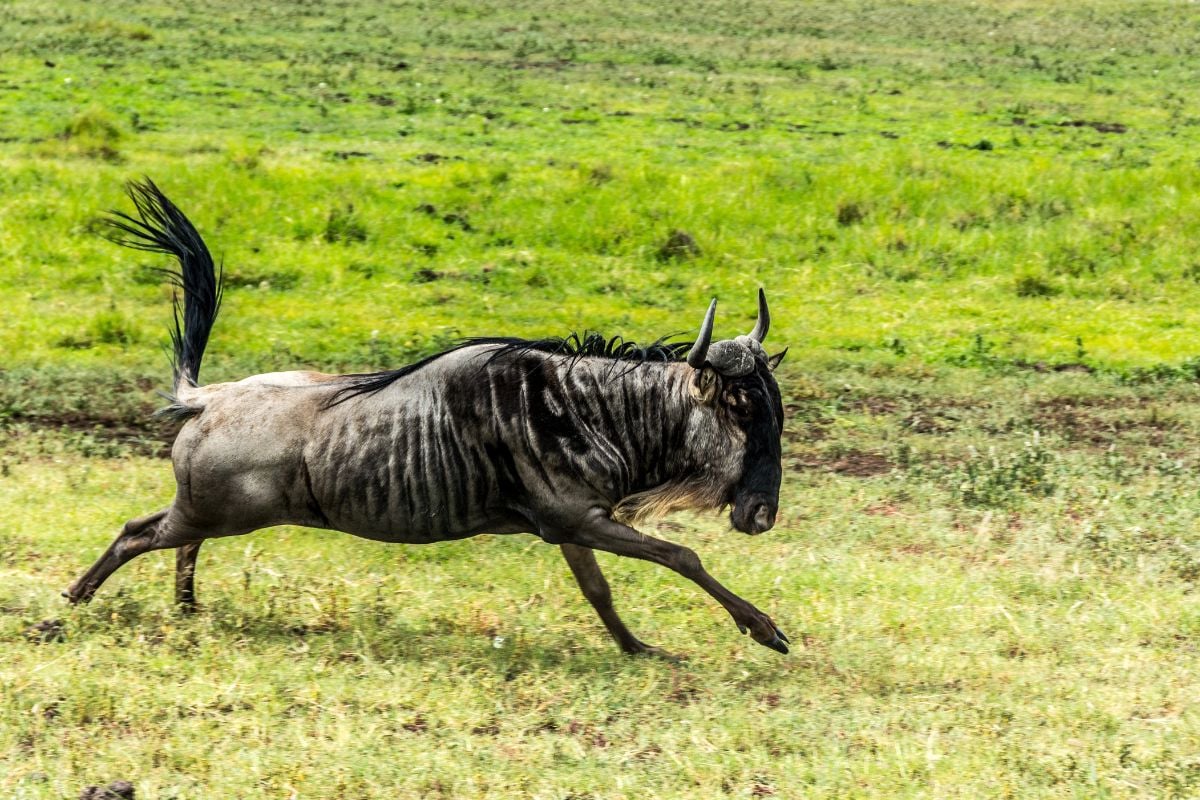
When danger looms, a wildebeest can call on its surprisingly impressive speed to avoid being caught by predators.
At full tilt, a wildebeest can hit 80 kilometres per hour, or 50 miles per hour.
On top of its speed, it has great stamina, which it relies on to migrate across long distances.
That stamina also matters when fleeing hunters such as cheetahs. A cheetah may be faster than a wildebeest, but it can only sprint in short bursts, so given a head start a wildebeest can slip out of its reach.
Final Thoughts
Wildebeest are remarkable animals and genuinely rank among the fastest land mammals on earth.
For all their thick, stocky build, they have tremendous endurance and can hit high speeds when apex predators threaten them.
That combination of speed and stamina serves them enormously well during migration and keeps them safe from carnivores.