
18 December 2023
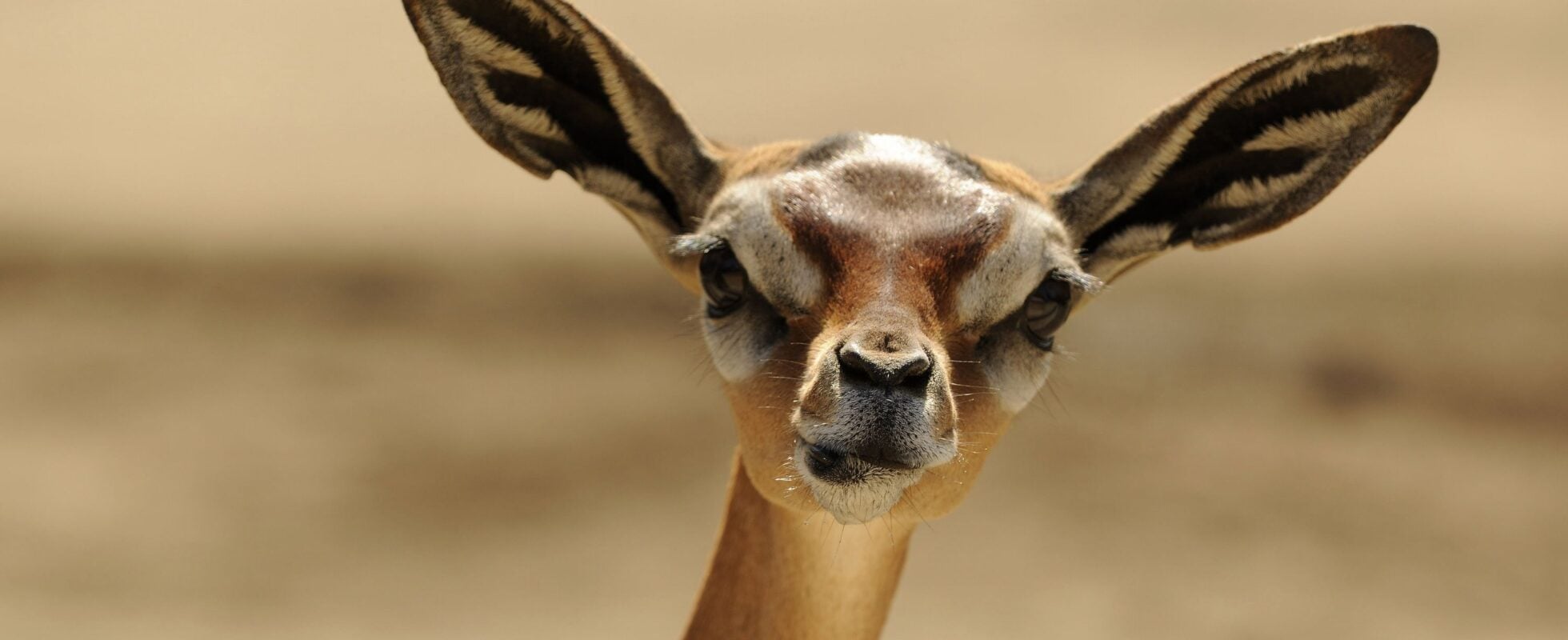
Anyone who has come across a gazelle or an antelope may well have paused and wondered which of the two they were looking at. At a quick glance the resemblance is strong, and nobody could hold it against you for mixing them up. That goes double when the animal is still a calf or fawn – you’d probably find yourself puzzling over the question, gazelle vs antelope – which is this?
That is where we come in: below you will find a clear description of each, so there is no confusion next time, and you will be able to impress your companions by naming them on sight.
Keep reading to find out more about these two graceful species.
Overview Of Gazelle
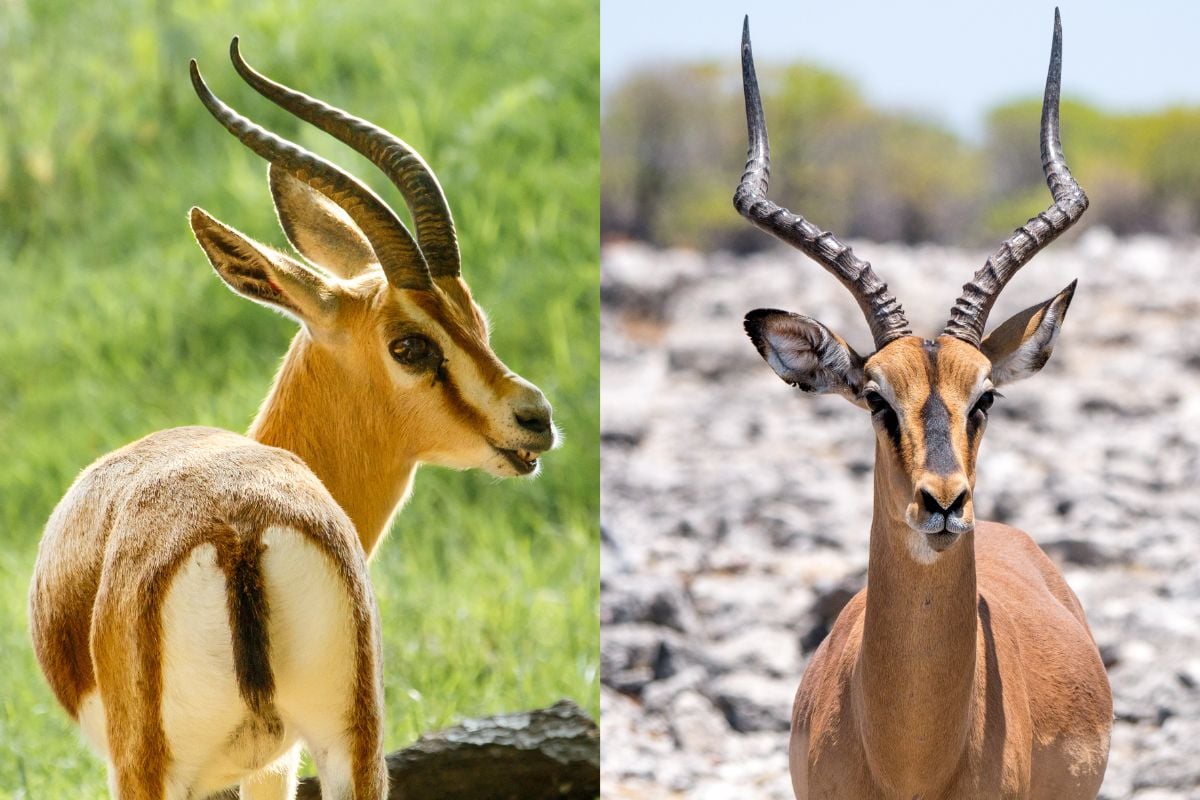
In short: every gazelle is an antelope, yet not every antelope is a gazelle. To be more precise, gazelle is a genus within the antelopes, which means the two are linked in classification but not as closely as two individual species would be.
Gazelles are recognisable by their sleek tan coats, marked with patterns of stripes and spots.
Their horns are ringed, and they are typically found in regions such as Asia and China. Their range also stretches from the Horn of Africa right down to Tanzania.
Gazelles feed on the leaves and stems of plants, and they rely less on drinking water than other species do.
They are also remarkably nimble, which lets them escape a tight spot in a hurry; after all, they are on the menu of many predators, from cheetahs to pythons. A gazelle has two hoofed toes on each foot, handy when it needs to bound or slot its way out of trouble.
The following animals belong to the gazelle group:
- Thomson’s Gazelle
- Grant’s Gazelle
- Gerenuk
- Steenbok
- Oribi
- Springbok
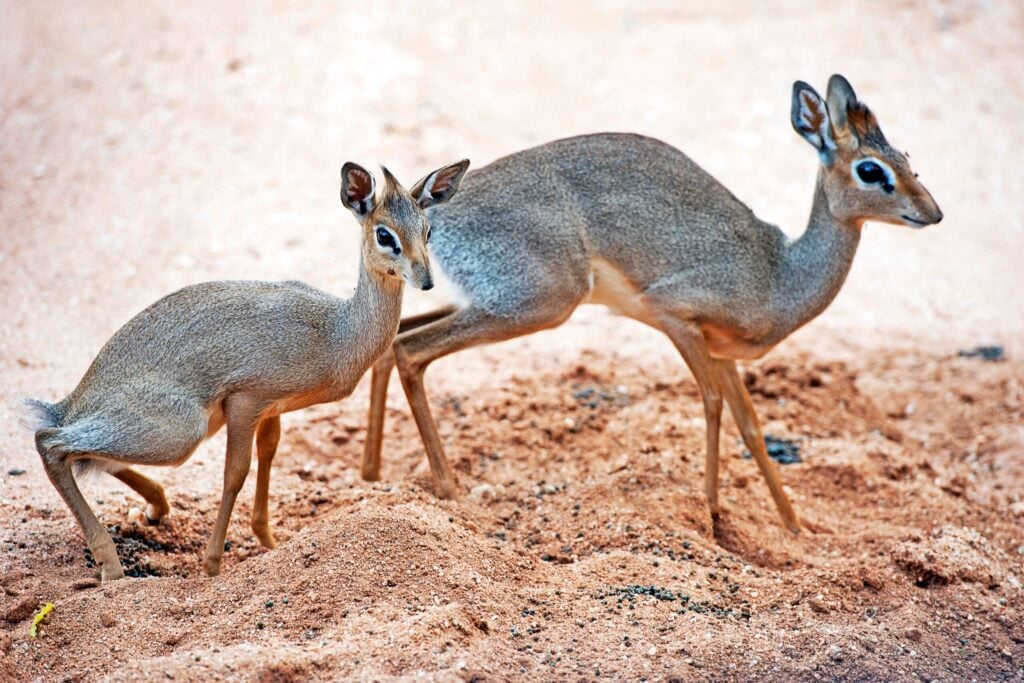
- Dik-dik (the smallest btw)
Overview Of Antelope
Set against the gazelle, the antelope has even toes, smooth hair and horns that look straighter. Almost all male antelopes carry horns, whereas only about two-thirds of females do.
Antelopes are bigger-bodied, which means they are not as fast as gazelles. Their diet is a little different too: certain antelope species will eat small birds, mammals and insects.
In dry spells, when the feed they eat contains less than 40% moisture, an antelope drinks roughly 2.8 litres of water a day, though only when it cannot get enough moisture from grass, leaves, mulch and the like.
The following animals belong to the antelope family:
- Imapala
- Oryx
- Eland
- Waterbuck
- Wildebeest
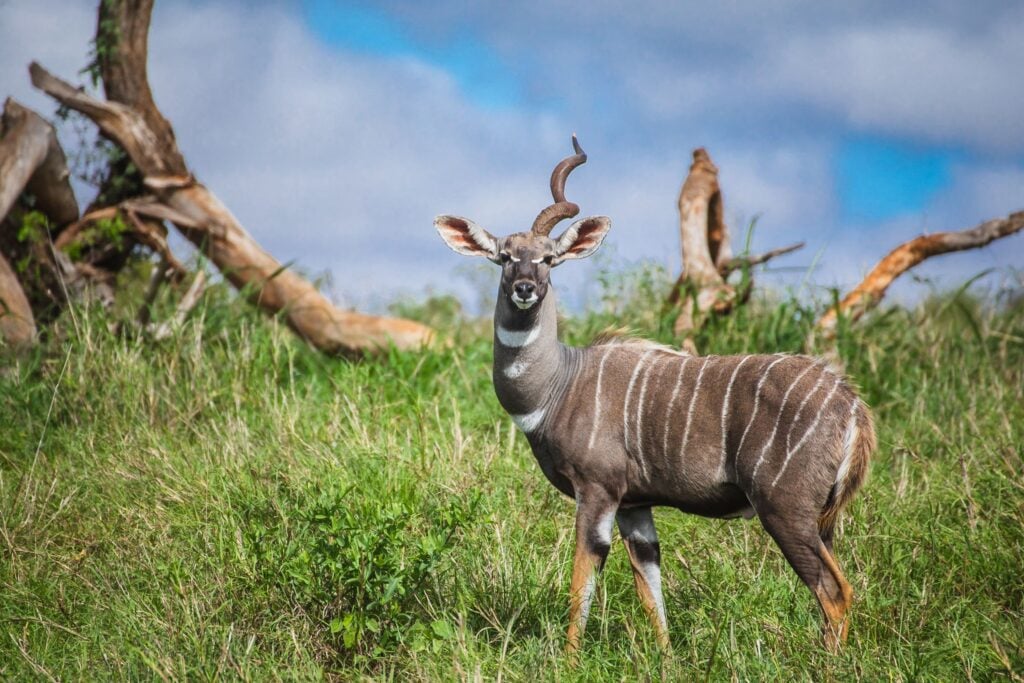
- Kudu
- Duiker
- Klipspringer
- Bushbuck
- Hartebeest
- Topi
- Sable Antelope
- All gazelles
Particular kinds of antelope turn up in different parts of Africa and Europe, and with 91 separate species of antelope in existence, we won't blame you for not knowing the defining features of each. Now and then you may even come across a unicorn 😉
Do They Have Any Similarities?
With a picture of each species in mind, it makes sense to look at what they have in common. These shared traits between antelope vs gazelle are probably the reason the two get confused so often. The biggest one is that both belong to the bovid family, itself a very broad grouping.
Both are generally regarded as herbivores, although certain antelopes, the duiker for instance, stray from that description a little and can count as omnivores. Even that is fairly flexible, depending on the habitat and how scarce particular food sources are.
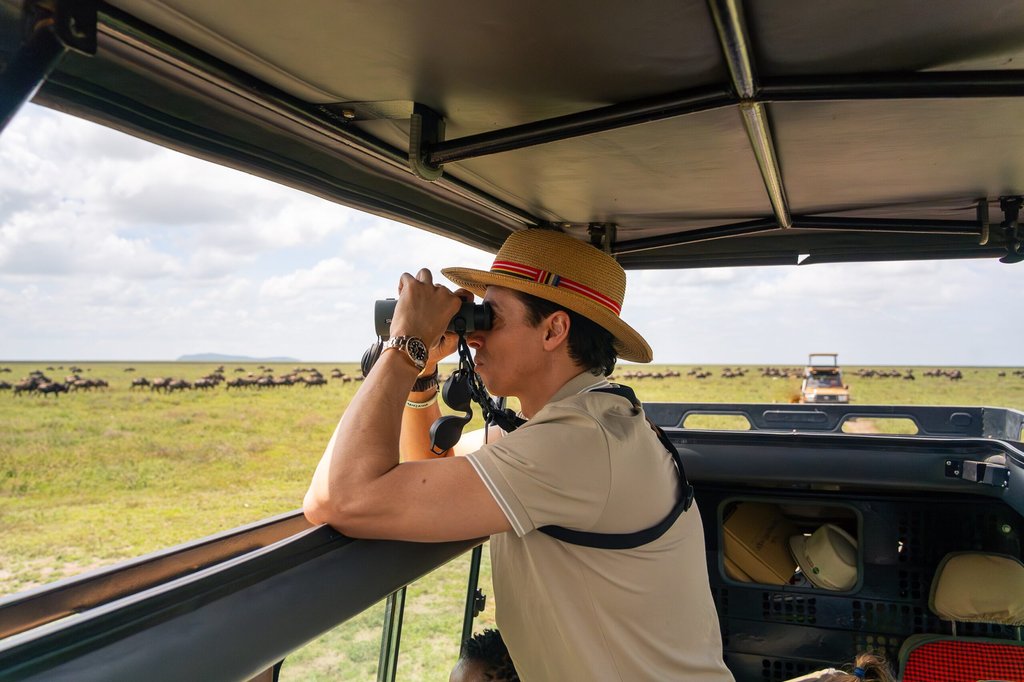
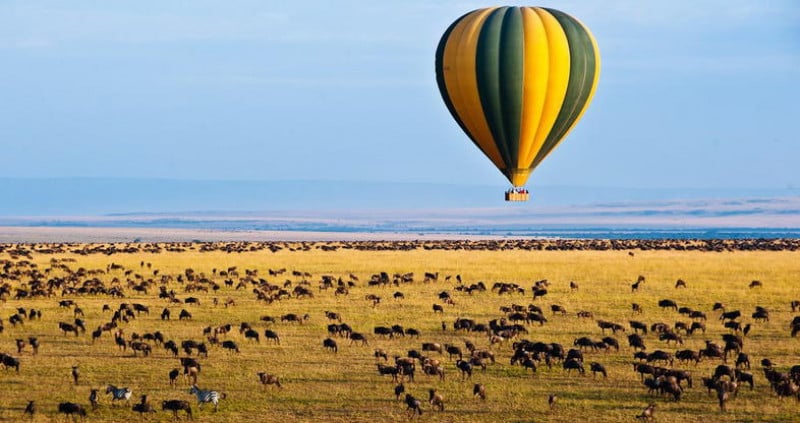
Among the most striking similarities is that both kinds of bovid tend to move in groups, anything from small to large; some number up to 700 animals. Antelopes, though, can travel in far bigger herds of thousands, which is most obvious during their yearly migration.
Conclusion
Watch a gazelle avoiding danger and you will see it leap or slot, either to warn the rest of its group or to give a predator the slip; the same movement is on display during the mating season.
It is interesting that antelopes can live in a wide range of environments, from deserts and cold tundra to the shores of lakes and oceans, while certain gazelles, such as the Tibetan gazelle, inhabit high mountain meadows and other species are better suited to arid and desert conditions.
Keen to watch gazelles and antelopes in the flesh? Then your search ends here! Get in touch today and let us arrange the journey of a lifetime for you.