
29 May 2022
The birds of Tanzania include some of the most beautiful, varied and unusual species on earth. Most visitors arrive with the dream of seeing the Big Five or the Great Wildebeest Migration, but a single glance at photos of Tanzania’s remarkable birdlife is bound to widen that dream.
Watching these splendid feathered animals, large and small, in their own habitat is something you will not forget. For this article we drew on the expertise of our birds of Tanzania guides to put together a top 10 of Tanzanian birds. Pour yourself a cup of tea, settle in and enjoy!
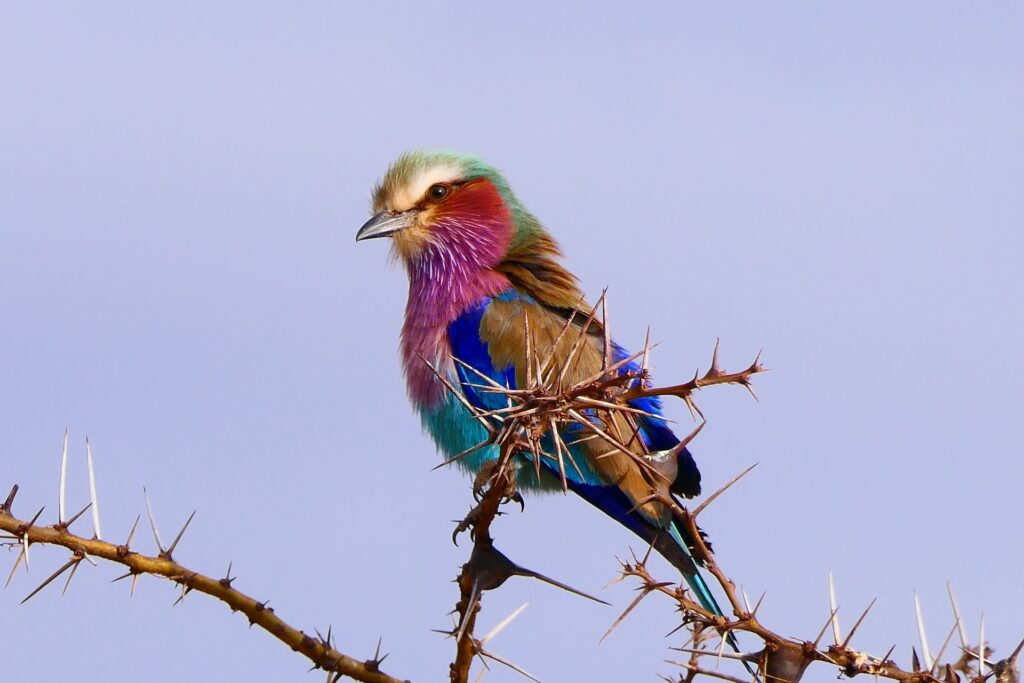
Tanzania: a paradise for bird lovers
Nobody knows precisely how many bird species live in Tanzania, though the estimate is around one thousand. Some Tanzanian birds have not been spotted for years, while others appear wherever you look – and that is exactly where our birds of Tanzania guides prove their worth on your Tanzania safari!
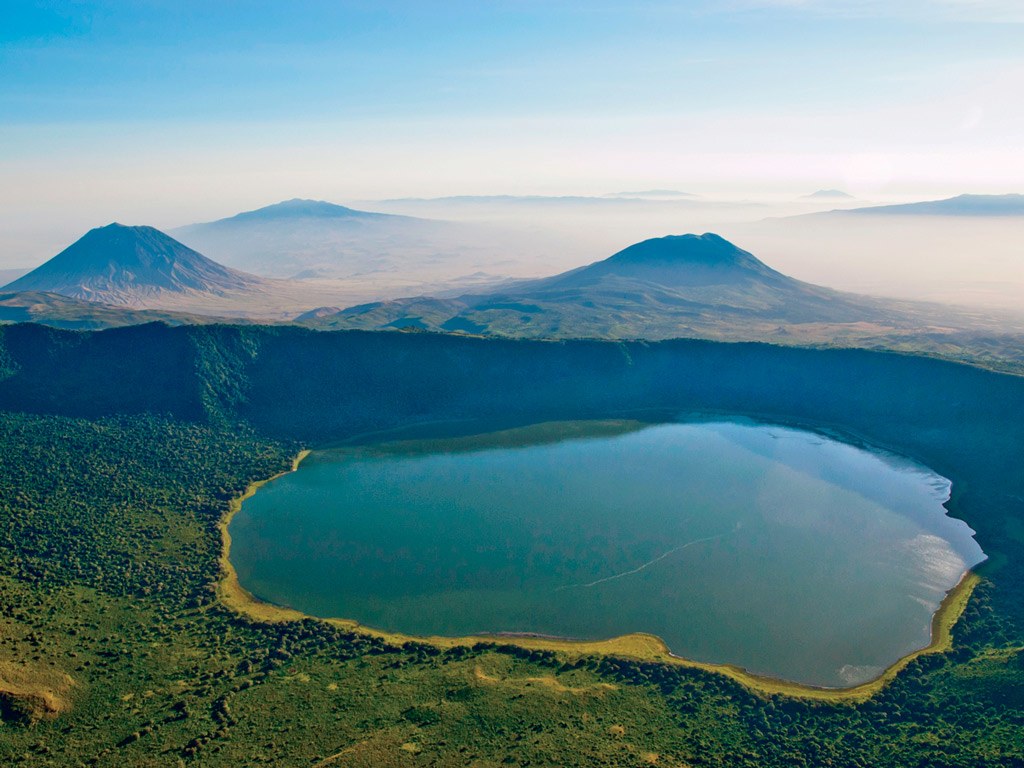
Ten birds to look out for on a Tanzania safari
Rufous-tailed weaver – Serengeti National Park
At 20 to 22 centimetres, with chestnut plumage and dark spots, the rufous-tailed weaver is hardly the most colourful character. What sets it apart is that it’s endemic to Tanzania, meaning this lovely bird lives nowhere else on the planet. During the breeding season, from July to February, the males build their nests, frequently in the baobabs for which the Serengeti National Park is well known.
Silvery-cheeked hornbill – Lake Manyara National Park
The silvery-cheeked hornbill enjoys a very relaxed life and spends each breeding season with just one partner. For their meals, they typically meet up with other couples in fruit-bearing trees, so don’t be surprised: you might see more than 100 hornbills at the same time! And if you want to impress your fellow adventurers with a fun fact: you can easily distinguish between the male and female hornbill by looking at their beaks. Males have a prominent casque over their entire beak, while females have a much shorter one—a fantastic sight for epic pictures of birds of Tanzania.
Fisher’s lovebird – Serengeti National Park
Even though they are only 14 centimetres in length, and thus belong to the smallest birds of Tanzania, the small Fisher’s lovebird is easy to spot with their bright green and orange plumage. As their name suggests, these parrots take their romantic life seriously: they are monogamous and spend their whole life with one partner. Furthermore, they have mastered the gender-neutral look: looking at their feathers, you cannot tell whether you see a male or female.
Tawny Eagle – Tarangire National Park
From one of Tanzania’s smallest parrots we move to a big bird of prey in our top 10 birds of Tanzania. The Tawney eagle has a wingspan of as much as 190 centimetres. In Afrikaans it is known as the ‘roofarend’, meaning ‘robber eagle’. Feeding on carrion, this Tanzanian bird is regarded as fairly aggressive when it steals prey from other birds—a feeding habit known as kleptoparasitism. So watch out!
Black heron – Lake Manyara National Park
The black heron, a pitch-black bird of 42 to 66 centimetres, is remarkably clever. When fishing it wades into shallow water, lowers its head and wraps its wings around itself, creating a canopy of feathers. This gives it a clear view of what is happening under the surface, making the fish easier to catch. Now and then you may also find the heron keeping company with the African sacred ibis: the ibis stirs the fish up through the water and the black heron simply dives in to grab them. Fast food on a busy day!
Red and yellow barbet – Tarangire National Park
Among the most endearing birds in Tanzania is the red and yellow barbet. It is famous for its beautiful (and loud) voice, and its song has a wonderful rhythm. These songs often go on for a full two minutes, with other birds chiming in. Such a grand performance calls for a striking outfit, and with its red head, yellow chest and black wings dotted with white, the red and yellow barbet more than delivers. With all those qualities, who cares that its wingspan is only around 10 centimetres!
Flamingo – Arusha National Park
As we all know, female birds sometimes choose a mate on very particular grounds, such as the most inventive dance or the finest nest. The flamingo, common in Arusha National Park, is one such bird. In the mating season the males assemble in a big group and, perfectly in time with one another, flap their wings, turn their heads and sing. Once this show is over, the pairs find one another and then remain together for life. Should you be lucky enough to witness this lovely courtship ritual, you are sure to come away with one of your most beautiful and unusual photos of Tanzanian birds.
Golden-breasted starling – Mkomazi National Park
During your safari in Mkomazi National Park, make sure to keep your eyes open for the golden-breasted starling. Thanks to its fantastic plumage, it’s a bird that’s not hard to miss. The upper part of this bird is coloured in iridescent blue, green, and purple. The belly is golden-yellow, and to top it off, this starling has a very long tail. Ask your birds of Tanzania guide for the tips to recognise the birds of Tanzania during your luxury safari.
Pel’s fishing owl – Ruaha National Park
Pel’s fishing owl is found only in African countries, and actually seeing one takes some luck. Like all nocturnal animals, it hunts solely at dusk, dawn and during the night, and its reddish-brown plumage blends in perfectly with the trees where it passes most of the day snuggled up to its mate. If the night’s hunting has not yielded enough food, however, the owl may show itself by day too. So keep your eyes peeled!
Ostrich
In a top 10 list of Tanzania birds, we cannot miss out on the worlds’ biggest bird: the ostrich! There is much to say about this magnificent bird, but our favourite ostrich facts are:
- The ostrich cannot fly.
- It has three stomachs.
- It can sprint up to 70 km/h.
- Males are black and white, while females have brownish-grey plumage.
- Thanks to its long legs and a forward kick, it is capable of killing a predator such as a lion, or even a person… in theory 😉
- Despite what many people think, ostriches do not stick their heads in the sand.
- Their mating process is highly complicated, and to win over a lady, the males have to give it their all – listen to the great David Attenborough explaining this below.
Birding Safari: our best tips
Can’t wait to hop into the 4×4 and go on a bird watching tour yourself? Check out our 10-day safari through all northern national parks with a high bird density – from Tarangire and Lake Manyara to the famous Serengeti and the breathtaking Ngorongoro Crater.
A stay at the Manyara Best View Lodge could be worthwhile too: it sits near the great escarpment, beside a protected wildlife zone, and offers exactly the comfort you want after an exciting day of spotting animals.
Questions about our Africa bird safaris?
Besides sharing detailed knowledge of the Big Five and Tanzania’s incredible natural environment, our birds of Tanzania field guides are remarkably skilled at identifying hundreds of beautiful bird species.
Curious how to put together the ideal itinerary for photographing as many Tanzanian birds as possible? You may come to Tanzania for the lions and go home thinking about the red-and-yellow barbet. Contact the Your Tanzania Trip team and begin planning the Tanzania bird safari of your dreams.